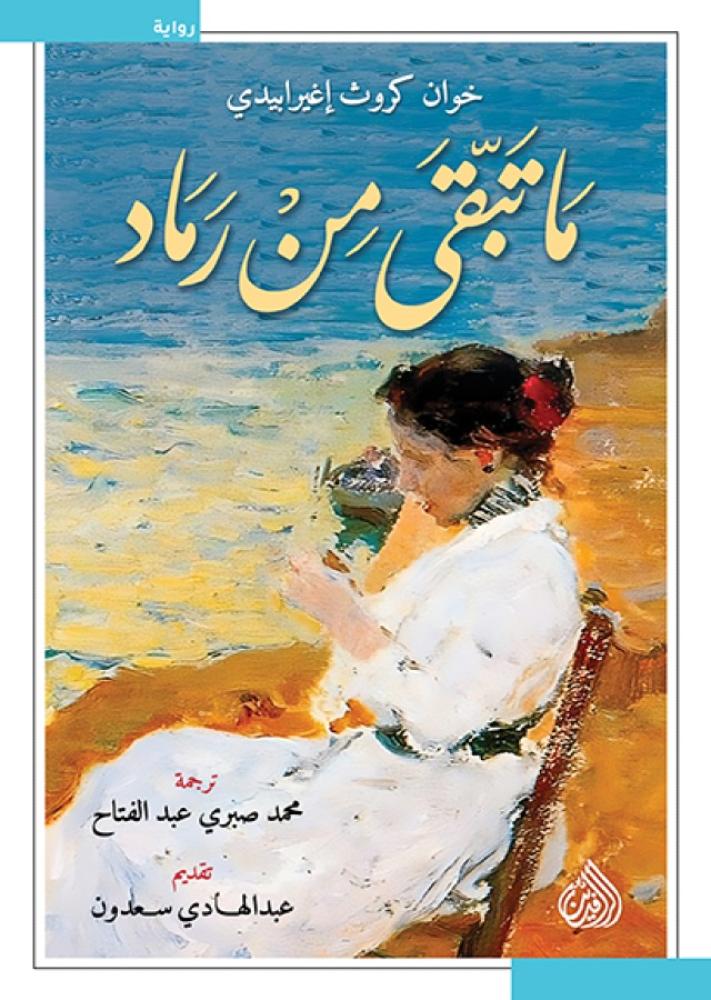
What remains of the ashes
46.37ر.س
Product description
Author's name: Juan Croth Egirabidedar
Publisher: Al-Rafidain Publishing and Distribution
Year of publication: 2023
Literary classification: Biographies and memoirs
Synopsis of the book: Ouster dedicates his book to illuminating the corners of his mind as childhood recalls it. The book can be considered a history of the author's psychological development, where "the winter story" is a history of the development of the writer's body. Childhood here is the absolute hero. To the extent that events suggest that the writer experienced a childhood rich with incidents and mingling, you come away with a decisive impression that the only truth is the solitude of the human being in a world struggling to appear cohesive. Especially in his first chapter, when Ouster comfortably reviews the child's anxieties—seeing stars as mysteries, scissors as walking beings, and the television as a cousin of the teapot! Or when he sees himself as merely "a human seed." A child writing his first poem at the age of nine cannot be anything but sufficiently isolated, even if the noise of school social experiences outwardly dismisses that. Shadows of the Korean War, and others about his feeling of humiliation from involuntary urination episodes, and a third about the shaping of his personality before puberty through his obsession with cinema, reviewing films: “The Incredible Shrinking Man” and “I Am a Fugitive From a Chain Gang.” The inner self, which is the twin of our isolation, the only confirmed truth of the being in his earthly life. The inner self to which we escape from everything that penetrates the purity of our rare moment, dissipated mercilessly on the altar of endless technological network communication. In the final chapter of the book, Ouster quotes a letter to his later lover/wife, Lydia Davis: "For me, the problem of the world is primarily and above all a personal problem, and its solution can only be achieved by starting from within."

From Najran
Questions you might have