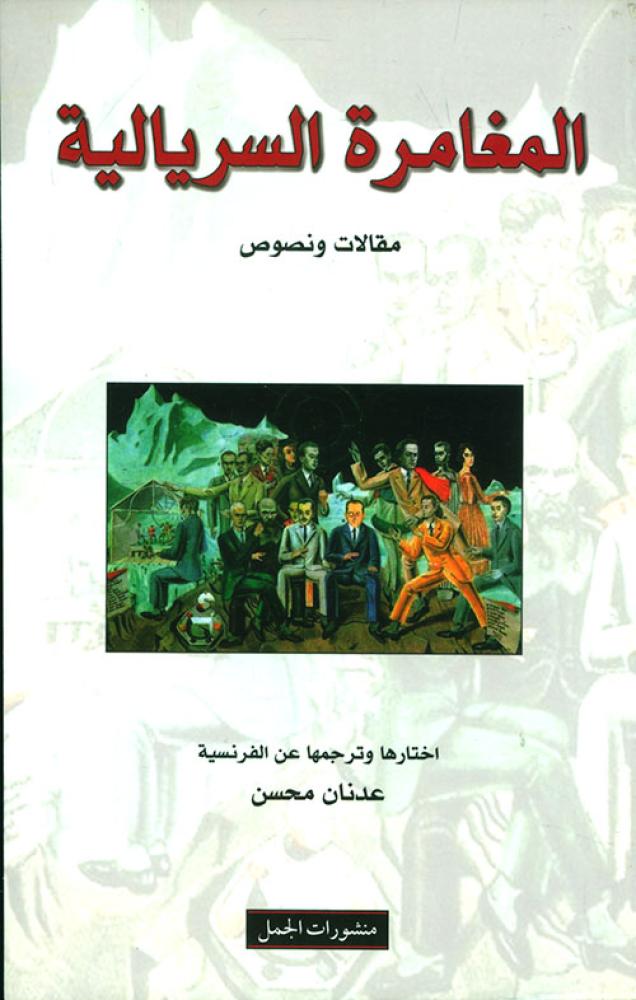
The Surrealist Adventure (Articles and Texts)
36.71ر.س
Product description
Author's name: Adnan Muhsindar
Publication: Al-Jamal Publications for Publishing and Distribution
Year of publication: 2016
Literary classification: Culture and History
Brief about the book: The issuance of the first surrealist statement in 1924 is considered the official birth document of Surrealism, and also the article published by the French poet Jean Schuster in Le Monde newspaper in 1969 titled "The Fourth Chant" is considered its death certificate, as he announced the end of Surrealism as an organized movement, three years after the death of André Breton, the movement's leader, theorist, and greatest symbol, in 1966.
The period between the two World Wars, 1919-1939, is considered its golden age, where its influence expanded beyond France to become a global movement. Its exhibition held in 1938 included fourteen countries. Its meaning then expanded beyond its original content, and people began to call any extraordinary act "surreal," a word that had not yet entered French dictionaries at that time.
This specific period is the primary subject and material of the book. What is Surrealism, and who are the early Surrealists? The book discusses the seven prefaces that precede its activities, play, and texts, focusing on the foundational topics of Surrealism: its history as an organized movement, its leaders, followers, opponents, activities, publications, and exhibitions. It also explores its relationship with painting, poetry, and the poetic nature of its leader, as well as the relationship of early Surrealists like Rambo as an inspiration among others, and its connections with Marxism and the French Communist Party. Additionally, there is some critique of Surrealism from within the movement itself.
All of this results from research conducted by French writers, some of whom accompanied its journey through various stages (Alikeh and Huber), others who joined and participated in all its activities (Lugran and Joffroy), and some who were symbols of it and were expelled from its ranks (Arto), for example.

From Najran
Questions you might have