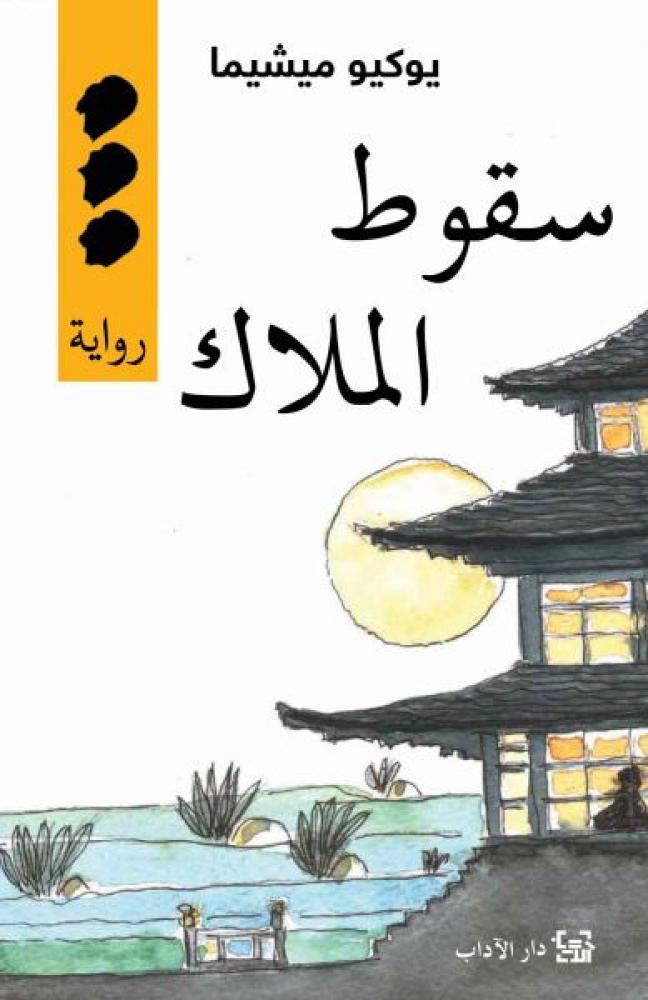
The fall of the angel
57.96ر.س
Product description
Author's name: Yukio Mishima
Publisher: Dar Al-Adab for Publishing
Year of publication: 1995
Brief about the book: As if "The Fall of the Angel" was intended by Yukio Mishima to depict the fall of his protagonist Honda, who lived in the space of his tetralogy "Sea of Fertility" as a human being who moves through reincarnation and within four stages, and also four characters. In this volume, Mishima concludes his tetralogy, and we find ourselves facing Honda, the central hero of this novel, himself, who stood as a witness to all the endings, and the very end of the great cycle of reincarnation.
The novels "The Fall of the Angel," "Spring Snow," "Runaway Horses," and "The Temple of Dawn" are unique in that they are entire works written after Mishima decided to end his life, after completing his tetralogy. Therefore, they reflect his philosophy and worldview more fully and richly than any of his other works, which Mishima left us in thirty-six volumes comprising his complete works.
What truly draws our attention here is that Mishima ends "The Fall of the Angel" with a visit Honda makes to the Gishō Temple, where he meets Satoko, the heroine of "Spring Snow," after she has aged, having spent her life as a priestess who turned her back on the world. Honda believes, when he finds that Satoko does not remember her former lover Kiyoki, but instead wonders if it was destined for a person bearing that name to exist as a cat, that if Kiyoki does not exist, then neither Isao nor Ryo-san exist, and perhaps Honda himself does not exist either. Perhaps all that has passed was merely a dream and a wandering in the nebula. The bitter question Honda raises in this regard is whether beliefs can fade away so easily, leaving everyone with the final interpretations of what crosses their minds based on their own inspirations!
Mishima concludes his monumental work with Honda stepping out into the inner courtyard of the temple, where: "The garden was empty, and Honda himself felt that he had come to a place devoid of memories and everything. The midday summer sun’s rays flowed, flooding the silent garden."
This stage ends, and then the most difficult question arises: what is the true essence of Yukio Mishima’s grand journey? On that bloody morning of November 25, 1970, when Mishima and his companions went to the Eastern headquarters of the Japanese army, where he met his death through the ritual of seppuku, the Japanese writer left a note on his desk before leaving his house, written on a scrap of paper: "Human life is short, but I want to live forever."
Now, can we, while reading "Sea of Fertility," say that Mishima achieved his wish... And then, "Sea of Fertility" is an immense universe of mystery, magic, and beauty. Sailing in it is not an easy task, but ultimately, that is the true beautiful difficulty—perhaps because in this turbulent sea, we are rediscovering ourselves in some way, and posing the most important questions to the human within us, leading to the vast and wondrous space that overlooks the possibility of change in the year.

From Najran
Questions you might have