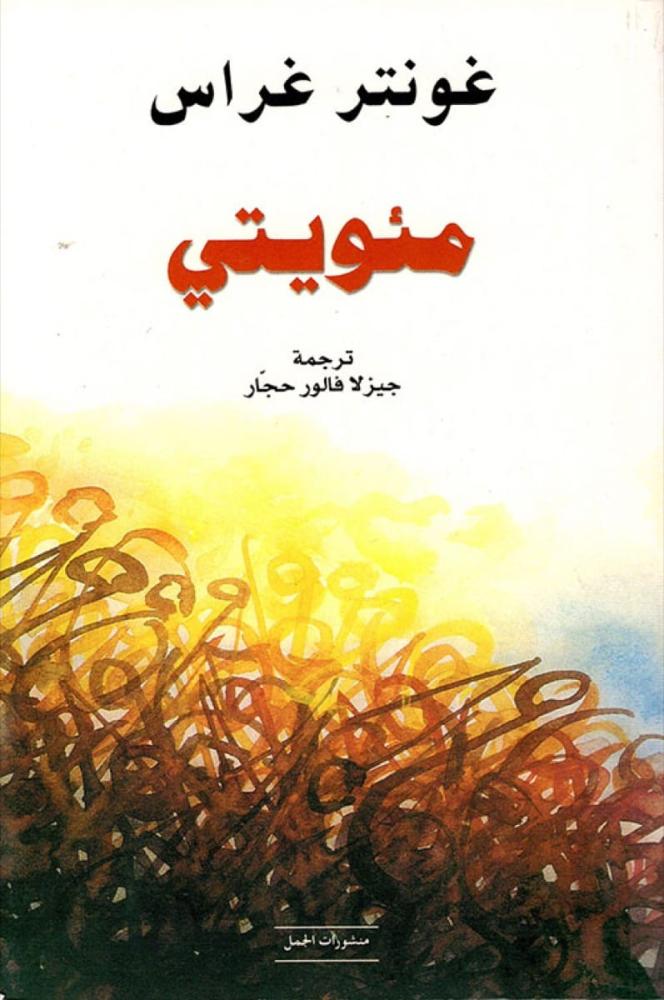
My hundredth
38.64ر.س
Product description
Author's name: Günter Grass
Publisher: Jamal Publications for Publishing and Distribution
Year of publication: 2007
Literary classification: Novel
Brief about the book: "The universe or being... suddenly all those noble words, in their various forms – essence, principle, every being, non-being – suddenly ceased to say anything, as if they were just verbal hums. I find myself a question mark, feeling compelled to give testimony here. After fleeing from years that have passed without my noticing, because the world around me distracted me from it, the world celebrating in its current tumult with various matters that seem worthy – from the German Marxism that started to stir fifty years ago to the strange year of 1968 – indeed, the world rushing towards them as if rushing to end-of-season sales. After this decision, I record what happened to me on a day during this semester... On that day, after I began my four-hour lesson with cautious hints at a textual connection between my two poems 'The Tune of Death' and 'Totenhauer,' without mentioning the noteworthy meeting between the philosopher and the poet. And while I was listening to my students' contributions slipping into arbitrary concepts, questions suddenly overwhelmed me, related urgently to time, and I shouldn’t even attribute to them a 'existential weight' such as: Who was I then? Who am I today? What happened to that 'rider of wave eighty-six,' the forgetful of being and the indifferent at once, who was present by coincidence two years before 1968, when the first protest movement against the Vietnam War formed in Berlin?"
The events of that novel take place during the two Germanies. The main character is an inspiring poet who philosophizes about life through its social and political currents during a period when the world witnessed events that changed the course of history. The novel opens with a scene coinciding with the German Reich occupying a region in northeastern China in 1898, and with the occupation of the commercial district in Beijing by a group of Chinese called Boxers, who killed several foreigners, including the German envoy. At that time, the poet was fighting in the German army. Over the years, that person changes, and his perspective on matters shifts as if he is sacrificing himself, as he says in his own words: "I, who changed my state from other selves I was..." The novel ends with the scene of the fall of the Berlin Wall and the poet celebrating his mother’s centenary, whom he summoned to tell what happened in the past, in ancient times. Through her, the novel emphasizes the human suffering that encompassed the world, which was then tumultuous with wars.

From Najran
Questions you might have