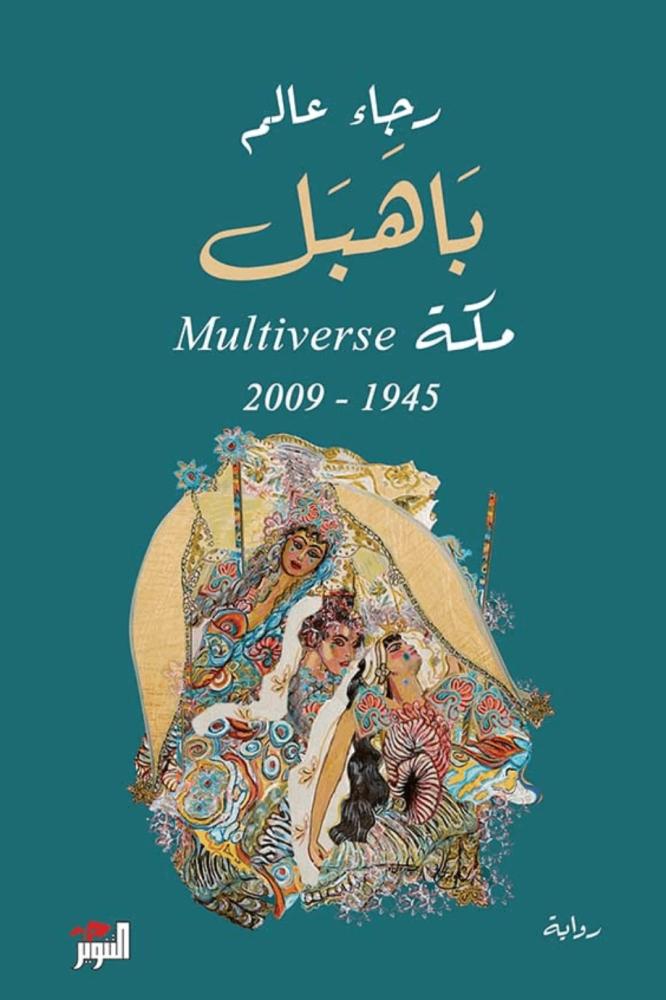
Bahbal: Mecca 1945_2009
54.10ر.س
Out of Stock
Product description
Author's name: Raja Al-Madar
Publisher: Dar Al-Tanweer for Publishing and Distribution
Year of publication: 2023
Literary classification: Novel
Brief about the book: The Sardar family is a model of the noble Meccan family, through which we see the life of Mecca. Specifically, the lives of women in Mecca between 1945 and 2009, a period that witnessed many transformations in the lives of the city's residents, who live on the presence of the Haram.
In a family where the father controls all aspects of life, the child "Abbas" (Bahbal) is born, who was one of the twins, according to what the midwife said, but his twin was lost! He lived close to the women of the family and decided to write their lives.
Written by: Mohamed Turki Al-Rabeeu — Qantara website
Many are afflicted with the disease of the cities in which they were born and lived their childhood. In this age stage, stories of parents, neighbors, and friends are formed, and over time, these stories turn into events, tales, and memories of the city and its customs. Escaping from them becomes impossible, even if we leave to other cities.
This applies to the Saudi novelist Raja Al-Alam. She tries in her novel (Bahbal Mecca 1945-2009) to complete her writing project on the social and cultural history of Mecca. The city — which has always been associated in the minds of Muslims with the House of Allah and its black cloak — appears in another aspect, changing very rapidly.
The Meccan novelist Raja Al-Alam appears daring: Mecca — a refuge for seekers of spirituality and wishes — now bears in its margins stories of women and young people from three generations who turned to madness as a refuge from their daily traditional reality.
Mohamed Turki Al-Rabeeu's extrapolation for Qantara.
Mecca, which we seek out in search of dreams, spiritual memories, and wishes — dreams we hope to realize after visiting — carries in its margins and edges the stories of hundreds of women and young people who went mad due to their daily traditional reality.
The Prophet Muhammad, who led the city — fourteen centuries ago — toward another religious fantasy, now his children live under a city without dreams or fantasy.
This is perhaps a result that Al-Alam does not explicitly mention, but the reader of the novel feels it through the scene of Sukriya saying, "The fear of shame killed us."
Perhaps someone preceded Raja Al-Alam in talking about the life of madness, such as Naguib Mahfouz’s novels about Cairo, for example, and Khairy Al-Dhahabi’s novels about Damascus.

From Najran
Questions you might have