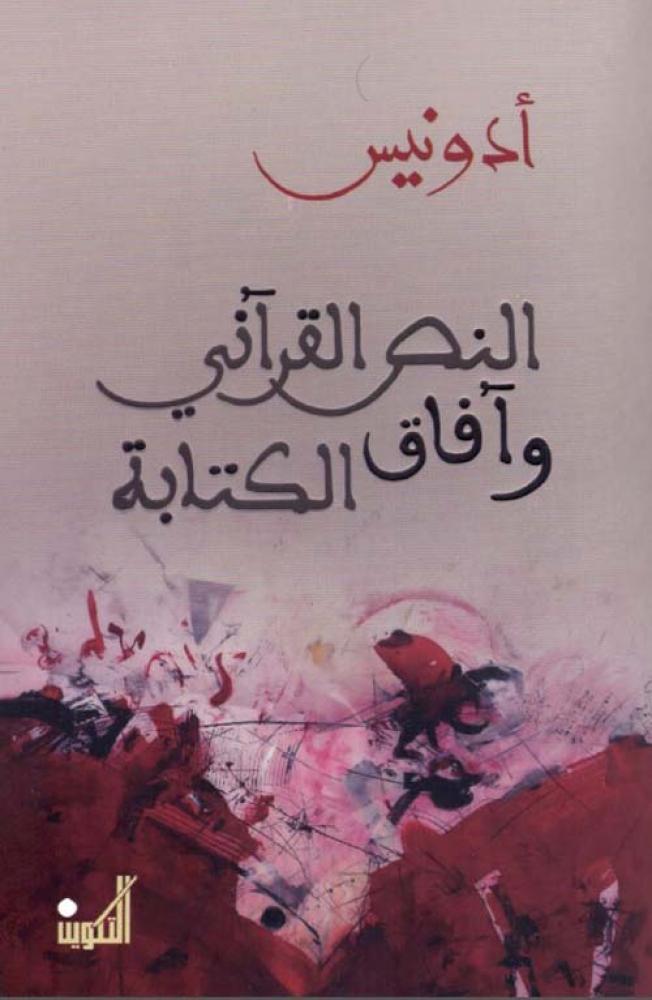
The Quranic text and horizons of writing
18ر.س
Out of Stock
Product description
Author's name: Adonis
Publisher: Al-Takween for Publishing and Distribution
Year of publication: 2019
Literary classification: Reflections
Brief about the book: Adonis and the Qur'anic text and horizons of writing
Reflections, contemplations, and philosophy dictated by the language of texts and their meanings, intellectual openings dictated by familiar and unfamiliar poeticities, poeticities that aspire to a vision whose dimensions extend with the meanings of letters and words, and expand beyond a broad human literary horizon, accommodating all new mental insights that illuminate for the gifts accepted by the mind, enjoyed by the soul, and opened by thought.
Adonis wrote about the Qur'anic text as a linguistic text, outside any religious dimension, both in reflection and practice, a text read as literary texts are read, seeing that the Qur'anic text answers questions of existence, ethics, and destiny in an aesthetic-artistic manner — and therefore described it as a linguistic text. Understanding it requires understanding its language, emphasizing that this language is not just vocabulary and structures, but rather it creates a specific vision for humans and life, for the universe — in essence, unseen, and in the afterlife.
Thus, Adonis proceeds in his reading of the Qur'anic text, confirming that the Qur'an is the book that Malarmé described as a book he dreamed of writing: a fountain of truth from which all humanity drinks. It is the beginning and the end, a writing at the level of the universe.
Adonis moved from his reading of the Qur'anic text to horizons of writing through pathways, inquiries, and celebrations, speaking in pathways about poetry, culture — non-poetry, names, language, and truth, and touching in inquiries on the critique of Arab modernity and the future of poetry, dedicating celebrations to celebrating poetry, humans, Ahmed Al-Safi Al-Najafi, and Al-Sayyab and Al-Jawahiri... etc.
Adonis's texts carried much for the linguist, the poet, and the contemplator.

From Najran
Questions you might have