
Death of secrets volume
63.25ر.س
Product description
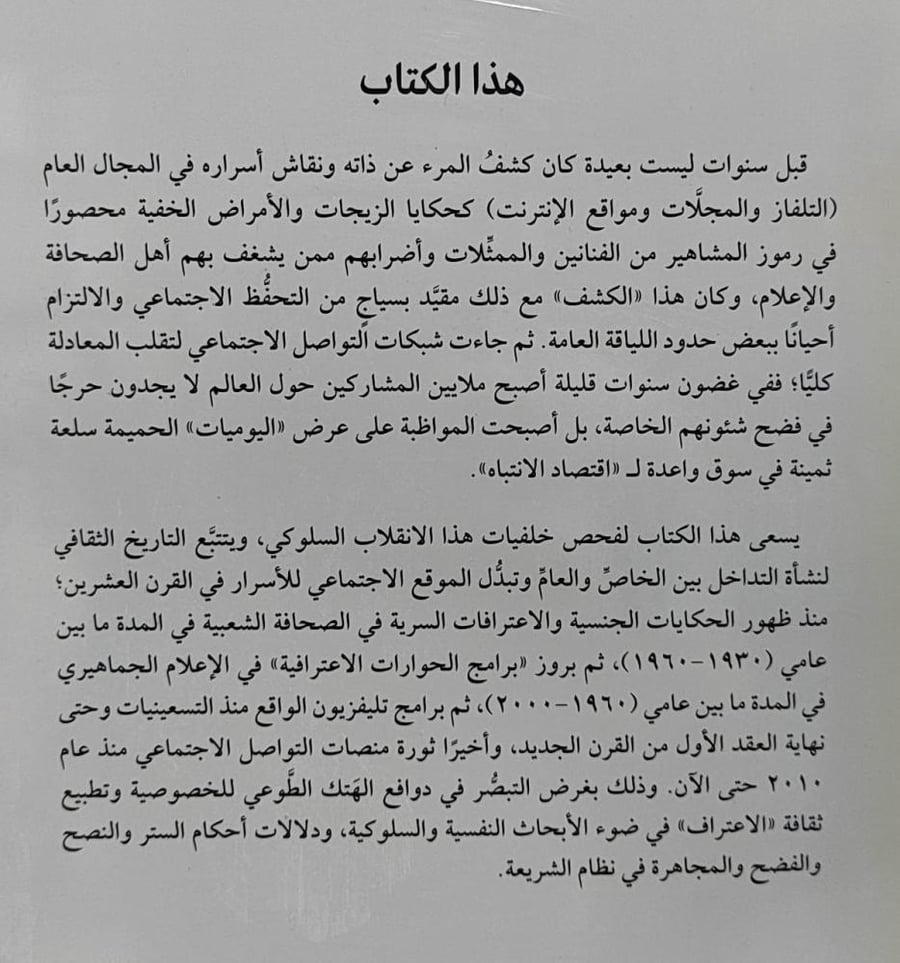
Summary introducing the book: Years ago, revealing oneself and discussing secrets in the public domain (television, magazines, and internet sites) was limited to the stories of marriages and hidden illnesses, confined to the symbols of celebrities from artists, actresses, and their likes who captivated the press and media. This "disclosure" was still restricted by social modesty and sometimes adherence to some boundaries of public decorum. Then social media networks came to completely change the equation; within a few years, millions of participants around the world found no shame in exposing their private affairs, and maintaining the display of intimate "diaries" became a valuable commodity in a promising market for the "attention economy." This book aims to examine the background of this behavioral revolution, tracing the cultural history of the emergence of the intersection between private and public, and the changing social status of secrets in the twentieth century; from the appearance of sexual stories and secret confessions in popular journalism between 1930 and 1960, then the rise of "confessional talk shows" in mass media between 1960 and 2000, then reality TV programs from the nineties until the end of the first decade of the new century, and finally the social media platform revolution from 2010 until now. The purpose is to gain insight into the motives behind voluntary privacy breaches and the normalization of the culture of "confession" in light of psychological and behavioral research, as well as the implications of judgments related to covering, advising, exposing, and openly confessing within the system of Sharia.

From Riyadh
Questions you might have