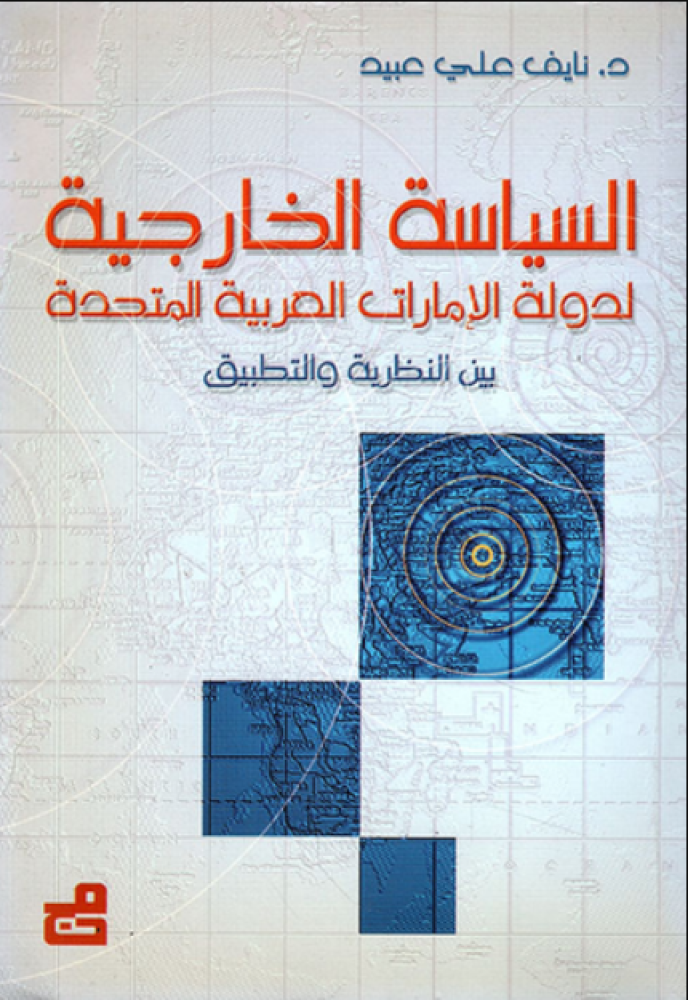
The foreign policy of the United Arab Emirates between theory and practice
66ر.س
75ر.س-12%Product description
The subject of this book is one of the topics whose importance is not hidden, as it deals with an in-depth and objective analysis of the foreign policy of the United Arab Emirates, which is considered an active and influential party, and a prominent political and economic hub on both the Gulf and Arab arenas. It has made constructive contributions and played distinguished roles on various regional and global levels, making such a specialized and comprehensive study of its foreign policy of great importance to those concerned with it, including scholars and researchers everywhere.
Although there are some studies and writings that preceded the publication of this book and were authored by other specialized researchers on some aspects of the foreign policy of the United Arab Emirates, none of them — despite their scientific value — match this study in terms of comprehensiveness of its axes, breadth of its horizons, and richness of its scientific material, as well as the coherence of its presentation, clarity of thought, and depth of analysis.
The book begins with a preliminary theoretical framework for foreign policy, including a definition of its nature, objectives, tools, determinants, and the methodologies used in its study. From this theoretical introduction, the author proceeds to analyze a set of main determinants that influence the formation of the core content of the UAE's foreign policy.
Within this interconnected context of presentation and analysis, the author paints a comprehensive picture of the main apparatus responsible for formulating this foreign policy, shaping its objectives, and defining its foundations. This is also the body tasked with managing it to enable it to achieve its desired goals, which is the Ministry of Foreign Affairs of the United Arab Emirates.
Following this, the author dedicates a chapter to analyzing the UAE's regional and international relations, addressing many key issues in which the UAE played an active role. The presentation is well-organized and clearly reflects what the author aimed to clarify and emphasize.
Furthermore, since the Iran-Iraq war had a profound impact on the strategic, political, and economic conditions of the Gulf region, the picture would not be complete without discussing the influences surrounding the outbreak of this long regional war, delving into its resulting repercussions and the serious security challenges it posed, and concluding with an analysis of the UAE's stance towards the two main parties involved.
The author's skill in analysis is once again evident through his detailed presentation of the UAE's position regarding the Iraqi invasion of Kuwait in 1990. This event went beyond the region itself to shake the world profoundly, especially since the war occurred during a period of significant transformation marked by the emergence of the new world order, after communism had collapsed in Eastern Europe, the Warsaw Pact had disintegrated, and the Soviet Union's star was waning as a superpower on the international stage.
The final chapter of the book discusses the events of September 11, 2001, and the UAE's stance on them. We can say that despite the extreme sensitivity of those horrific events, and the conflicting international interpretations of the motives behind them, the forces involved, and the ultimate goals they sought, the author succeeded in navigating this dangerous turning point by providing an accurate and expressive picture of the international situation after 9/11, as well as the Arab world's repercussions and the firm positions expressed by the UAE through its policies and decisions.

From Riyadh