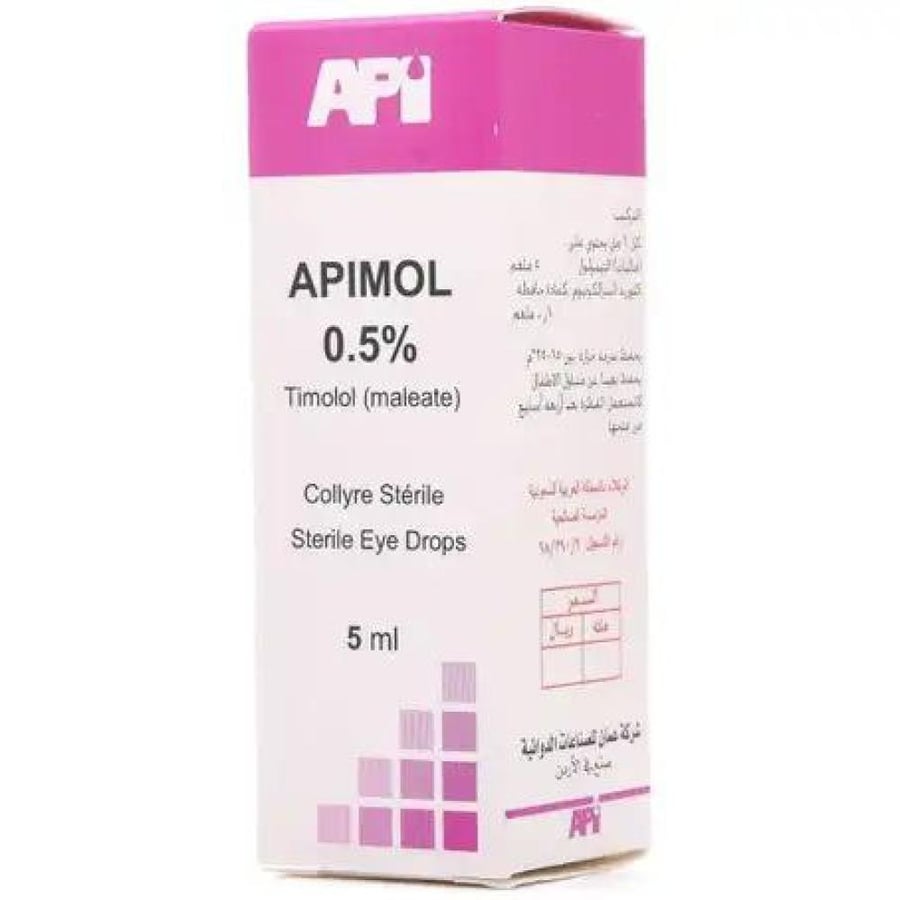
Apimol 0.5% eye drops 5ml
9.95ر.س
Out of Stock
Product description
Product Description:
- Timolol Maleate 0.5% Eye Drops Solution
What is Timolol Maleate and what is it used for?
- Timolol maleate is a medicine that belongs to a class of medicines called 'beta blockers'.
- It is used in patients with glaucoma (increased pressure in the eye that can lead to vision loss) to reduce eye pressure.
- Do not use Timolol Maleate:
- If you are allergic to timolol maleate, other beta blockers, or any of the ingredients in this medication. Tell your doctor about the allergy and any signs you experience.
- If you currently have or have ever had respiratory problems such as asthma or severe chronic obstructive bronchitis (a severe lung problem that may cause difficulty breathing and wheezing).
- If you have heart problems including irregular heartbeat, slow heartbeat, heart failure (inability of the heart muscle to pump blood properly) or cardiogenic shock (a serious heart problem due to low blood pressure, which may lead to symptoms such as white skin, dizziness, rapid heartbeat, lightheadedness, restlessness, sweating and loss of consciousness).
Warnings and Precautions:
- Talk to your doctor or pharmacist if you experience an allergic reaction such as shortness of breath, rash, swelling of the face or neck.
- Stop using this medicine and talk to your doctor right away if you develop an allergic eye reaction such as eye redness, itching, rash, or swelling.
- Talk to your doctor before starting timolol if you currently have or have ever had heart failure, an abnormal heartbeat, coronary heart disease (a heart problem that may cause choking, chest pain, or shortness of breath), or low blood pressure.
- Talk to your doctor before starting timolol if you currently have or have had breathing problems, chronic obstructive pulmonary disease (COPD) or asthma.
- Talk to your doctor before starting timolol if you currently have or have had poor blood circulation (such as Raynaud's disease).
- Talk to your doctor before starting timolol if you currently have or have had diabetes because this medicine may mask the signs and symptoms of low blood sugar.
- Talk to your doctor before starting timolol if you currently have or have had hyperthyroidism because this medicine may mask the signs and symptoms.
- Talk to your doctor before starting timolol if you wear soft contact lenses.
- Talk to your doctor before starting timolol if you are going to have surgery because this medicine may change the effects of some medicines used during anesthesia.
- Seek your doctor's advice right away if you develop eye inflammation, eye irritation, or any new eye problems (such as swollen eyelids or red eyes).
- Talk to your doctor if you have an eye injury.
- Talk to your doctor if your eye condition gets worse or if you experience new symptoms.
- This product contains a preservative known as benzalkonium chloride which can affect the color of your soft contact lenses and may also cause eye irritation especially if you have corneal problems or dry eyes, so be sure to remove your soft contact lens before applying eye drops and wait at least 15 minutes before putting your contact lenses back in.
- Talk to your doctor if you feel an abnormal eye sensation (pain or stinging) in your eye after putting in the eye drops.
- This product contains phosphate which may rarely cause calcium build-up during treatment resulting in cloudy spots on the cornea (clear layer at the front of the eye) if you have severe corneal damage.
Possible side effects:
- Possible side effects include allergic reactions (such as rash and itching), low blood sugar levels, depression, memory loss, difficulty sleeping (insomnia), nightmares, and hallucinations.
- Stroke or decreased blood flow to the brain, fainting, headache, dizziness, increased signs and symptoms of myasthenia gravis (muscle problem),
- Abnormal sensations such as tingling or pins and needles, ringing in the ears, chest pain, slow heart rate or heart palpitations, edema (fluid buildup),
- Heart problems such as heart rhythm or heart rate changes or irregular heartbeats, congestive heart failure (a heart problem that may cause difficulty breathing and swelling of the feet and legs) or heart attack,
- Low blood pressure, fainting, Raynaud's phenomenon (a rare disorder of the blood vessels that causes them to constrict in the fingers and toes), cold hands and feet,
- Decreased blood flow to the legs causing claudication, constriction of the airways in the lungs (especially in patients with respiratory problems),
- Difficulty breathing, coughing, wheezing, taste disturbances, diarrhea, nausea, indigestion, dry mouth, vomiting, abdominal pain, and sexual dysfunction.
- Decreased sex drive, Peyronie's disease (a disorder that causes abnormal curvature, pain, or hardening of the tissues of your penis), a skin rash with a silvery-white appearance, hair loss, worsening of psoriasis,
- Itching, muscle fatigue or weakness, muscle pain not caused by exercise, systemic lupus erythematosus (a disorder that causes the immune system to attack the body's own tissues, leading to widespread inflammation and damage to affected organs such as the skin, joints, brain, kidneys, lungs, and blood vessels).
- Eye side effects include eye irritation (such as itching, burning, redness, or tearing), inflammation of the eyelid or cornea, blurred vision, and decreased corneal sensitivity.
- Detachment of the layer below the retina, which may lead to visual distortions, dry eyes, drooping of the upper eyelid, corneal erosion (damage to the front layer of the eyeball),
- Double vision, sensitivity to light, eye discharge and eye pain.

From Jeddah