
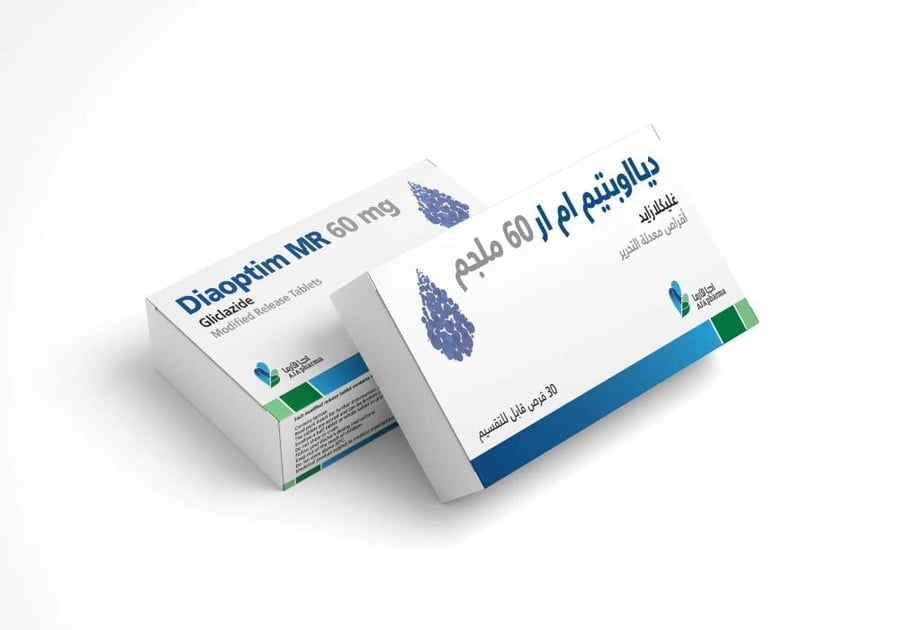
Diopectim MR 60 mg - 30 tablets
24ر.س
Out of Stock
Product description
Dyaopectim MR 60 mg Product description: Contains Diaoptim MR 60 mg modified-release gliclazide tablets designated for treating adults not dependent on insulin (type 2) when dietary measures, physical activity, and weight loss alone are not sufficient to control blood glucose levels. Usage instructions: The daily dose of Diaoptim MR 60 mg may vary from half a tablet to two tablets daily, i.e., from 30 to 120 mg taken orally in a single dose at breakfast, each tablet is divisible. It is recommended to swallow the tablet(s) without crushing or chewing. If a dose is missed, there should be no increase in the dose taken the next day. As with any blood sugar-lowering agent, the dose should be adjusted according to the patient's metabolic response (blood glucose, HbA1c). If blood glucose is effectively controlled, this dose can be used for maintenance therapy. If blood glucose is not sufficiently controlled, the dose can be increased to 60 or 90 or 120 mg daily, in successive stages. The interval between each dose increase should be at least one month, except for patients whose blood sugar level has not decreased after two weeks of treatment. In such cases, the dose can be increased at the end of the second week of therapy. The maximum recommended daily dose is 120 mg. Warnings and precautions: Hypoglycemia: This treatment should only be prescribed if the patient is likely to eat regularly (including breakfast). It is important to eat carbohydrates regularly due to the increased risk of hypoglycemia if a meal is delayed, or if an insufficient amount of food is eaten, or if the food is low in carbohydrates. Hypoglycemia is more likely to occur during low-calorie diets, after prolonged or strenuous exercise, alcohol consumption, or when using a combination of blood sugar-lowering agents. Careful patient selection, appropriate dosing, and clear patient instructions are essential to reduce the risk of hypoglycemic episodes. Factors increasing the risk of hypoglycemia: Patient refusal or (especially in the elderly) inability to cooperate, malnutrition, irregular meal times, skipping meals, fasting periods or dietary changes, imbalance between physical activity and carbohydrate intake, renal insufficiency, severe hepatic failure, overdose, certain endocrine disorders. Renal and hepatic impairment: Pharmacokinetics and/or pharmacodynamics of gliclazide may change in patients with hepatic impairment or acute renal failure. The hypoglycemic episodes in these patients may last longer, so appropriate management should be initiated. Poor blood glucose control: Blood glucose control in patients treated with oral hypoglycemic agents may be affected by: concurrent use of St. John’s Wort (Hypericum perforatum), fever, shock, infection, surgical intervention. The hypoglycemic effect of any oral hypoglycemic agent, including gliclazide, may diminish over time in many patients: this may be due to the progression of diabetes severity or decreased response to treatment. This phenomenon is known as secondary failure, which differs from primary failure when the active substance is ineffective from the first use. Appropriate dose adjustment and dietary compliance should be considered before classifying the patient as secondary failure. Hypoglycemia disorders: Glucose disturbances, including hypoglycemia and hyperglycemia, have been reported in diabetic patients receiving concomitant treatment with fluoroquinolones, especially in elderly patients. In fact, close monitoring of blood glucose levels is recommended for all patients receiving Diaoptim MR 60 mg and fluoroquinolones simultaneously. Treating patients with G6PD deficiency with sulfonylurea agents can lead to hemolytic anemia. Since gliclazide belongs to the chemical class of sulfonylurea drugs, caution should be exercised in patients with G6PD deficiency, and a non-sulfonylurea alternative should be considered. The medication should not be used in the following cases: hypersensitivity to the active substance or any of the excipients, other sulfonylureas, sulfonamides, type 1 diabetes, diabetic coma and diabetic ketoacidosis, severe renal or hepatic failure: in these cases, insulin is recommended. Treatment with miconazole. Breastfeeding. Components: Each tablet contains 60 mg of gliclazide.

From Buraydah