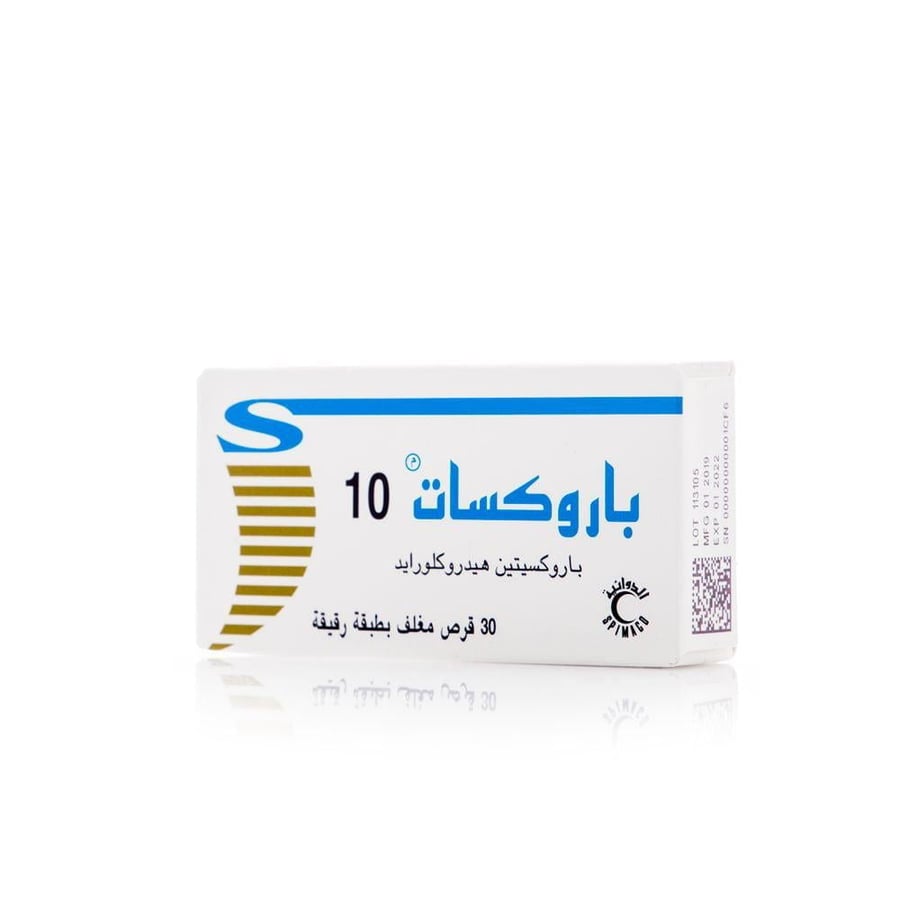
Paroxet 10 mg - 30 tablets
30.15ر.س
Product description
Paroxetine Hydrochloride Tablets 10 mg What is Paroxetine Hydrochloride and what is its use: Hydrochloride of Paroxetine is a medicine belonging to a class of drugs known as "selective serotonin reuptake inhibitors." It works by increasing serotonin levels in the brain, a hormone present in the brain that may be associated with depression and anxiety when deficient. It is used to treat adult patients suffering from depression and/or anxiety disorders. Anxiety disorders that can be treated with this medication include: generalized anxiety disorder (feeling generally very tense and anxious), panic disorder (panic attacks, including agoraphobia, fear of open spaces), obsessive-compulsive disorder (obsessions, and recurrent thoughts with uncontrollable behavior), social anxiety disorder (fear of social situations), and post-traumatic stress disorder (anxiety caused by a previous traumatic event).
You should not take Paroxetine Hydrochloride if you are allergic to Paroxetine Hydrochloride or any of the ingredients of this medication.
Tell your doctor about any allergies and symptoms you have.
If you are taking or have taken in the past two weeks MAO inhibitors (used for depression), such as Methylthioninium chloride (methylene blue) and Moclobemide, talk to your doctor if this applies to you. Your doctor will tell you when to start taking Paroxetine Hydrochloride after stopping an MAO inhibitor.
If you are taking any of the following antipsychotic medications: Thioridazine or Pimozide.
Precautions and warnings:
Talk to your doctor or pharmacist before taking Paroxetine Hydrochloride if you are taking any other medications.
This medication may cause Tamoxifen (used for fertility problems and breast cancer) to be less effective if taken together. Talk to your doctor or pharmacist before starting this medication if you are taking Tamoxifen. Your doctor may switch your medication to another antidepressant.
Tell your doctor if you have a history of epilepsy (seizures) or convulsions, or if you have a history of manic episodes (excessive thoughts or activity).
Talk to your doctor before starting this medication if you have liver, heart, or kidney problems.
Tell your doctor if you are undergoing electroconvulsive therapy; a procedure used to treat some mental health conditions.
Consult your doctor before starting this medication if you are pregnant or planning pregnancy, or if you have glaucoma (increased eye pressure), diabetes (high blood sugar), or are on a strict low-sodium diet.
Talk to your doctor before starting this medication if you are taking drugs that increase the risk of bleeding (such as blood thinners like Warfarin, tricyclic antidepressants used for depression, non-steroidal anti-inflammatory drugs like Ibuprofen, Acetylsalicylic acid, Celecoxib, Diclofenac, Etodolac, Meloxicam used to reduce inflammation and pain, or antipsychotics like Clozapine or Perphenazine) or if you have bleeding problems.
For patients under 18 years old: Talk to your doctor before starting this medication if you are under 18; this medication may increase the risk of depression, suicidal attempts, suicidal thoughts, and aggression (anger, oppositional behavior, and hostility), and therefore should not be given to children and adolescents under 18. If your doctor decides to start you or your child on this medication, make sure to discuss all risks with the doctor and consult your doctor immediately if you notice any worsening of depression signs or any of the previously mentioned signs, such as loss of appetite, mood changes, abnormal sweating, bruising or unusual bleeding, abnormal growth, maturity, or behavioral and cognitive development, stomach pains, mood changes, and feeling tense.
This medication may cause withdrawal symptoms if suddenly stopped. Do not stop the medication without consulting your doctor first.
It may take up to two weeks or more for this medication to start working, so initial signs of anxiety or depression may worsen. Make sure to go to the hospital or talk to your doctor immediately if you experience worsening signs such as thoughts of killing yourself or self-harm. This is more likely to happen if you are a young adult or have previously experienced similar thoughts or suicidal behavior.
It is advisable to inform a close friend or relative about your anxiety or depression and ask them to read this leaflet for you. It is also recommended to ask them to monitor you for any behavioral changes or worsening signs that you might not notice.
Drinking alcohol with this medication can worsen symptoms and increase side effects. Do not drink alcohol while taking Paroxetine.
It is recommended to take this medication in the morning with food to reduce the risk of nausea.
Do not chew the tablet.
Take the medication at the same time every day.
Swallow the tablet with a full glass of water.
If you are 65 years or older, do not exceed 40 mg per day.
Your doctor may prescribe a lower dose if you have liver or kidney problems.
How to store Paroxetine Hydrochloride:
Keep the medication out of reach of children and pets.
Store the medication below 30°C.
Ensure to keep half the tablets safely in the packaging (if you are using half tablets).
Do not use the medication after the expiration date printed on the package.
Keep the medication in its original container to protect it from moisture and light.
Do not use damaged pills.
Do not dispose of medications in wastewater or household waste.

From Buraydah