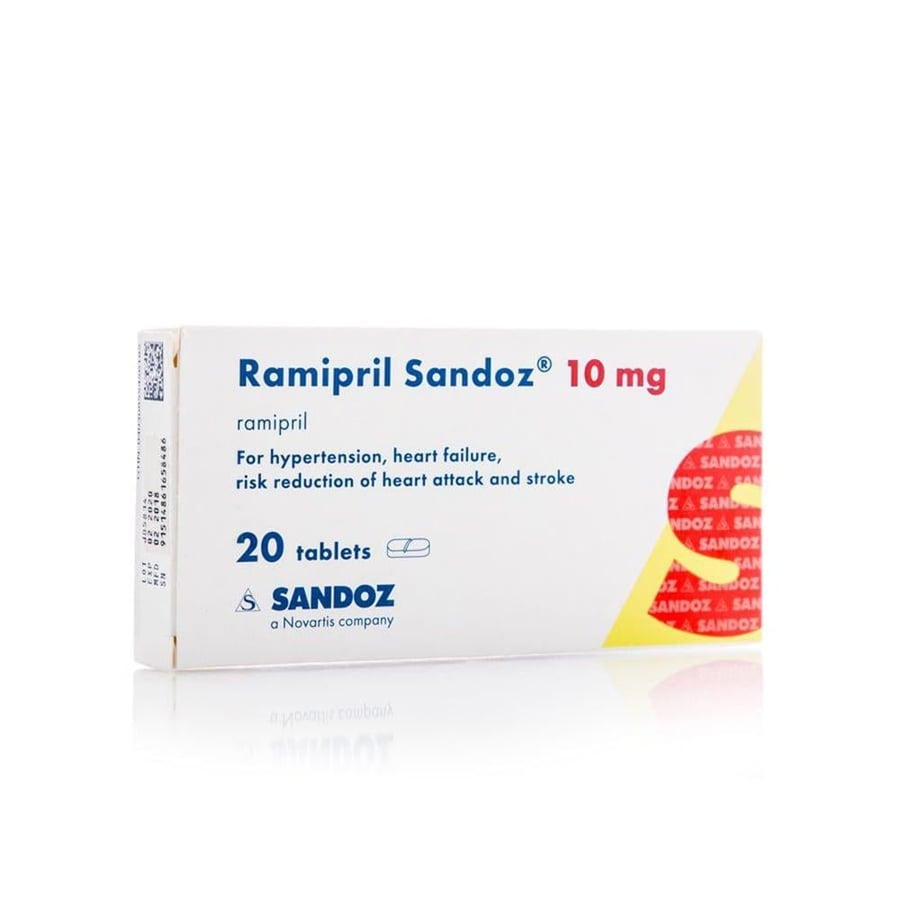
Ramipril Sandos 10 mg 20 tablets
24.75ر.س
Out of Stock
Product description
Ramipril 10 mg tablets What is Ramipril and what are its indications for use: Ramipril can be used: to treat high blood pressure (hypertension). To reduce your risk of having a heart attack or stroke to reduce the risk or delay the worsening of kidney problems to treat your heart when it cannot pump enough blood to other parts of the body (heart failure) as treatment after a heart attack (myocardial infarction) with heart failure. Do not take Ramipril: if you are allergic to Ramipril, or any other ACE inhibitors or any other components of this medicine. if you have ever had a severe allergic reaction called "angioedema". if you have taken or are currently taking Sacubitril / Valsartan. if you are undergoing dialysis or any other blood filtration. if you have kidney problems where blood flow to your kidneys decreases during the last six months of pregnancy. if your blood pressure is abnormally low or unstable. your doctor will need to perform this assessment. if you have diabetes or kidney impairment and are treated with a blood pressure-lowering medicine containing Aliskiren. Warnings and precautions: Talk to your doctor or pharmacist before taking Ramipril: if you have heart, liver, or kidney problems if you have lost a lot of body salts or fluids through illness (vomiting), diarrhea, sweating if you will receive treatment to reduce your sensitivity to bee or wasp stings if you will receive anesthesia. if you have high levels of potassium in your blood (shown in blood test results) if you are taking medicines or have conditions that may reduce your blood sodium levels. if you are taking medicines that may increase the risk of angioedema. if you have vasculitis such as scleroderma or systemic lupus erythematosus. You should inform your doctor if you think you (or may become) pregnant. Ramipril is not recommended in the first three months of pregnancy and may cause serious harm to your baby after 3 months of pregnancy. If you are taking any of the following medicines used to treat high blood pressure: Angiotensin II receptor blockers, Aliskiren. Possible side effects of Ramipril: include headache or feeling tired, dizziness, fainting, low blood pressure, dry cough, sinusitis or bronchitis, shortness of breath, stomach or intestinal pain, diarrhea, indigestion, nausea or sickness, rash with or without swelling, chest pain, cramps or muscle pain, blood tests showing higher than normal potassium levels, balance problems (dizziness), itching and abnormal skin sensations like tingling. Other medicines and Ramipril: tell your doctor if you are taking any of the following medicines. Painkillers and anti-inflammatory drugs such as Ibuprofen or Indomethacin. Medicines used to treat low blood pressure, shock, heart failure, asthma, or allergies. Sacubitril / Valsartan - used to treat a type of chronic heart failure in adults. Cancer drugs (chemotherapy). Drugs to prevent organ rejection after transplantation such as Cyclosporine. Diuretics (water pills) like Furosemide. Medicines that can increase potassium levels in the blood. Steroid medicines used for improvement like Prednisolone. Allopurinol (used to lower uric acid in the blood). Procainamide (for heart rhythm problems). How to take Ramipril: Treatment of high blood pressure. The usual starting dose is 1.25 mg or 2.5 mg once daily. Your doctor will adjust the amount you take until blood pressure is controlled. The maximum dose is 10 mg once daily. If you are already taking diuretics (water pills), your doctor may stop or reduce the amount of diuretics before starting Ramipril. To reduce your risk of having a heart attack or stroke. The usual starting dose is 2.5 mg once daily. Your doctor may then decide to increase the amount you take. The usual dose is 10 mg once daily. Treatment to reduce or delay worsening of kidney problems can start with 1.25 mg or 2.5 mg once daily. Your doctor will adjust the amount you take. The usual dose is 5 mg or 10 mg once daily. Treatment of heart failure. The usual starting dose is 1.25 mg once daily. Your doctor will adjust the amount you take. The maximum dose is 10 mg daily, preferably administered twice a day. Treatment after a heart attack. The usual starting dose is 1.25 mg once daily to 2.5 mg twice daily. Your doctor will adjust the amount you take. The usual dose is 10 mg daily, preferably administered twice a day. How to store Ramipril: Keep this medicine out of sight and reach of children. Do not use this medicine after the expiration date printed on the cardboard boxes and blister packs. The expiration date refers to the last day of that month. This medicine does not require any special storage conditions.

From Buraydah