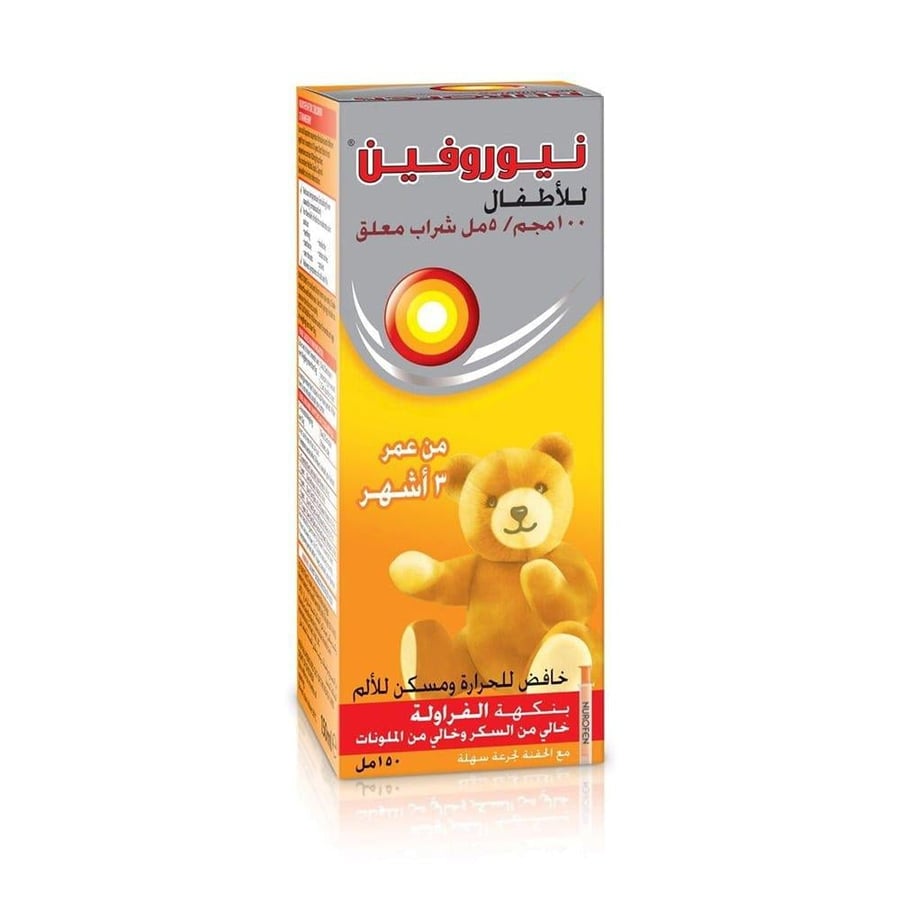
Neurofen syrup suspension with strawberry flavor 150 ml
17.15ر.س
Product description
Ibuprofen 100 mg / 5 ml suspension solution Why is Ibuprofen used? Ibuprofen is used to relieve mild to moderate pain (headache, toothache, muscle and back pain, and menstrual pain), to reduce fever, and to relieve pain and inflammation in cases of arthritis (such as rheumatoid arthritis, osteoarthritis...). Do not take Ibuprofen • If you are allergic to Ibuprofen or any other ingredients of this medication. • If you have an allergy to acetylsalicylic acid or other anti-inflammatory painkillers. • If you have previously experienced gastrointestinal bleeding after taking non-steroidal anti-inflammatory drugs. • If you have a stomach or intestinal ulcer or bleeding, or if you have had at least two episodes in the past. • If you have severe problems with the liver, kidneys, or heart. • If you are severely dehydrated. • If you have any active bleeding. • If you have conditions that increase the risk of bleeding. • If you are in the last three months of pregnancy. Precautions and warnings Tell your doctor about all your health conditions, including: • If you have chronic inflammatory bowel problems such as ulcerative colitis or Crohn’s disease. • If you have systemic lupus erythematosus (SLE). • If you have blood cell problems. • If you have blood clotting problems. • If you have high blood pressure or heart problems. • If you have liver or kidney problems. • If you have asthma or other breathing difficulties. Ibuprofen and similar drugs can cause ulcers and gastrointestinal bleeding, which can be serious. Ibuprofen and other similar drugs are associated with a slight increased risk of heart attack and stroke, especially when used at high doses for a long period. Possible side effects Stop using this product and seek immediate medical care if you develop a rash; itching; red or ulcerated or peeling skin; chest or throat tightness; difficulty breathing, swallowing, or speaking; unusual hoarseness; or swelling of the mouth, face, lips, tongue, or throat. The frequency of these side effects is unknown. Serious side effects: • Bleeding and gastrointestinal ulcers • Kidney problems • Severe skin reactions Other medications and Ibuprofen Tell your doctor about all medications you are taking. Ibuprofen interacts with many drugs, including: • Other non-steroidal anti-inflammatory drugs • Anticoagulants and blood platelets • Diuretics • Lithium • Digoxin • Steroids • Methotrexate • Immunosuppressants • Some antibiotics • Medications used to treat depression • Sulfonylureas • Fluconazole and Voriconazole • Some antiviral drugs • Ginkgo biloba (herbal product) How to take Ibuprofen • Take this medication as prescribed by your doctor. • Tablets are intended for adults and adolescents. Do not use in children under 6 years old or weighing less than 20 kg. • Suspension for children from 3 months old and weighing more than 5 kg. • Take the medication with food or after meals. • Adults and adolescents: The usual dose is one or two tablets 3-4 times daily (every 6 hours). Do not exceed 1200 mg/day with 200 mg tablets, and 2400 mg/day with 400 mg or 600 mg tablets. • Children aged 6-12 years (>20 kg): The usual dose is one 200 mg tablet 1-3 times daily. Do not exceed 3 tablets (600 mg) per day. • The dose in children depends on the child's weight. Ranges from 5-15 ml, 3 times daily. How to store Ibuprofen • Store at room temperature from 68 to 77 degrees Fahrenheit (20 to 25 degrees Celsius). • Discard the suspension within three months of opening. • Keep this medication out of reach of children. • Do not use this medication after the expiration date printed on the package. *The form and method of administration of 400 mg tablets, 600 mg tablets, 200 mg capsules, and 100 mg / 5 ml suspension should be prescribed according to the indication and severity of the disease for each patient individually.

From Buraydah