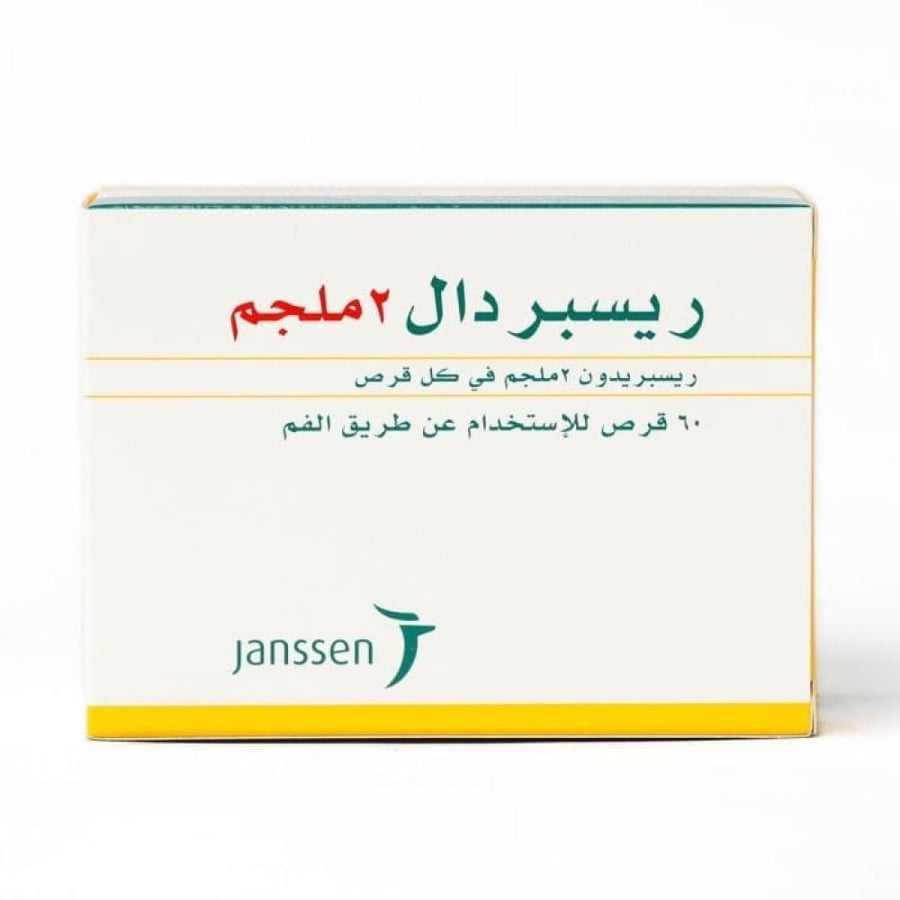
Respredal 2 mg - 60 tablets
39.75ر.س
Out of Stock
Product description
Risperidone 2 mg tablets
What is risperidone and what are its indications:
Risperidone belongs to a group of medicines called "antipsychotics" and is used to treat the following:
Schizophrenia, where you may see or hear or feel things that are not there or believe things that are not true or feel suspicious or unusually confused
Mania, where you may feel extreme excitement or happiness or agitation or enthusiasm or excessive activity. Mania occurs in a condition called "bipolar disorder"
Short-term treatment of aggression in long-term care for people with Alzheimer's dementia, who harm themselves or others.
Alternative treatments should be used for
Short-term treatment of long-term aggression in mentally disabled children and adolescents with behavioral disorders.
Do not take risperidone:
If you are allergic to risperidone or any other ingredients of this medicine.
Warnings and precautions:
Talk to your doctor or pharmacist before taking risperidone if:
You have heart problems or kidney problems or liver problems
You have high blood pressure or cardiovascular problems or blood vessel problems in the brain
You have ever experienced involuntary movements of the tongue, mouth, or face
You have previously experienced a condition involving symptoms such as high temperature, muscle stiffness, or difficulty moving
You have Parkinson’s disease or dementia or epilepsy
You have diabetes
You are a man with a prolonged or painful erection
You have an abnormally high level of the hormone prolactin in your blood test
You or anyone in your family has a history of blood clots.
Possible side effects of risperidone:
These include difficulty sleeping or staying asleep, tremors, feeling sleepy or drowsy, headache, pneumonia, bronchitis, cold symptoms, sinusitis, urinary tract infection, ear infection, feeling like you have the flu, elevated levels of the hormone called "prolactin" in blood tests, weight gain, increased appetite, decreased appetite, sleep disturbances, irritability, depression, anxiety, insomnia, muscle tension disorder, dizziness, movement disorders, tremors (shaking), blurred vision, eye infection or "pink eye," rapid heartbeat, high blood pressure, shortness of breath, sore throat, cough, nosebleeds, nasal congestion, stomach pain, discomfort in the abdomen, vomiting, nausea, constipation, diarrhea, indigestion, dry mouth, toothache, skin rash, skin redness, muscle cramps, bone or muscle pain, back pain, joint pain, swelling of the body, arms, or legs.
Other medications and risperidone:
Inform your doctor or pharmacist if you are taking:
Medications that act on your brain such as sedatives (benzodiazepines) or some pain medications (opioids), allergy medications (some antihistamines)
Medications that may alter the electrical activity of your heart, such as malaria medications, arrhythmia medications, allergy medications (antihistamines), and some antidepressants
Medications that cause slow heart rate
Medications that cause low potassium levels in the blood (such as some diuretics)
Medications for high blood pressure. Risperidone can lower blood pressure
Parkinson’s disease medications (such as levodopa)
Medications that increase central nervous system activity (psychostimulants, such as methylphenidate)
Water tablets (diuretics) used for heart problems or swelling of body parts.
How to take risperidone:
For the treatment of schizophrenia
Adults: The usual starting dose is 2 mg per day and can be increased to 4 mg on the second day.
Your doctor may then adjust your dose based on how you respond to the treatment.
This total daily dose can be divided into one or two doses per day.
Your doctor will tell you what is best for you.
Elderly: Usually, the starting dose is 0.5 mg twice daily.
Your doctor may then gradually increase your dose to 1 mg to 2 mg twice daily.
For the treatment of mania
Adults: The starting dose is usually 2 mg once daily.
Your doctor may then gradually adjust your dose based on your response.
Most people feel improvement with doses from 1 to 6 mg once daily.
Elderly: The starting dose is usually 0.5 mg twice daily.
Your doctor may then gradually adjust your dose to 1 mg to 2 mg twice daily depending on your response.
For the treatment of long-term aggression in people with Alzheimer's dementia (including the elderly):
The usual starting dose is 0.25 mg (0.25 ml of risperidone oral solution 1 mg/ml) twice daily.
Your doctor may then gradually adjust your dose based on your response.
Most people improve with 0.5 mg twice daily.
Use in children and adolescents:
Children and adolescents under 18 years old should not be treated with risperidone for schizophrenia or mania.
For behavioral disorder in children weighing less than 50 kg:
The usual starting dose is 0.25 mg (0.25 ml of risperidone oral solution 1 mg/ml) once daily.
The dose can be increased every two days in steps of 0.25 mg per day.
The usual maintenance dose is 0.25 to 0.75 mg once daily.
For children weighing 50 kg or more:
The usual starting dose is 0.5 mg once daily.
The dose can be increased every two days in steps of 0.5 mg per day.
The usual maintenance dose is 0.5 to 1.5 mg once daily.
How to store risperidone:
Keep this medicine out of sight and reach of children.
Do not use this medicine after the expiration date printed on the package, box, or bottle.
Do not store above 30°C.
*The dosage form and method of administration of 1 mg/ml risperidone oral solution should be prescribed according to the indication and severity of the disease for each patient individually.

From Buraydah