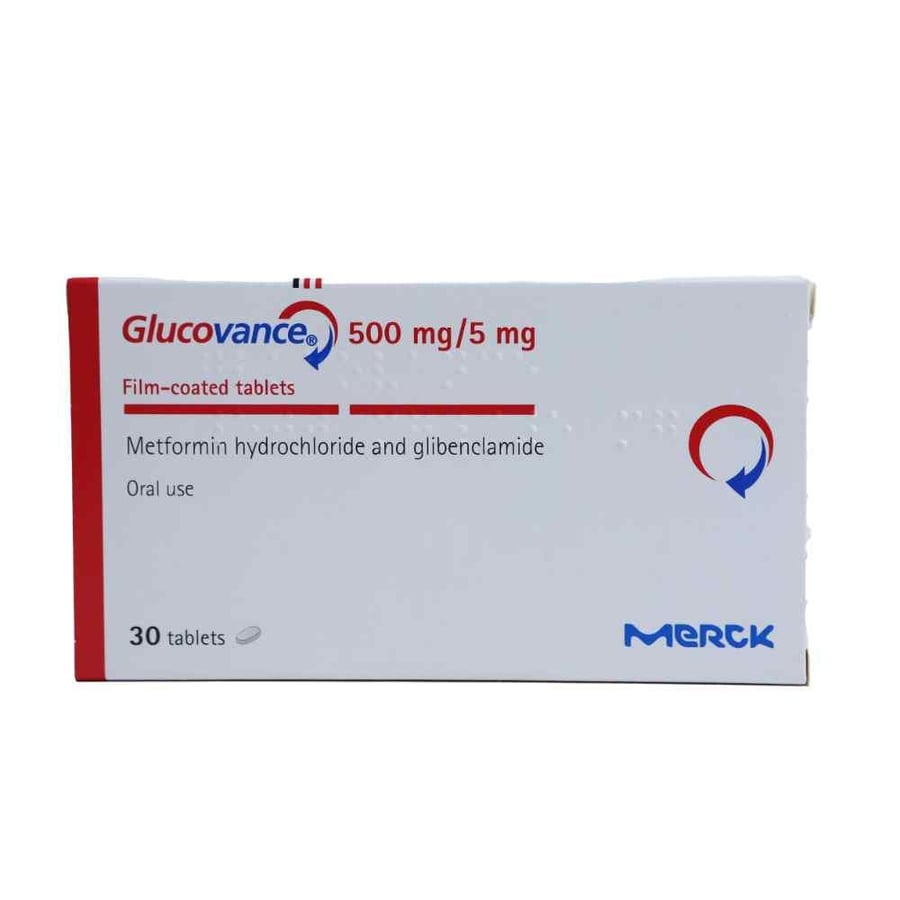
Glucovance 500 mg - 30 capsules
23.45ر.س
Product description
Glucovance 500 mg 30 tablets
Product name
Glucovance 500/5, reduces blood sugar level - 30 tablets
Scientific name
Glibenclamide 5 mg + Metformin 500 mg tablets
Glucovance 500 mg 30 tablets belongs to
Oral diabetes medications
Mechanism of action of Glibenclamide and Metformin (Glucovance 500 mg)
Like all sulfonylureas, Glibenclamide acts as an insulin secretagogue.
It lowers blood sugar levels by stimulating insulin secretion by pancreatic beta cells and by stimulating increased activity of insulin receptors inside cells.
Metformin reduces blood glucose levels by decreasing glucose production in the liver.
Metformin decreases intestinal absorption of glucose.
Metformin increases insulin sensitivity, leading to increased glucose absorption and utilization.
Medical uses of Glucovance 500 mg
Glucovance 500 mg is used to lower blood sugar levels in type 2 diabetes patients (non-insulin dependent).
It is used when diet and exercise alone fail to control diabetes.
How to use Glucovance 500 mg
Glucovance 500 mg is for adults only.
Take it as your doctor advised.
Take the medication with meals.
It is important to follow the diet and exercise plan prescribed by your doctor and continue the treatment.
The usual starting dose is Glibenclamide 1.25 - 2.5 mg / Metformin 500 - 1000 mg.
It is given once or twice daily.
Doses may be changed in special circumstances, so always follow your doctor’s or pharmacist’s instructions.
If you take more than the prescribed dose, talk to your doctor or go to the hospital immediately.
If you forget to take a dose, take it as soon as you remember unless it’s time for the next dose.
Do not take a double dose (two doses at the same time) to make up for the missed one.
Side effects of Glucovance 500 mg
Although the following side effects are not common for everyone, some patients may experience:
Decrease in blood cell counts (platelets, red blood cells, white blood cells)
Nausea
Diarrhea
Vision and eyesight problems
Allergy
Low blood sugar
Liver problems
Using Glucovance 500 mg during pregnancy and breastfeeding
If you are pregnant or breastfeeding, or think you might be pregnant or planning to have a baby, ask your doctor or pharmacist for advice before taking this medication.
Your doctor will discuss the potential risks and benefits of using this medication during pregnancy and breastfeeding.
Helpful tips for diabetes patients
All carbohydrates affect blood glucose levels, so it’s important to know which foods contain carbohydrates.
Choose healthy foods that contain carbohydrates and be aware of the portion size (amount of carbohydrates) needed.
Reduce salt intake.
Eating too much salt can increase the risk of high blood pressure, which in turn increases the risk of heart disease and stroke.
When you have diabetes, you are already more vulnerable to these conditions.
Eat more fruits and vegetables.
This can help you get the vitamins, minerals, and fiber your body needs daily to stay healthy.
You can always try low-calorie or calorie-free sweeteners (also known as artificial sweeteners) to help reduce sugar, for example https://www.al-dawaa.com/arabic/steviana-sweetener-100-s.html or https://www.al-dawaa.com/arabic/tropicana-slim-zero-cal-sweetener-300-t.html
Don’t forget to stay active.
Being more active helps you control blood sugar levels.
Remember to regularly measure blood glucose levels using home devices such as https://www.al-dawaa.com/arabic/accu-chek-instant-mg-dl-sc-kit.html, https://www.al-dawaa.com/arabic/thiozac-600-mg-food-supplement.html, and https://www.al-dawaa.com/arabic/neurobion-30-tablets.html.
These will help reduce nerve problems caused by diabetes.
If you experience symptoms of hypoglycemia such as weakness, dizziness, increased sweating, rapid heartbeat, vision disturbances, or difficulty concentrating, usually eating or drinking something containing sugar helps.
Warnings and precautions while using Glucovance 500 mg
Consult your doctor about all your medical conditions before taking Glucovance 500 mg, including:
If you are recovering from injury, surgery, or infection with fever
If you have liver or kidney problems
If you have a deficiency of an enzyme called glucose-6-phosphate dehydrogenase (G6PD)
If you have heart disease
Tell your doctor or pharmacist if you are taking, have recently taken, or might take any other medications, including over-the-counter drugs, prescribed medicines, herbal supplements, vitamins, and dietary supplements.
Storage instructions for Glucovance 500 mg
Store Glucovance 500 mg at temperatures below 25°C.
Do not refrigerate Glucovance 500 mg.
Keep this medication out of sight and reach of children.
Store in the original container to protect from moisture.
Do not use this medication after the expiration date printed on the package/strip/label.
The expiration date indicates the last day of the month.
Your health in numbers
Random blood sugar test: A blood sample will be taken at a random time. Regardless of when you last ate, a blood sugar level of 200 mg/dL or higher indicates diabetes.
A blood sugar level less than 140 mg/dL is considered normal, and a reading between 140 and 199 mg/dL indicates a risk of diabetes.
Fasting blood sugar test: A blood sample is taken after overnight fasting.
A fasting blood sugar level less than 100 mg/dL is normal.
A fasting blood sugar level from 100 to 125 mg/dL indicates prediabetes.
If the level is 126 mg/dL or higher in two separate tests, you may have diabetes.
Oral glucose tolerance test: For this test, you fast overnight, and blood sugar levels are measured during fasting.
Then you drink a sugary liquid, and blood sugar levels are periodically tested over the next two hours.

From Buraydah
Questions you might have