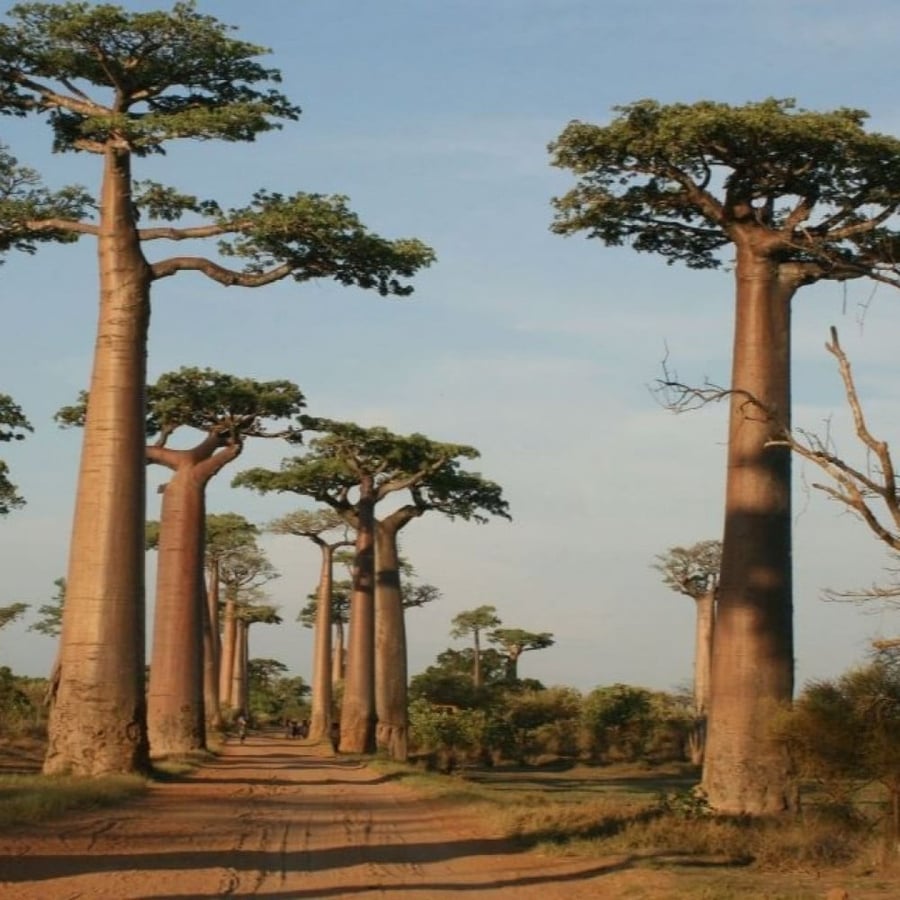
Seeds of the Tabladi tree - Baobab
7ر.س
Out of Stock
Product description
Common name: Tabladi
Scientific name: Adansonia
Among its names: Habbahbuh - Lovers' Tree - Kalhama - Baobab - Bottle Tree
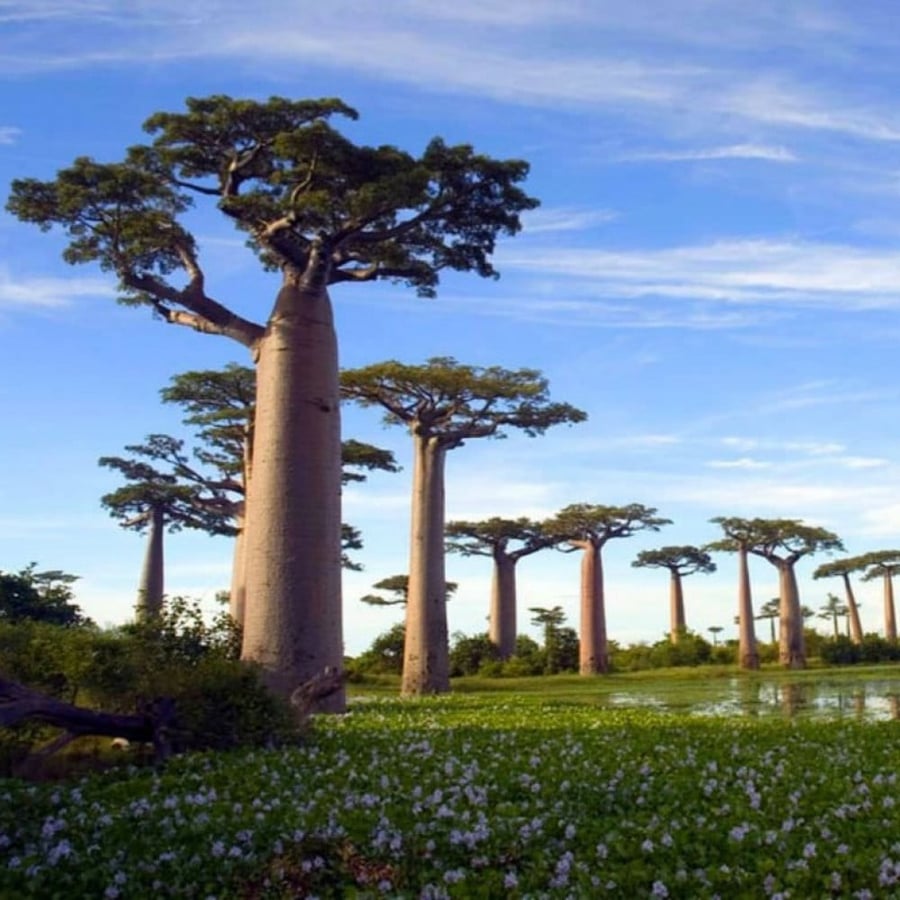
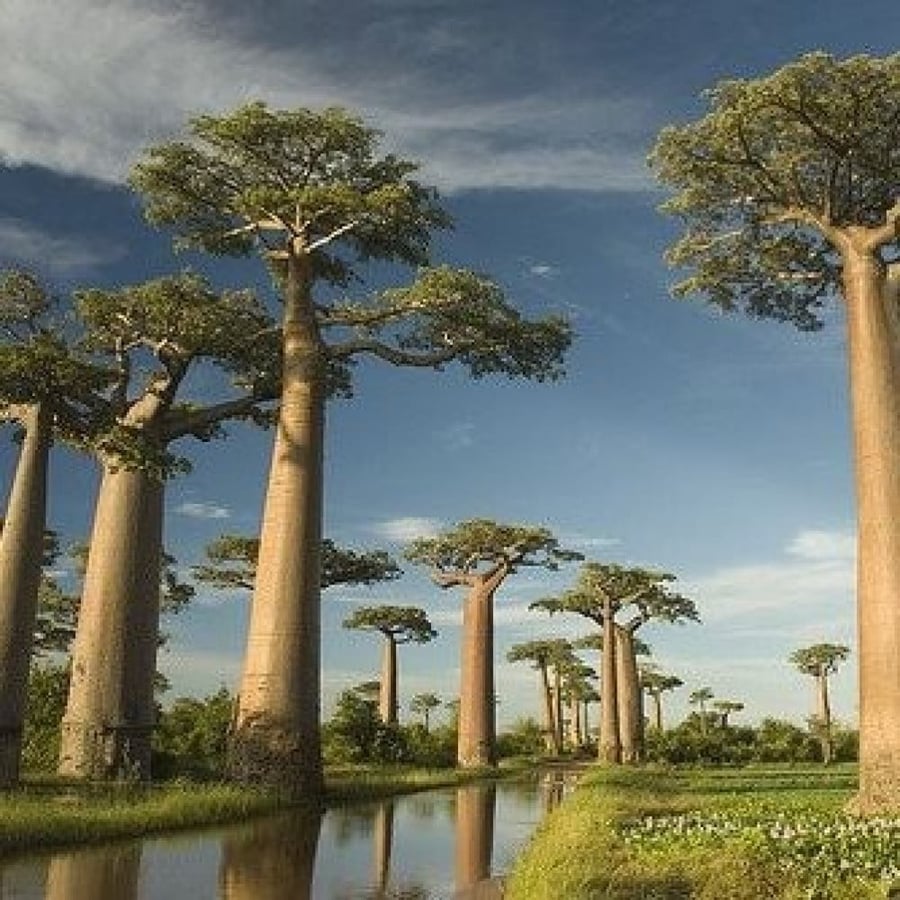
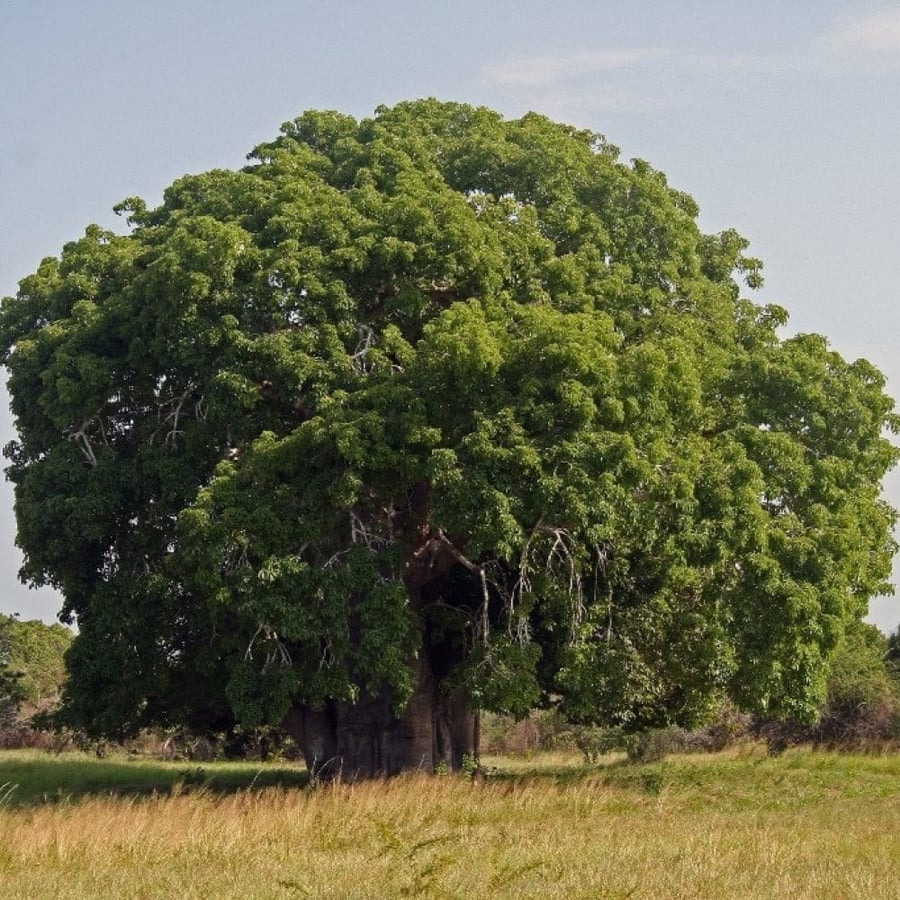
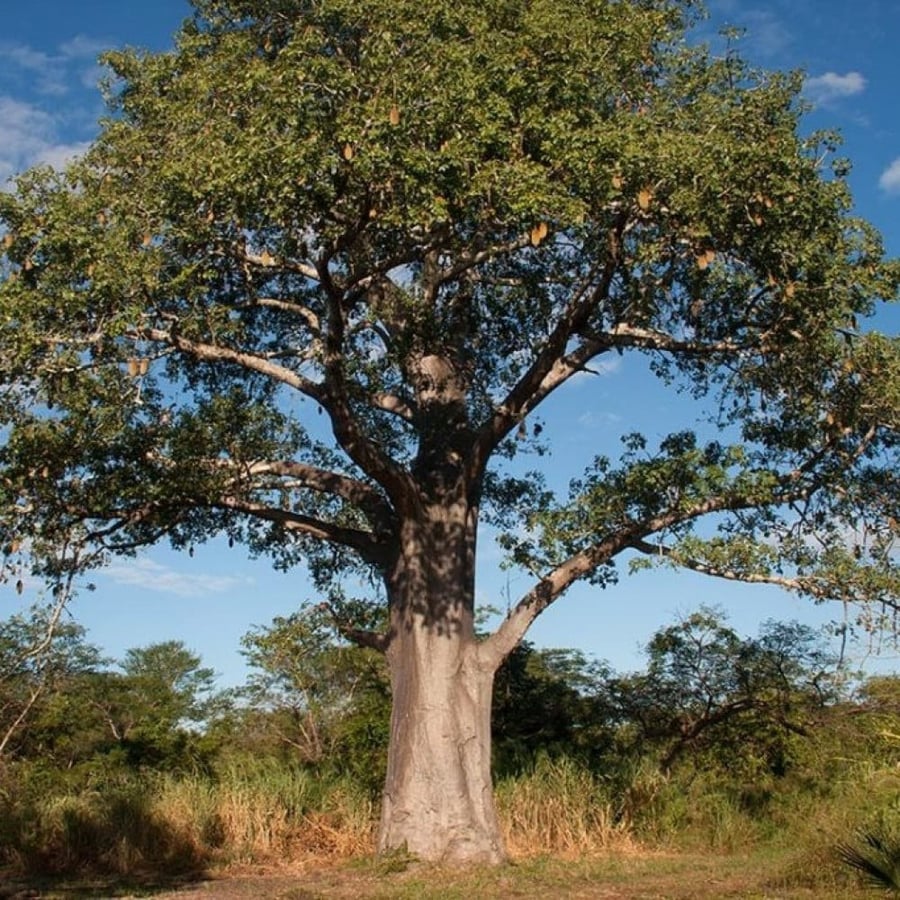
A tropical tree from the Malvaceae family, considered one of the largest and tallest trees in the world, reaching a height of 25-30 meters, and the trunk diameter can reach 11 meters, capable of accommodating 45 people if emptied from the inside. The most distinctive feature of the Tabladi tree is its absence of leaves for 9 months a year, as it retains its leaves only 3 months in the year, which is the autumn period.
• Flower of the Tabladi tree - Baobab: Large hanging flowers with a diameter ranging between 10-12 cm, with a thick long stalk. Its petal-like leaves are large, waxy, white, and curved upward. The center of the flower contains the pistil with a long, large style, surrounded by many stamens with white filaments and brown anthers, resembling a shaving brush.
• Fruit of the Tabladi tree - Baobab: A closed box that does not open on its own, large, oval or pear-shaped, up to 30 cm long. Its surface is velvety due to dense gray or brownish-yellowish fuzz covering its thick, hard shell. The inside of the fruit contains many kidney-shaped seeds about the size of a bean, with a dark brown shell. The seeds are separated by a fine, brittle, white-ivory substance with a slightly sour taste.
• Season for germinating the Tabladi tree - Baobab: The autumn and spring seasons are the best for planting the Tabladi tree. It can also be planted year-round in agricultural greenhouses, enclosed or plastic places where temperature can be controlled, sunlight is available, or lighting is sufficient for the plant.
• Suitable climate and soil for planting the Tabladi tree - Baobab: The Tabladi is a tropical tree but tolerates humid climates as well as drought and frost. It prefers moist, well-drained, ventilated soil, usually irrigated by rain.
• Method of planting the Tabladi tree - Baobab: It propagates by seeds. It is preferable to scratch a small cut in the seed deep enough to expose the white inner layer, then soak it in room-temperature water overnight. Since it is a tree seed, the planting depth should be between 2 cm and 3 cm.
• Its benefits and uses: Its fruits are used in making juices, and various food products are made from it. In western Sudan, it is used to store water during the summer. It is also an ornamental tree planted along roads and in large gardens.
• Original habitat of the Tabladi tree - Baobab: Its native region is Africa, and it is cultivated in the western and southern regions of the Kingdom of Saudi Arabia and in several Gulf and Arab countries. Since 1940, the Tabladi tree has been protected in South Africa. There are ten species of the Tabladi, six of which are in Madagascar, and the other species are found in Africa, Australia, and India.

From Buraydah