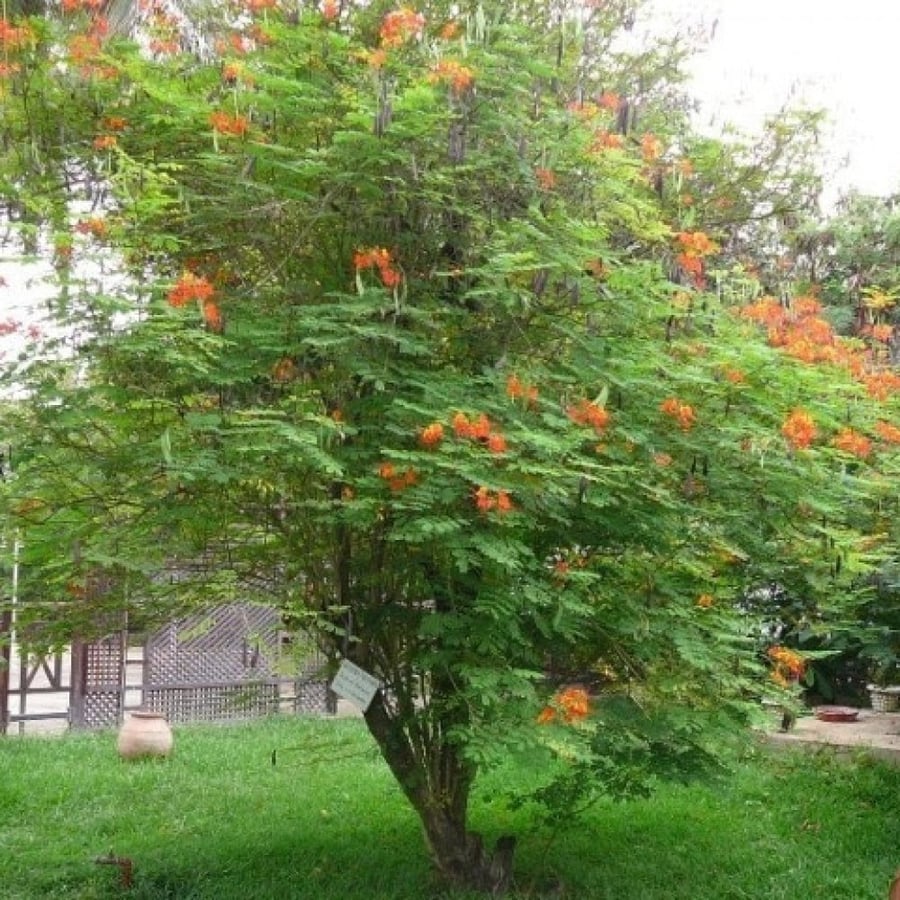
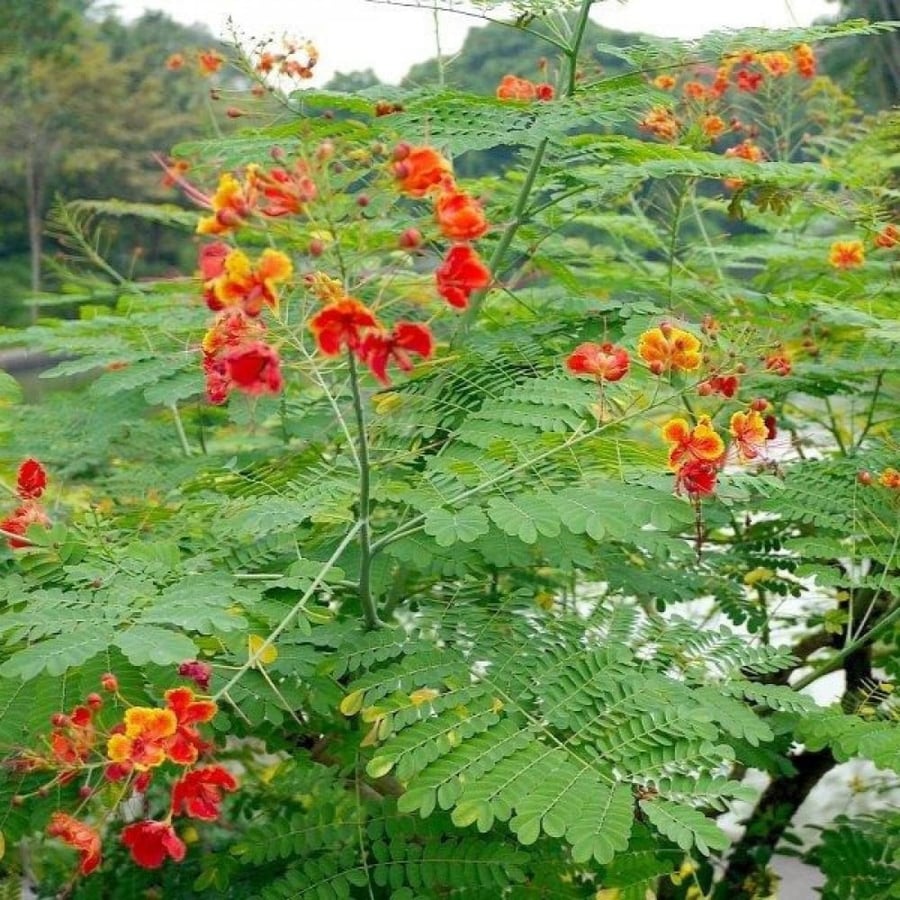
Red Caesalpinia shrub seeds - Dwarf Poinciana (Caesalpinia pulcherrima)
8ر.س
Product description
Common name: Red Caesalpinia - Dwarf Poinciana
Scientific name: Caesalpinia pulcherrima
Other names: King’s Whiskers - Paradise Bird - Red Peacock Flower - Caesalpinia Gallesiana
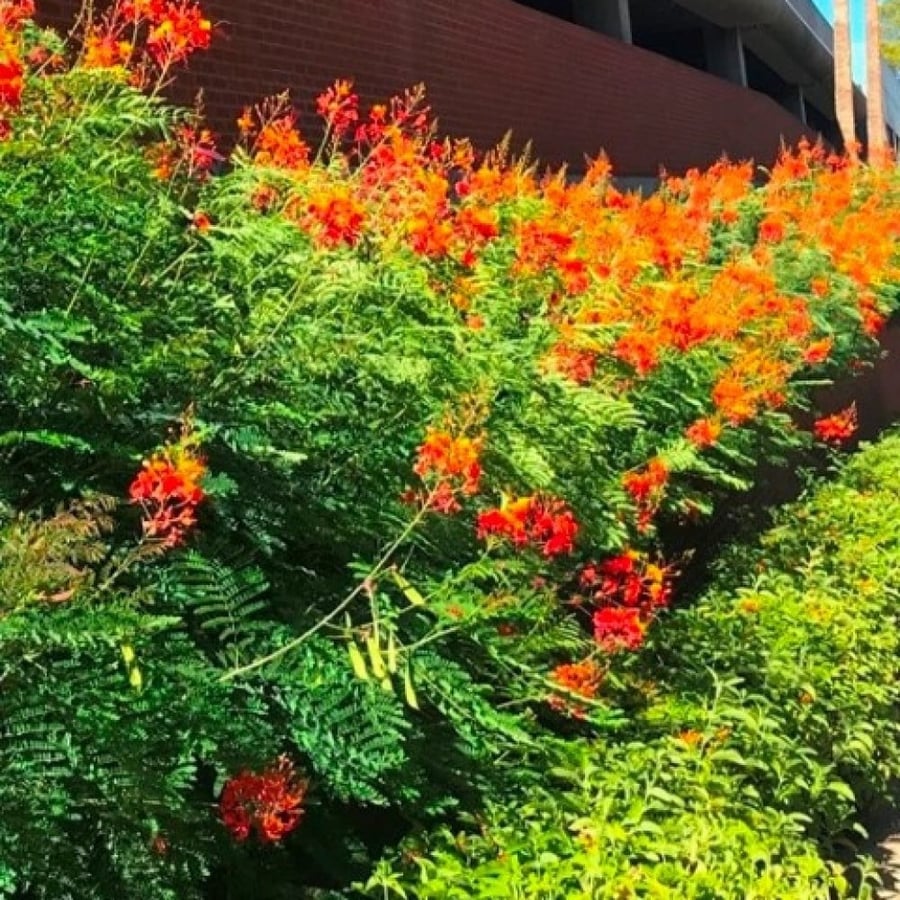
A fast-growing, evergreen flowering shrub, its leaves are pinnate, compound, and fall off, reaching up to 20 cm in length. They resemble the leaves of the Poinciana tree, hence the name Dwarf Poinciana. It exceeds 2 meters in height, blooms densely from an early age, and can be used as a standalone ornamental shrub or as a hedge. It is suitable for home cultivation.
What is the shape of the flowers of the Red Caesalpinia shrub?
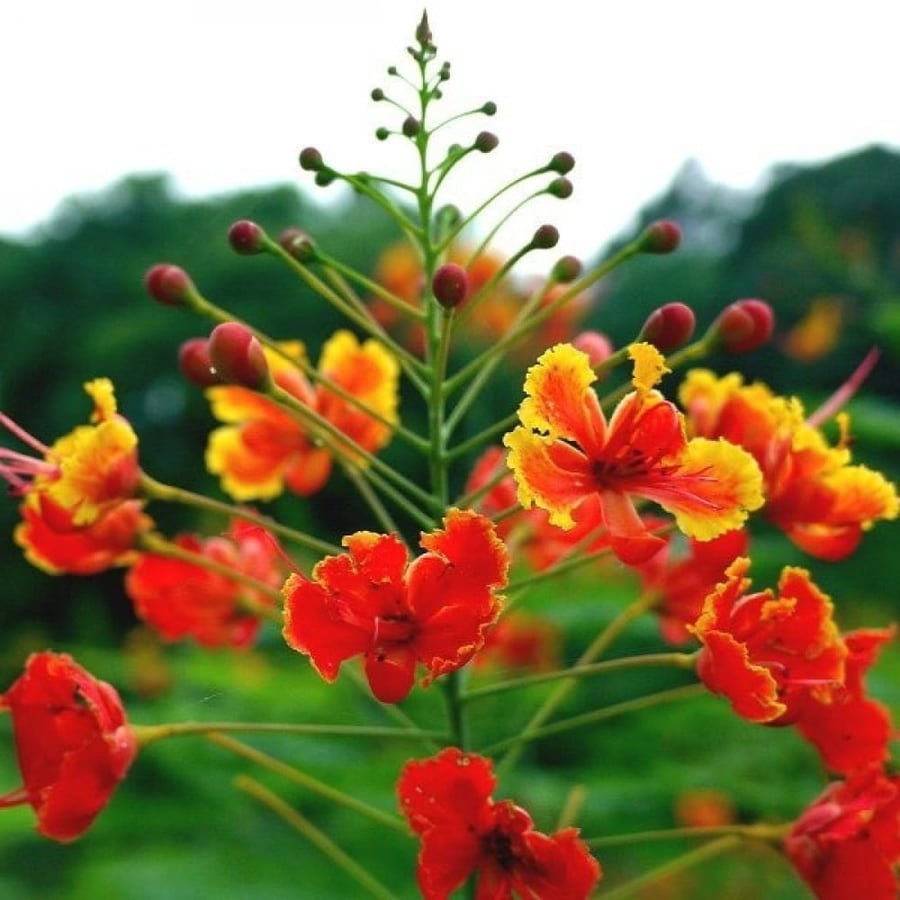
Its large red flowers cluster at the top of the tree and have long red stamens protruding from the center of the flower, hence called King’s Whiskers. They are characterized by their density and early blooming, and are attractive to bees.
What are the fruits and seeds of the Red Caesalpinia shrub?
Its fruits are hanging pods, initially green, then turn dark brown when ripe. Inside, they contain a few flat, round seeds that are light green in color.
What is the best time to plant the Red Caesalpinia?
The best time to propagate the Red Caesalpinia shrub is in spring and autumn. It can also be planted year-round in agricultural shelters, enclosed or plastic places where temperature can be controlled, and where the plant receives adequate sunlight.
What is the suitable climate and soil for growing the Red Caesalpinia shrub?
Red Caesalpinia loves sunlight and warm weather, is sensitive to frost, and tolerates salinity and drought. It can grow in most types of soil.
How is the Red Caesalpinia shrub cultivated?
It propagates through seeds planted at a depth of 1-2 cm from the soil surface. It can also be fertilized with organic fertilizer to accelerate growth.
What are the benefits and uses of the Red Caesalpinia shrub?
It is cultivated for decoration and beautifying public and private gardens.
Where is the native habitat of the Red Caesalpinia shrub?
South America.

From Buraydah