

Bee bread seeds - borage - hamham
7ر.س
Product description
Common name: Borage
Scientific name: Borage officinalis
Other names: Abu Al-‘Irq - Lisan Al-Thawr - Al-Hamham - Al-Qas’ain
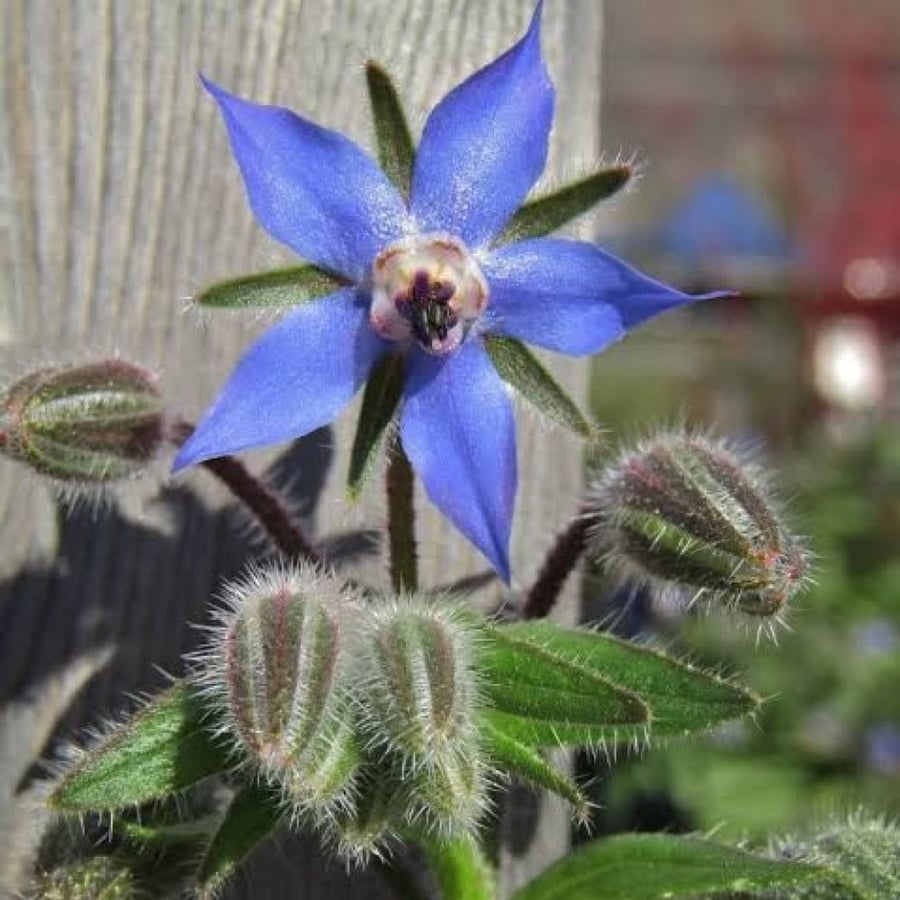
The naming of this plant as "Bee Bread" comes from its richness in pollen dust and nectar, which bees use to feed the larvae of males and workers. In beekeeping, the term "Bee Bread" refers to the brood food made of honey and pollen dust, hence the name. It is a seasonal plant with a hollow, succulent stem that reaches about one meter in length. Its leaves are oval-shaped, over 10 cm long, covered with dense hairs or fuzz that cause skin itching when touched.
Bee Bread flower: small, not exceeding 2 cm in diameter, star-shaped, located at the tips of branches with three petals, brightly colored in blue or purple, blooming in spring.
Date Palm Seed: seeds are inside the fruits, which are green at the beginning of growth, and turn dark brown when dried. They have a hard, rough shell and retain viability for up to five years.
Germination season: Bee Bread seeds are planted in September and October, and can also be cultivated year-round in protected agricultural environments, enclosed or plastic places where temperature can be controlled, and where they receive sunlight or adequate lighting for the plant.
Suitable climate and soil for growing Bee Bread: It is a winter wild plant that can tolerate low temperatures and moderate climates but does not withstand high temperatures. It can be cultivated in light clay soils, fertile yellow lands, and newly reclaimed land. It is frost-resistant and watered regularly.
Method of cultivating Bee Bread: It reproduces through seeds planted at a depth of no more than 1 cm from the soil surface after soaking them in water for at least 24 hours. It can also be fertilized with organic fertilizer at least once during flowering to accelerate growth and development.
Its benefits and uses: It is cultivated to feed bees, planted near apiaries in England, France, the Levant, and recently in Egypt due to its medicinal uses and benefits for honey.
Original habitat: Its original habitat is the Alps and the Levant. It is cultivated in Egypt, Saudi Arabia, and many Arab countries.

From Buraydah