

Eucalyptus citriodora
6ر.س
Out of Stock
Product description
Common name: Camphor – Lemon Eucalyptus
Scientific name: Eucalyptus citriodora
Other names: Lemon Eucalyptus - Balkeenya
The Balkeenya or Camphor is one of the widely cultivated trees, belonging to the Myrtaceae family. It is a fast-growing, evergreen, large tree reaching up to 45 meters in height. It has a large, open, rounded crown and a light red bark that can reach 50 cm in thickness, which sheds in flakes around the middle of the tree, sometimes falling in elongated sheets.
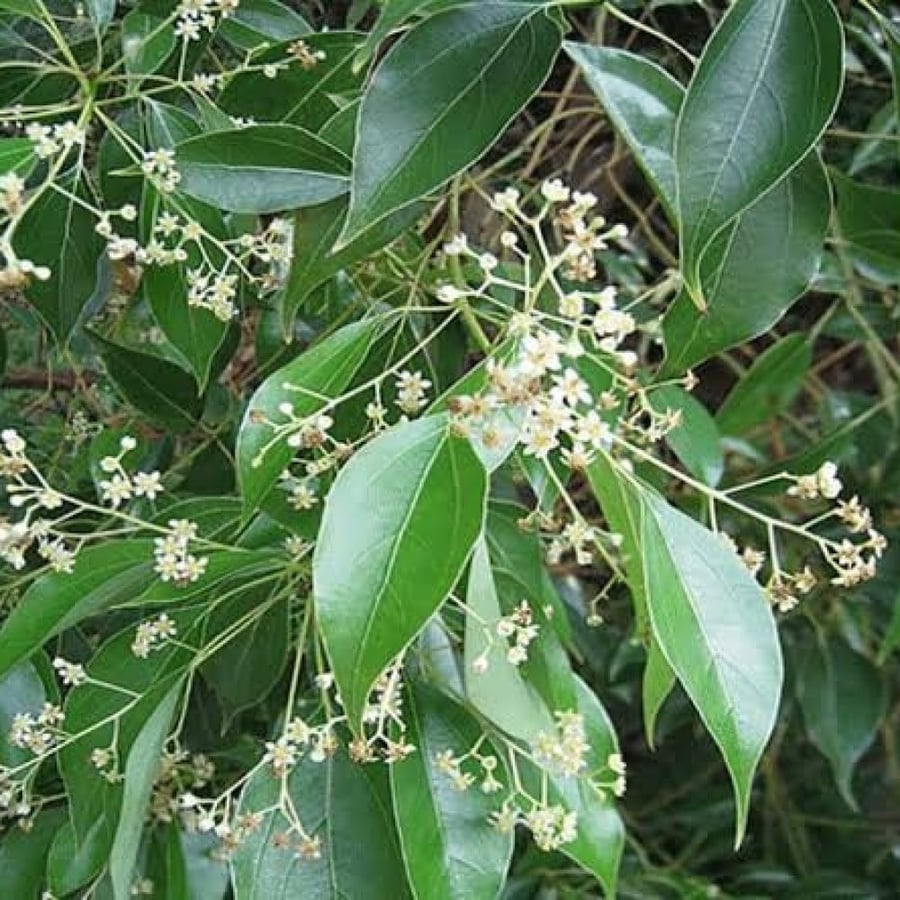
Its leaves are simple, alternate (petiole length 1-2 cm), lanceolate in shape, with a full margin, length (10-25 cm), and width (0.5-1.5 cm). They have a fragrant smell when rubbed by hand.
Camphor - Lemon Eucalyptus flowers: Cream-colored flowers that produce nectar with a honey-like taste, blooming from January to March.
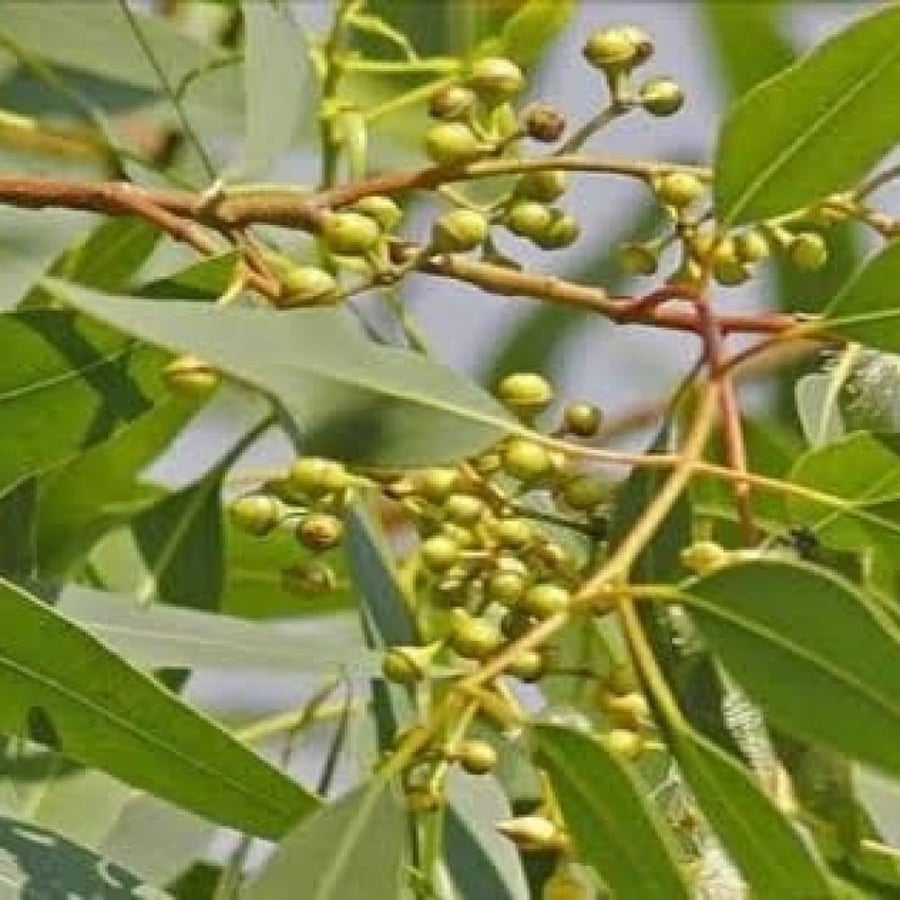
Camphor - Lemon Eucalyptus fruit and seeds: The fruits are round, containing small light brown seeds that disperse from the top of the fruit, measuring 2 cm – 2.5 cm.
Camphor - Lemon Eucalyptus propagation season: Cultivation is done at the beginning of spring in April and May. It can also be planted throughout the year in nurseries, enclosed spaces, or plastic-covered areas where temperature can be controlled and sunlight or adequate lighting is available.
Suitable climate and soil for Camphor - Lemon Eucalyptus: It can tolerate drought and is a sun-loving plant. It is cultivated in sandy loam, loamy, and well-drained soils. The best soil is dry and moist, with acidic, alkaline, or neutral pH. Watering is once a month in winter, and once every two weeks in summer during the first and second years of planting. It relies on natural water from rain and groundwater until the roots deepen into the soil.
Method of planting Camphor - Lemon Eucalyptus: It propagates through seeds or cuttings. Seeds do not require any treatment before planting. They are planted at a depth of 1 cm – 3 cm. Camphor should be fertilized from the start of planting until the trees reach five years of age.
Uses and benefits: Used for decoration, wood and oil production, honey, and planting alongside roads and fences. It is also planted for environmental purposes such as phytoremediation, as it effectively absorbs excess groundwater through transpiration.
Native habitat of Camphor - Lemon Eucalyptus: Originates from northeastern Australia and is spread in Saudi Arabia and Gulf countries.

From Buraydah