
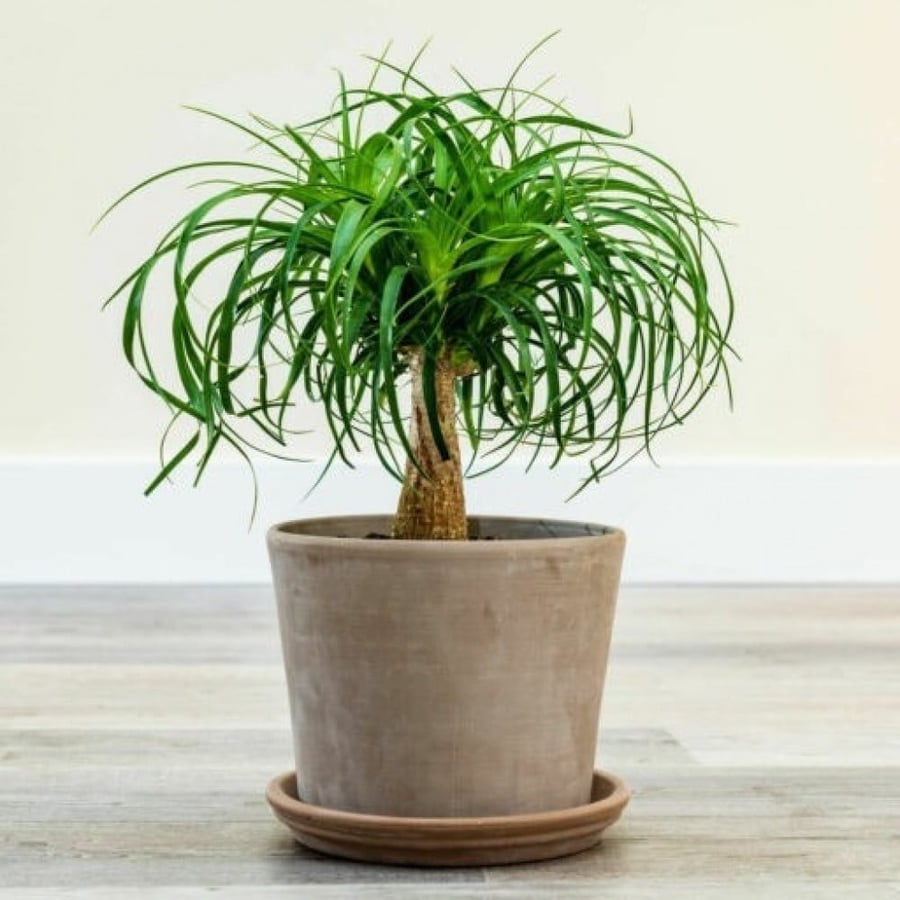
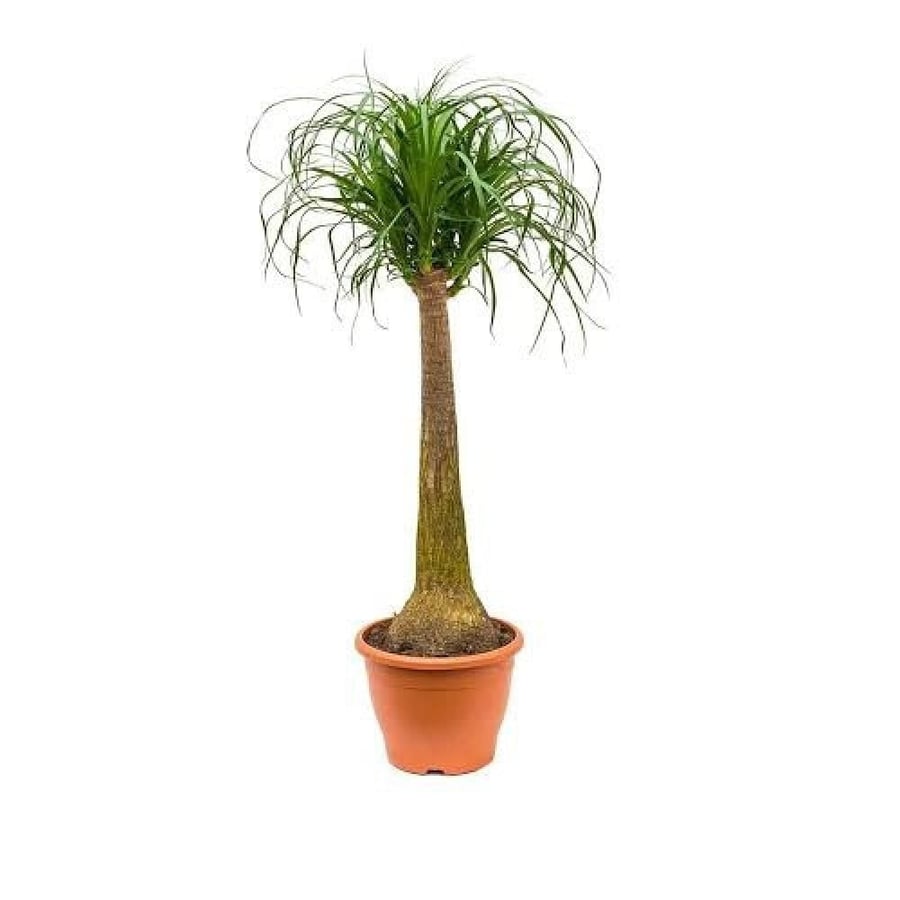


Beaucarnea recurvata
7ر.س
Product description
Common name: Nolina - Elephant's Foot
Scientific name: Beaucarnea recurva
Other names: Zalloua - Horse Tail Palm
Nolina or Elephant's Foot is a slow-growing plant with a long, swollen trunk at the bottom where it stores water sufficient for a long period. Its leaves are shiny, strap-shaped, dark green in color, and can exceed 3 meters in length. It is called Horse Tail Palm despite not belonging to the palm family.
**Nolina - Elephant's Foot planting season:**
It is cultivated from January to May, and can also be grown year-round in agricultural reserves and enclosed or plastic places where temperature can be controlled or where it receives sufficient light for the plant.
**Suitable climate and soil for growing Nolina - Elephant's Foot:**
It grows in a moderate climate. It is not necessary to expose it to direct sunlight; enough light can come from a window, strong lighting, or a semi-shaded place, which helps in indoor cultivation in hot climates. It needs fertile soil with good drainage.
**How to cultivate Nolina - Elephant's Foot:**
The plant propagates in two ways:
First method: Side shoots can be cut with their roots and placed in a separate pot or container to grow as an independent plant, but this is done during spring.
Second method: Propagation through seeds, which should be planted no deeper than 1 cm, with light and consistent moisture during the germination phase. After the plant grows, water it at intervals when the soil dries out, as it does not like constant humidity. Therefore, it can be left without watering for 10 days during winter.
**Its benefits and uses:**
Used for decoration and beautifying balconies and homes.
**Original habitat of Nolina - Elephant's Foot:**
Its native habitat is Africa, and it is cultivated as an indoor plant in Saudi Arabia and Gulf countries.

From Buraydah