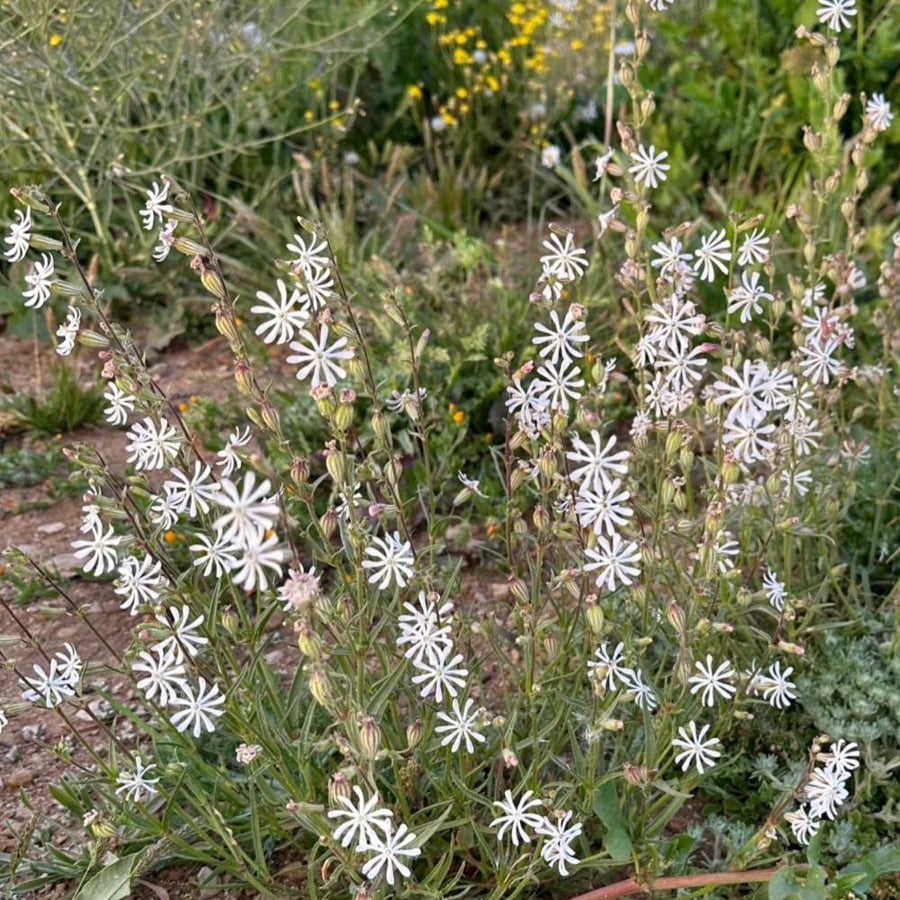

Seeds of Tura Herb Abu Dehina (Silene arabica Boiss)
9ر.س
Out of Stock
Product description
Common name: Abu Dehina soil
Scientific name: Silene arabica Boiss
Other names: Al-Fuqah - Al-Qurhani
A wild annual herb not rangeland from the Myrtaceae family, with multiple stems exceeding 30 cm in height, long lanceolate leaves, Abu Dehina soil differs from Nafud soil in its vertical growth and flowers with elongated petals. Abu Dehina soil appears rarely in deserts with hard ground during winter after rain falls on scattered seeds in the soil.
What is the shape of Abu Dehina soil's flower?
Its small flowers are white with ten thin petals, blooming in spring.
What is the shape of Abu Dehina soil's seeds?
Its seeds are tiny, black, spherical, and minuscule.
When is the planting season for Abu Dehina soil?
October and November are the best months for planting Abu Dehina soil seeds, and they can also be cultivated year-round in climate-controlled greenhouses and areas with a moderate climate.
What is the suitable climate and soil for growing Abu Dehina soil?
It requires a moderate atmosphere during the germination stage and light, well-drained soil.
What is the method of planting Abu Dehina soil?
Planting is done via seeds, and since Abu Dehina soil seeds are extremely tiny—one gram contains thousands of seeds—it is better to mix 0.5 grams of seeds with 50 grams of sand to facilitate scattering. The seeds should be watered continuously to prevent the soil from drying out during germination.
What are the benefits and uses of Abu Dehina soil?
It is cultivated for decoration in homes, gardens, and protected areas.
Where is the original habitat of Abu Dehina soil?
Saudi Arabia and Iraq.

From Buraydah