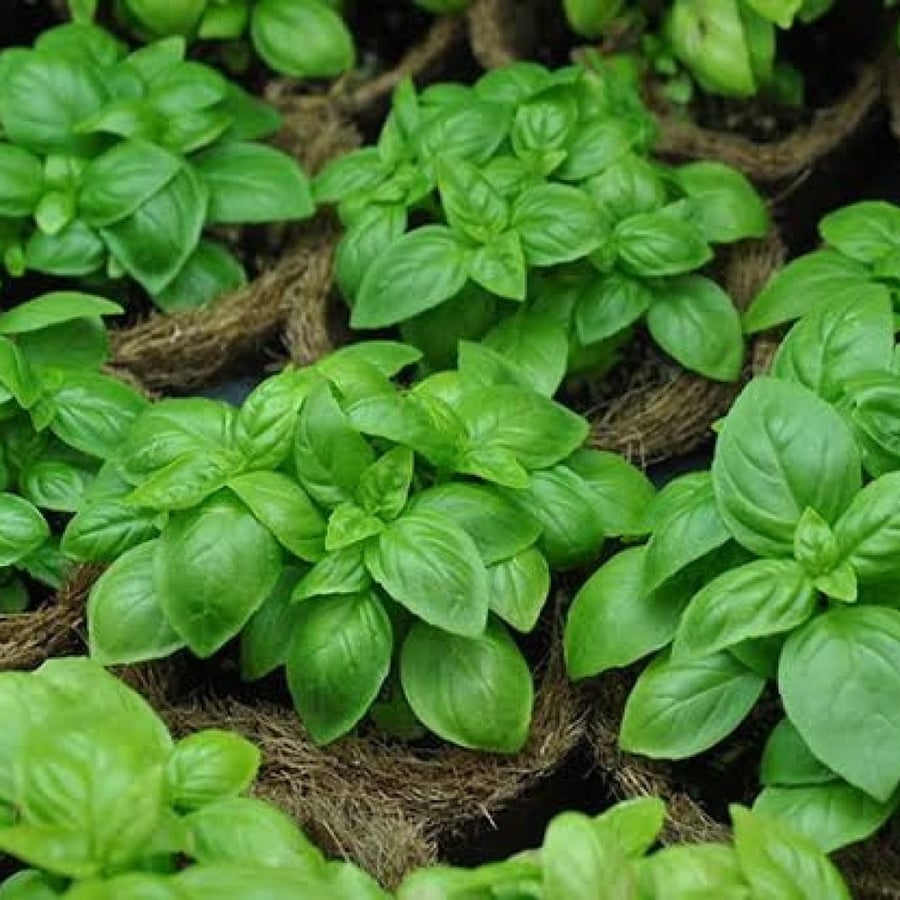
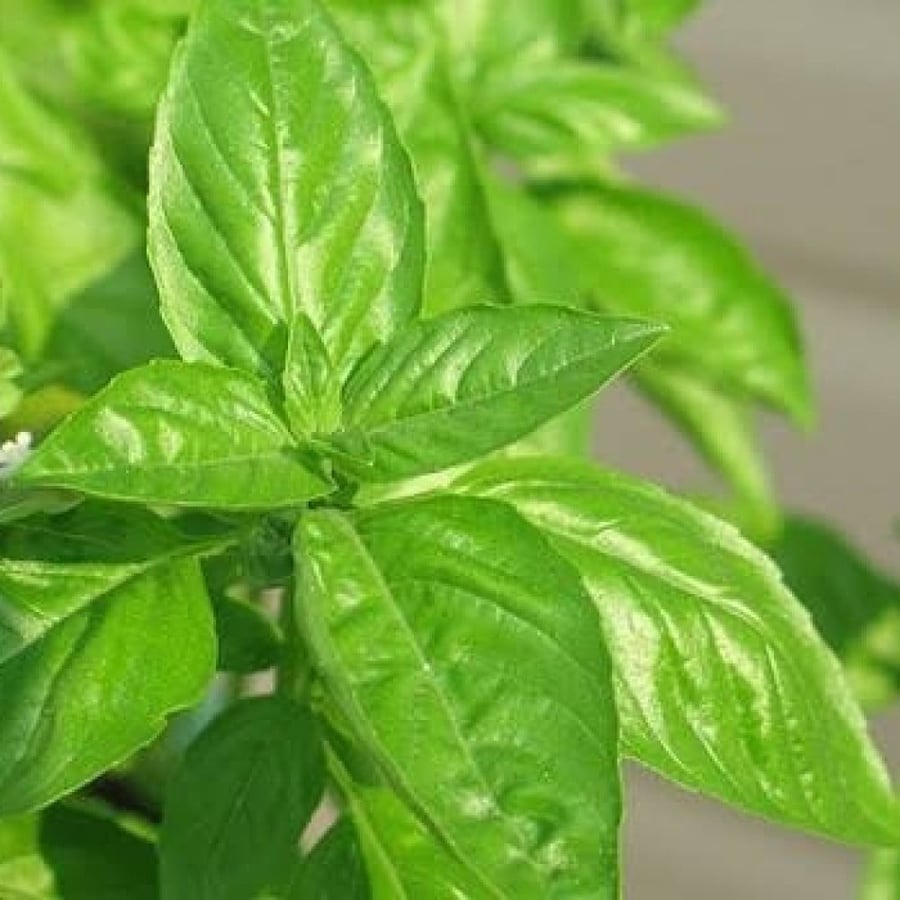


Basil herb seeds
6ر.س
Out of Stock
Product description
Common name: Basil
Scientific name: Ocimum basilicum
Among its names: Al-Hawki
The basil or as it is known as the basil plant is an annual or short-lived perennial plant, belonging to the Lamiaceae family, whose leaves are used as herbs. The length of the basil leaf ranges between 1 to 3 centimeters, while its width ranges between 1 to 6 centimeters. Basil is characterized by its thick roots and smooth, oval-shaped green leaves, which are branched from the center of the stem.
• Basil flower: Small white flowers clustered at the top of the plant, blooming in summer.
• Basil seeds: Very small seeds, 0.1 cm in size, black in color.
• Basil cultivation season: Grown in spring, and can also be cultivated year-round in agricultural greenhouses or enclosed or plastic places where temperature can be controlled and sunlight reaches, or where adequate lighting for the plant is available.
• Suitable climate and soil for basil: Basil prefers to grow in soil exposed to sunlight for long periods, but it also grows well in areas where the sun shines for only six hours. Additionally, the soil pH should be between 6 and 6.5, which is suitable for most vegetables. It also grows in moist, low-salinity soil, irrigated regularly.
• How to cultivate basil: Ensure the frost wave has ended, as it may threaten basil seeds if present. Then, sow the seeds directly into the soil at a uniform depth of about 0.6 cm. After five to seven days, the seeds will sprout. Once the delicate seedlings develop three or four leaves, they should be separated with a distance of approximately 15 to 30 cm by removing excess seeds. To maintain soil moisture and prevent weeds, cover the soil with a layer 5 to 8 cm thick, made of grass cuttings or straw. Organic fertilizer can be applied at least once.
• Benefits and uses: Grown for decoration as it is a flowering plant with a fragrant aroma. Used as a flavor in Eastern and Western dishes. Despite its many benefits, its seeds are rich in proteins, carbohydrates, and essential fats, and contain a high amount of dietary fiber, thus offering tremendous health benefits.
• Native origin of basil: It is believed that basil originates from India or Africa.

From Buraydah