

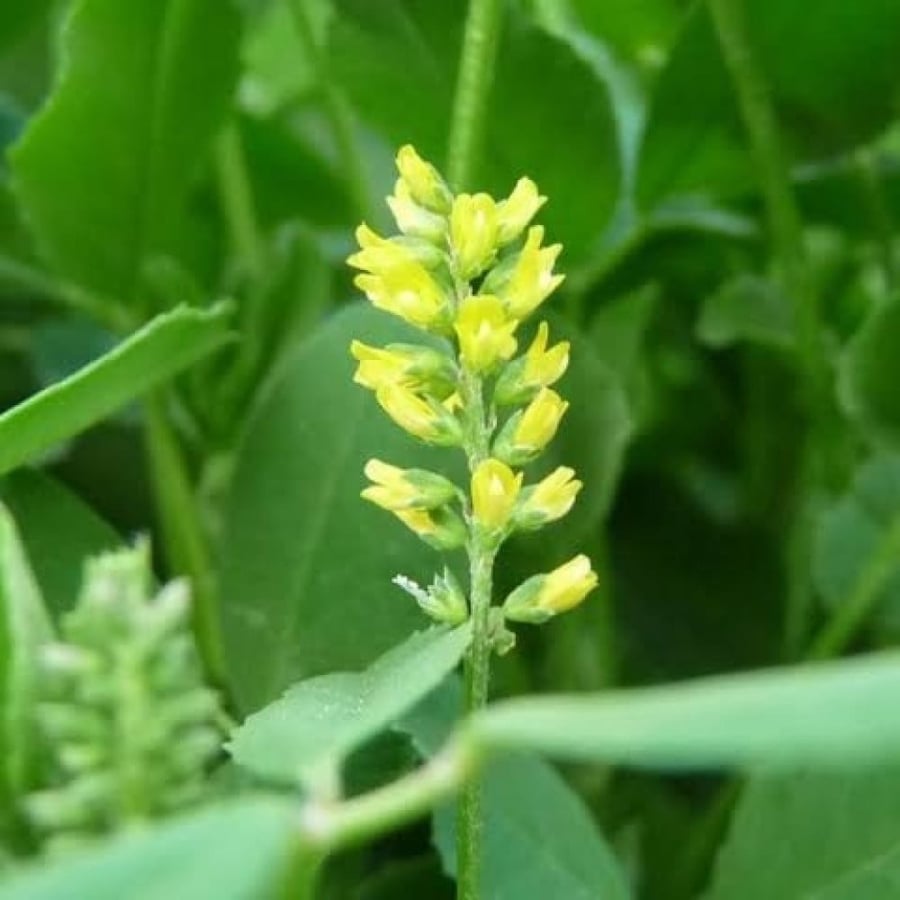

Seeds of the herb Al-Nafil (Trifolium)
6ر.س
Product description
Common name: Alfalfa herb
Scientific name: Trifolium
Also known as: Clover
Belongs to the legume family and includes about 300 species of plants, most of which are used as forage crops. It ranges in height from 30 to 40 cm. Its leaves are compound, consisting of three leaflets, and it is characterized by its fragrant smell.
• Flower of Alfalfa herb: Its flowers appear at the tops of dense, circular-shaped branches, with yellow and red colors, blooming in spring.
• Fruit and seeds of Alfalfa herb: Its fruits are gathered in a star-shaped, curved branch form, light brown in color, containing seeds inside.
• Growing season of Alfalfa herb: Seeds are planted in spring, and it can also be cultivated throughout the year in agricultural protected areas, enclosed or plastic places where temperature can be controlled, sunlight reaches, or where adequate lighting for the plant is available.
• Suitable climate and soil for Alfalfa herb: It grows in tropical regions and in fertile, well-drained, aerated soils, in somewhat cold weather. It tolerates high temperatures, drought, and frost. It is watered regularly.
• Method of cultivating Alfalfa herb: It propagates through seeds planted at a depth of 1 cm – 2 cm from the soil surface. It can also be fertilized with organic fertilizer at least once.
• Benefits and uses: Alfalfa is one of the most important nitrogen-fixing crops through root bacteria. Symbiotic nitrogen fixation is a feature of the legume family, which helps increase soil fertility. It has many medicinal benefits, as the plant works to purify the blood, and it is considered one of the best herbs to stimulate appetite.
• Original habitat of Alfalfa herb: Temperate and semi-tropical regions. It is also considered one of the most important wild plants in Saudi Arabia and the Gulf.

From Buraydah