Flower seed of snapdragon - Interhem (Antirrhinum majus)
7ر.س
Product description
+5000 Seeds
Common name: Snapdragon - Antirrhinum
Scientific name: Antirrhinum majus
Herbaceous biennial plant that grows indoors in summer, and is cultivated outdoors in winter when temperatures drop, and when temperatures rise, the plant is affected, so it is moved to protected places to continue growing, and the floral spike is tubular in shape, in the form of a spike-like inflorescence with various attractive colors when cultivated on a large scale. There are many varieties, some reaching more than 1 meter in height, and others are shrub-like in shape.
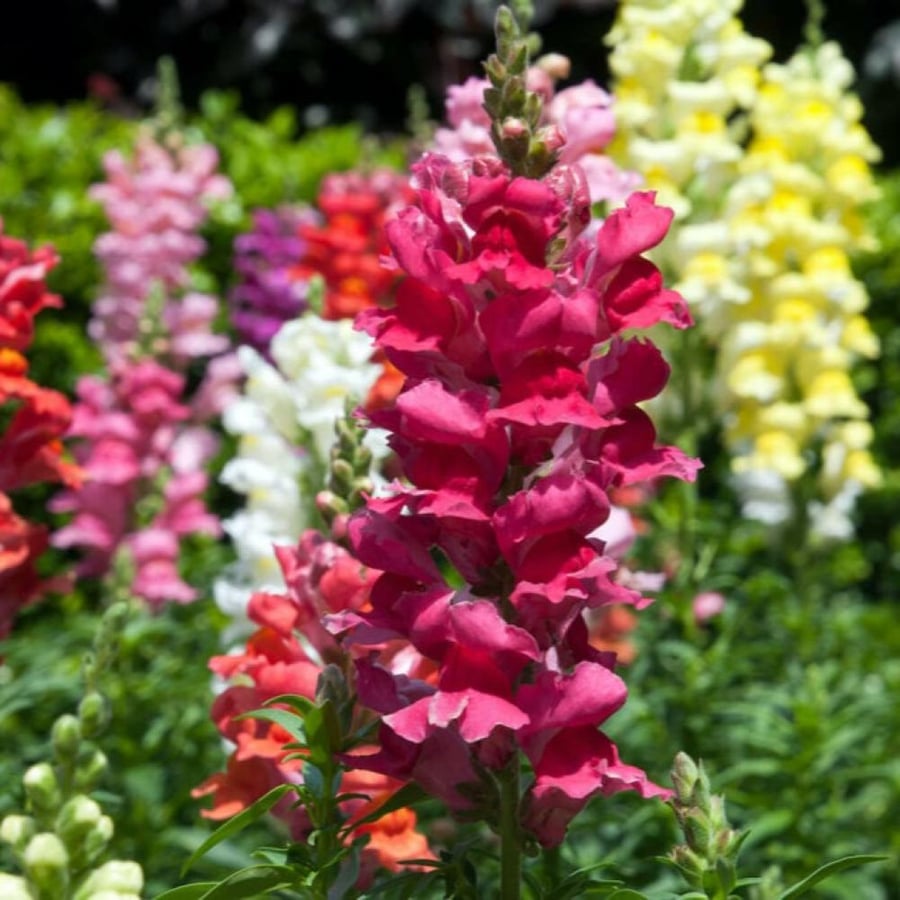
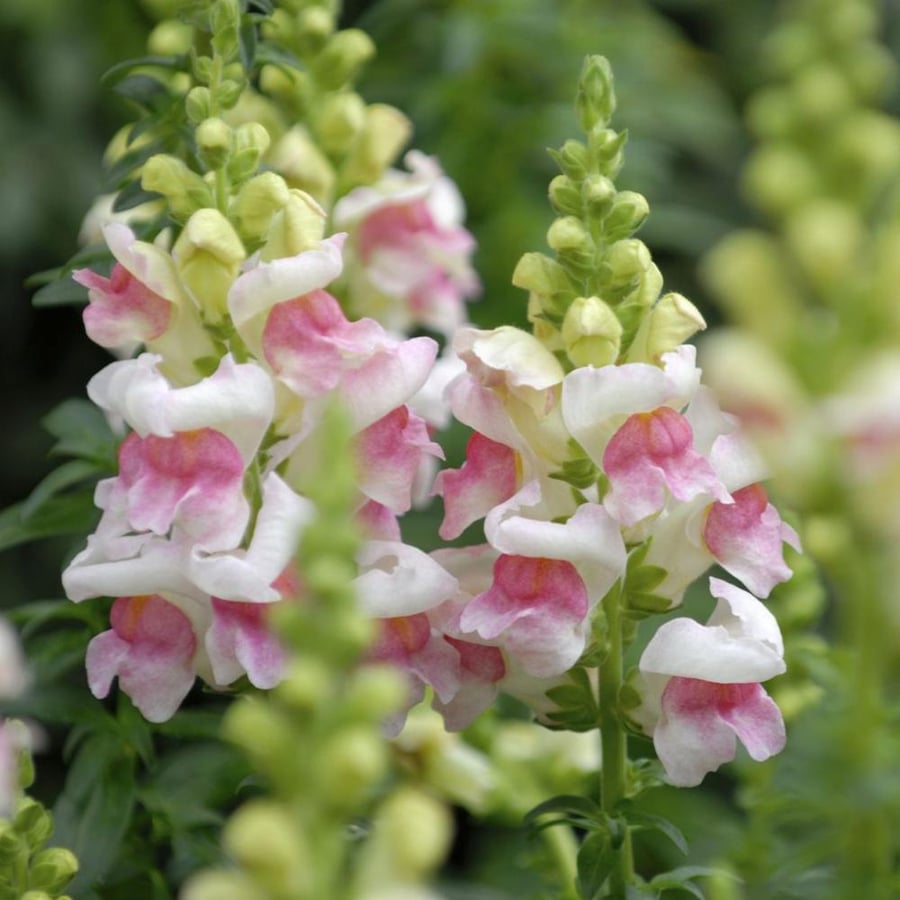
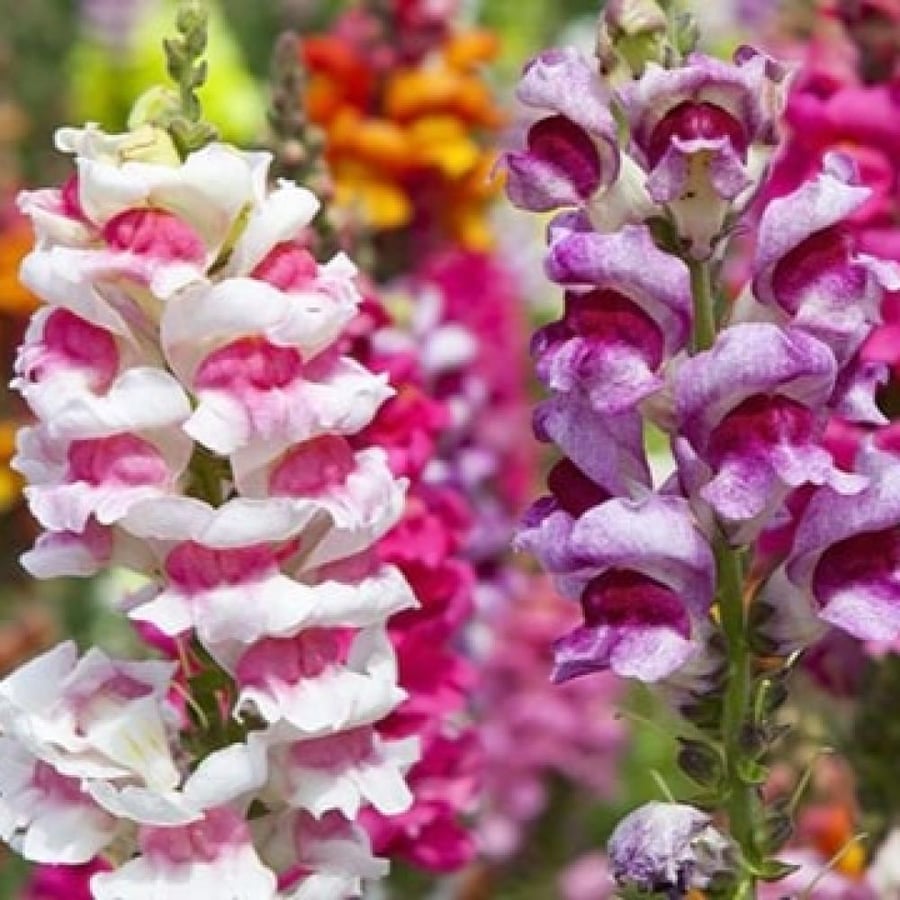
• Snapdragon flowers: Their flowers are found in simple spike-like inflorescences in many colors and diverse shapes, with a fragrant, sweet scent, and they attract bees. They bloom from March to October.
• Snapdragon seeds: The seeds come inside small boxes measuring 1.2 cm, and are black in color.
• Season for germinating Snapdragon: The best time to plant Snapdragon is in September and October through seeds, as well as by cuttings during spring. It can also be cultivated year-round in agricultural protected areas, enclosed or plastic places where temperature can be controlled, and where the plant receives adequate sunlight or lighting.
• Suitable climate and soil for Snapdragon: The plant needs rich, well-fertilized, neutral pH soil in sunny locations, watered regularly, with good drainage, and should not be overwatered in winter when densely planted on garden edges.
• How to cultivate Snapdragon: It propagates through seeds at a depth of 1 cm – 2 cm from the soil surface. It can also be fertilized with organic fertilizer at least once during flowering to accelerate growth.
• Benefits and uses: Snapdragon gives a distinctive appearance to the place due to its bright colors and stunning look, making it suitable for decorating locations and sites. Oil can be extracted from it, which has a value comparable to olive oil, and it is used in cosmetic products.
• Native habitat of Snapdragon: Its original habitat is Europe, the Mediterranean basin, and North Africa. It is cultivated in Saudi Arabia, Gulf countries, and many Arab countries.

From Buraydah