


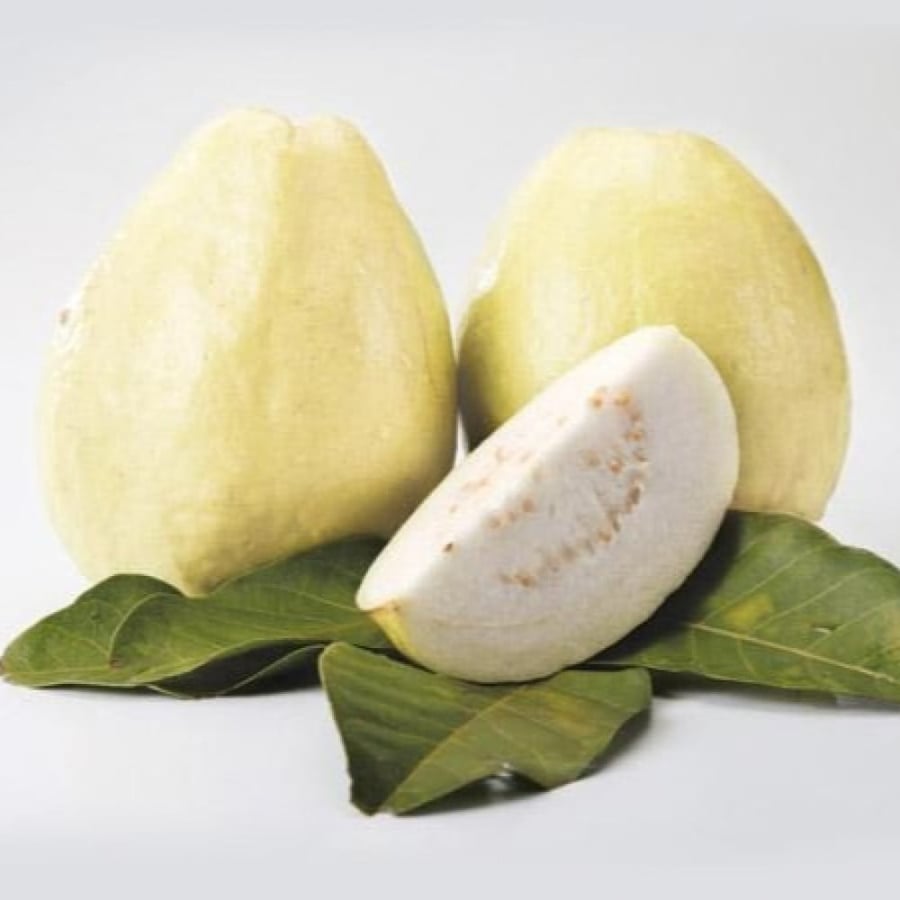
Yellow guava seeds
7ر.س
Product description
Common name: Yellow Guava
Scientific name: Psidium guajava
The guava is a perennial tree from the myrtle family, fast-growing, evergreen, reaching up to 40 years of age, but its fruit production decreases after 15 years. It has one or more trunks covered with smooth, thin, copper-colored bark that constantly peels to reveal the greenish layer underneath. Its leaves are simple, opposite, oval-shaped, with a length ranging from 5-15 cm. It is a popular, inexpensive fruit with high nutritional value that surpasses other fruits. Its evergreen foliage, bright flowers, and lush shade have led many people to plant it as an ornamental tree.
Yellow Guava Flower: Its flowers are small, white in color.
Yellow Guava Fruit and Seeds: Its fruits are pear-shaped or oval, sweet-tasting, with a yellow color inside and outside. They measure 5-10 cm in diameter and contain yellow seeds inside.
Germination Season: Guava is planted at the end of summer and throughout the fall. It can also be cultivated year-round in agricultural greenhouses and enclosed or plastic-covered places where temperature can be controlled, and where the plant receives adequate sunlight or lighting.
Suitable Climate and Soil for Growing Yellow Guava: It grows in various types of soil, including sandy, calcareous, or clayey soils. It needs sunlight and can tolerate high temperatures up to 50°C. Its growth stops at low temperatures but resumes with the return of warmth. It is sensitive to frost and drought and should be watered regularly.
How to Plant Yellow Guava: It propagates through seeds soaked in water for at least 24 hours, then planted in soil at a depth not exceeding 1 cm. It usually grows to about one meter in height within a year. It can also be fertilized with organic fertilizer at least once to accelerate growth and development.
Benefits and Uses: It is used for eating, has multiple health benefits, and its fruit is used in juices and jams.
Original Habitat: Its native region is tropical Central America, between Peru and southern Mexico, and it is widespread in many Arab countries.

From Buraydah