
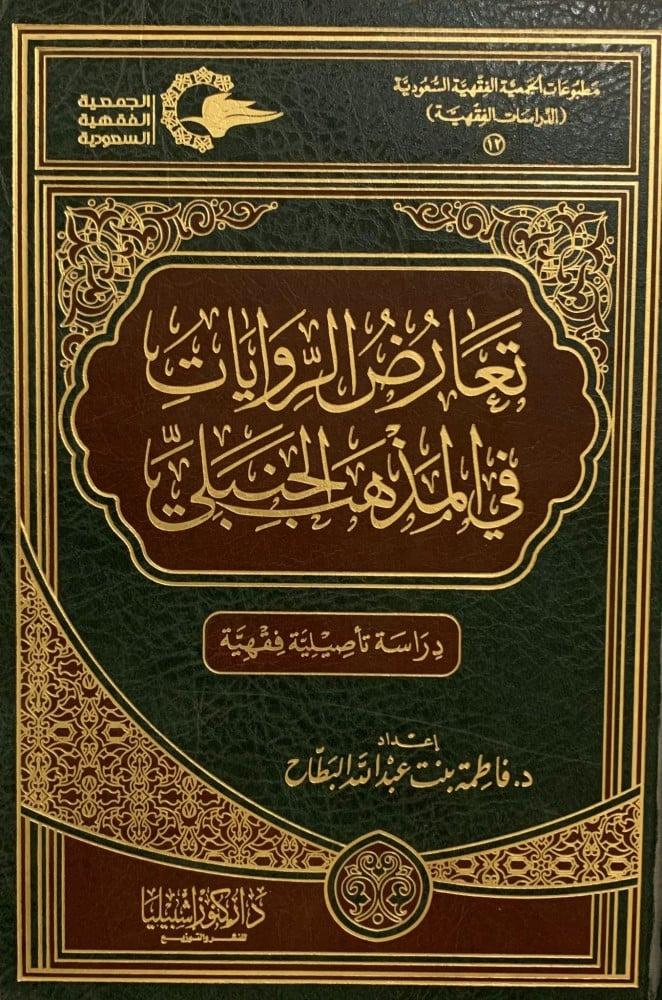
Contradiction of narrations in the Hanbali school of thought: an analytical jurisprudential study - Fatima Al-Battah
51ر.س
Product description
First Edition: 1426
Type of paper: Shamua
Number of volumes: One volume
God, by His grace and generosity, has granted the blessed Islamic nation eminent scholars and glorious jurists, starting with the Companions of the Messenger of Allah ﷺ, then those who came after them from the righteous predecessors.
Among them is our Imam Ahmad ibn Hanbal al-Shaybani, the supporter of the Sunnah, and the destroyer of innovation, whom Allah granted acceptance. Although he did not compile his jurisprudence himself, and forbade his companions and followers from doing so, his fatwas spread across the corners of the world.
Then a large number of scholars took it upon themselves to transmit, compile, and document his sayings, which became known as the issues of Ahmad ibn Hanbal; however, these issues included multiple narrations on the same matter, making it impossible to act upon all of them due to conflicting contents.
Therefore, I saw it necessary to investigate the differences in narrations of Imam Ahmad ibn Hanbal and to remove the label of contradiction by examining Imam Ahmad’s independent methodology of ijtihad, as well as his followers’ independence in serving their Imam’s school of thought, to understand the extent of how all this affected the variation in narrations about him.
Research Problem
Contradictions in the Hanbali school of thought: It is often narrated about Imam Ahmad ibn Hanbal that he recorded two conflicting opinions on issues of disagreement, which could lead to confusion among usul scholars regarding the invalidity of an ijtihadist’s statement of two contradictory opinions on the same incident.
And if this is assumed, it must be interpreted in several ways, such as differing circumstances or contexts, or through interpretation or restriction.

From Mecca
Questions you might have