Sera | Ammonium/Ammonia-Test (NH4/NH3)
65.22ر.س
Product description
Makes it easy to monitor the ammonium/ammonia level in fresh and marine water
Ammonium and ammonia mainly arise from fish waste. They are converted into each other depending on the pH value. While ammonium is mostly harmless, ammonia is toxic to fish.
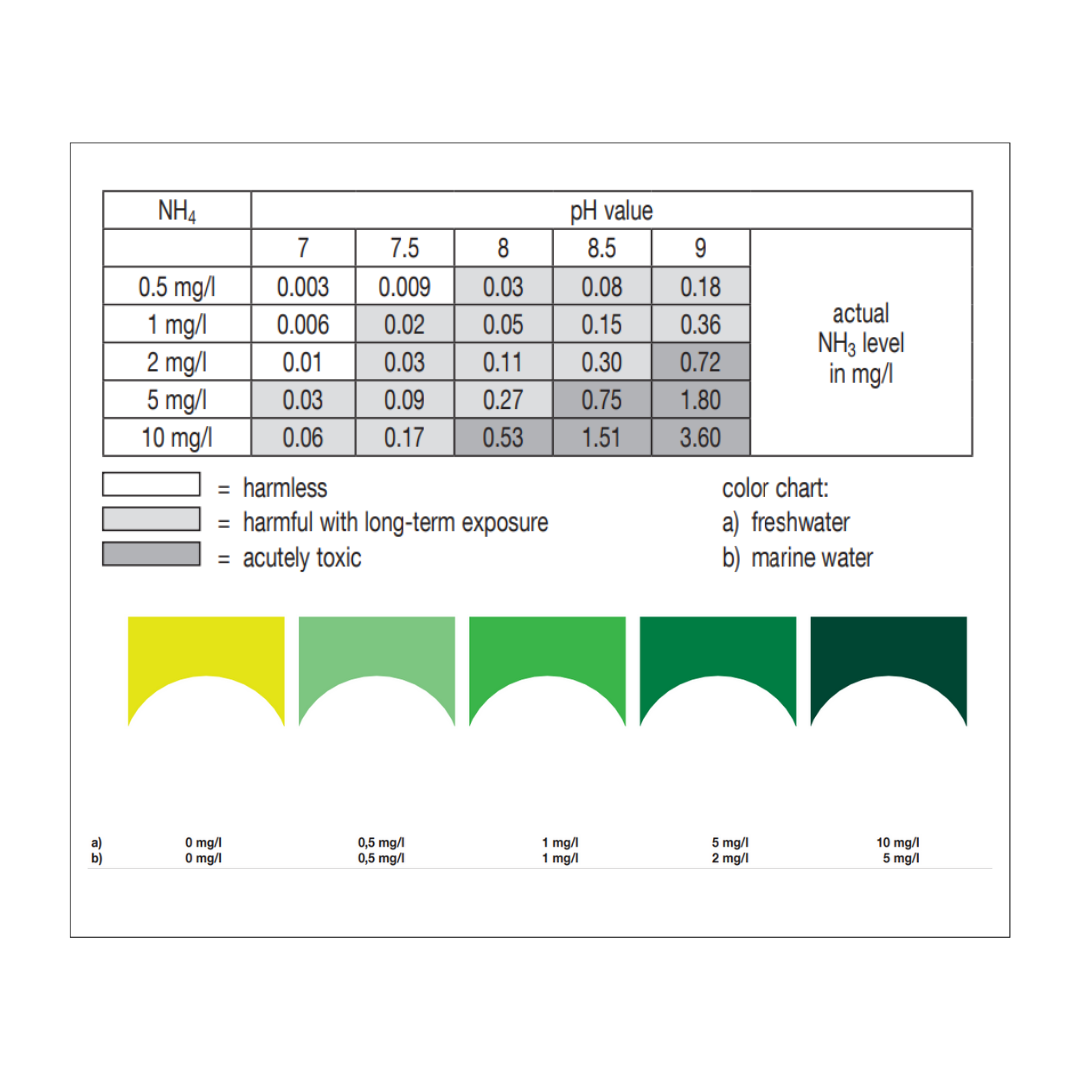
The sera NH4/NH3-Test allows monitoring the total concentration of both (the actual ammonia level can be calculated according to the pH value the using the included chart).
Information for use
High ammonium levels indicate a disturbed or not fully developed bacterial activity in
the filter. Ammonia (NH3) formed from ammonium (NH4) in case of pH values above 7
is especially dangerous. Even ammonia values of 0.02 mg/l lead to gill damages in the
long term. Therefore you should always check the pH value in addition to the NH4 level.
Evaluation and judgment of the measured values is effected using the chart in the margin.
sera toxivec immediately lowers the ammonia value in acute cases. Additionally, the
biological filter activity should be improved by using sera bio nitrivec (freshwater), sera
pond bio nitrivec (ponds) or sera marin bio reefclear (marine water), respectively. Regular partial water changes prevent too high water pollution.
Directions for use: Shake reagent bottles well before using! Do not allow tested water
to contact aquarium or pond water!
1. Rinse the measurement vial several times with the water to be tested, then fill to the10 ml mark (freshwater) or the 5 ml mark (marine water). Dry the vial on the outside.
2. Add 6 drops of reagent 1 and shake until the liquid is evenly distributed.
3. Add 6 drops of reagent 2 and shake the same manner.
4. Add 6 drops of reagent 3 and shake the same manner.
5. Compare the colors after 5 minutes. Place the vial on the chart and compare the colors from a position above under natural daylight. Avoid direct
sunlight.
6. Evaluate the level of free, toxic ammonia (NH3) from the measured value and the pH
value according to the chart in the margin.
7. Cleaning: Clean the vial thoroughly with tap water before and after each
test.
Close reagent bottles immediately after use and do not exchange caps. Store at room
temperature and away from light. For testing ornamental fish aquariums and pond
water only.