Product description
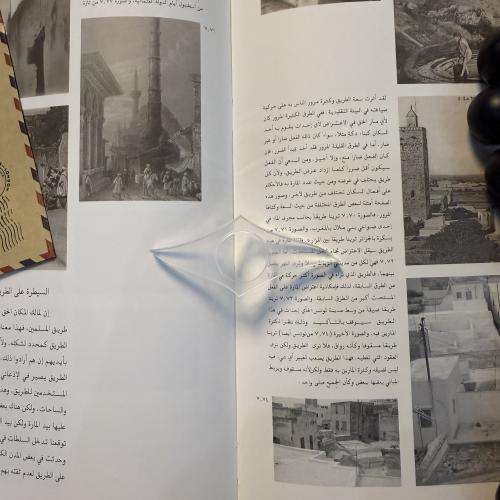
The book, which spans 340 pages of large format, covers a broad human and cultural journey, through its selection of articles on Arab culture and its history by Swedish researchers and writers from the eighteenth century until the end of the twentieth century. In the introduction, Jan Yerva questions why a small nation in Northern Europe is interested in the Islamic world, explaining many motivations that differ from those of other European peoples. In the remaining selected articles, the opinions of several Orientalists and travelers are highlighted, whose works ranged between theoretical Orientalism, Orientalism in art, and research in politics, literature, and travel. The Swedish Orientalist Jan Yerva points out in the book that Swedish Orientalism, despite being influenced at times by Western thought, was not driven by anything other than collecting information and manuscripts related to other peoples and distant countries, although he does not deny in the introduction that political motives also played a role in the interest in the East at certain periods. In addition to what has been mentioned, other factors pushed Sweden towards Orientalism, such as the emergence of new ideas about natural sciences, economic progress, and the possibility of understanding the techniques used in agriculture. The book sheds light on many figures, such as the poet and writer Werner von Haidenstam (1859–1940), who was influenced in his poetry by Eastern motifs, or in his novel "Andemion," which borrowed its title from Greek mythology, in which he defends the civilizations of the East and their values. It also discusses the works of Tor Andrée (1885–1947) and Henrik Samuel Nyberg (1889–1974), who offered fair opinions about Islamic history. The latter was a member of the Iraqi Scientific Assembly in the 1940s and wrote an article titled "Why Do I Love the Arabs?".

From Riyadh