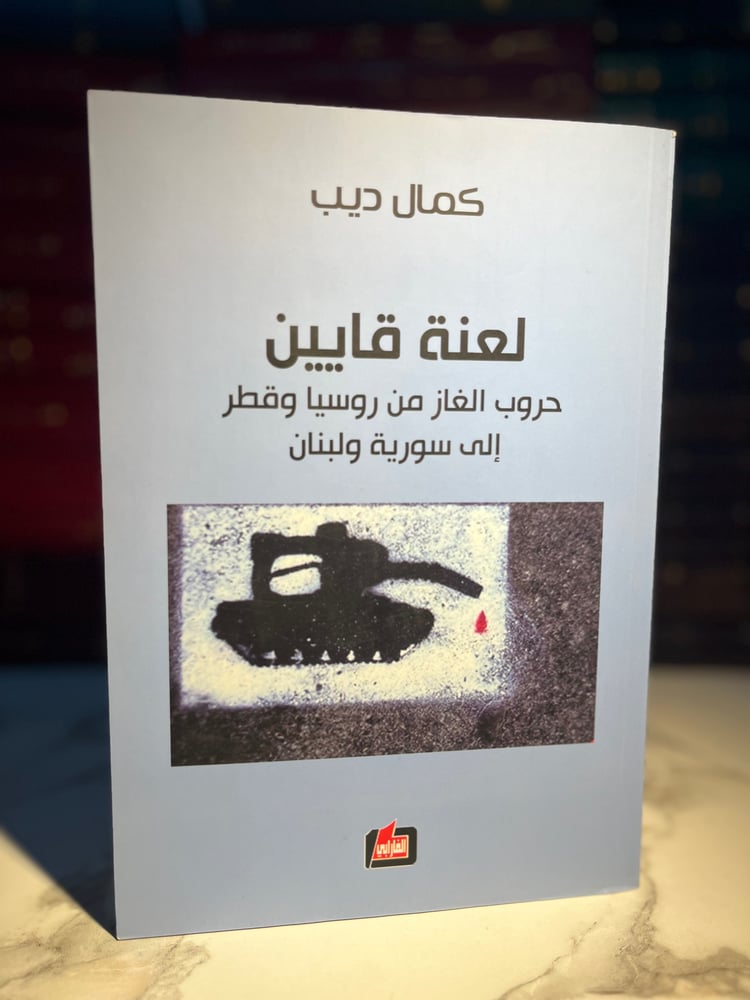

The curse of Cain
20ر.س
Product description
The Book of Cain's Curse: The Gas Wars from Russia and Qatar to Syria and Lebanon by Kamal Deeb covers an important gap in the Arab library, as it provides basic information on a vital topic that every researcher, media person, official, and every reader interested in public affairs needs. The gas wars are not military battles, missiles, and fleets, but are more complex; they began as a struggle over gas sources and supply routes, igniting wars from Central Asia to Syria, Ukraine, and Africa, interspersed with legal confrontations, sanctions, and boycotts between countries and companies. One wonders how Arab countries and Iran, for a hundred years, possessed most of the world's oil reserves (60 percent)—the essential commodity for driving the global economy—and did not benefit from it to serve their higher interests. Meanwhile, America used all its resources—even wheat—as strategic weapons, and Russia exploits its natural gas to restore itself as a great power. Talking about gas is not limited to economics; it is also present in geopolitics, as the race for dominance over the world has become a struggle over gas, which today, like oil yesterday, is a matter of life or death for all nations. According to the religious heritage of the Arab East, Abel and Cain (or Qabil) are the sons of Adam and Eve, working together—one a farmer, the other a shepherd. Jealousy struck Cain, who killed his brother and seized the wealth for himself, and he was cursed by God, or "Cain's curse." Oil is the "Cain's curse" of the Arabs. In the twentieth century, the Arab renaissance dream was strong, then Western colonization came and divided the Arabs, drawing borders among them according to the distribution of oil wealth, making princes with few inhabitants rulers, leaving the Arab population outside. Then colonization pushed "the brother to kill the brother," using oil revenues as fuel to kill Arabs and slaughter Palestine. In the twenty-first century, a second curse was born upon the Arabs—natural gas—becoming the fuel for Arab peoples and Arab countries in the "gas wars"—in Syria, Libya, Yemen, Iraq, Egypt, and also Lebanon and Palestine. Here, too, the West created princes who own much gas and accept to be "partners" in killing other Arabs.

From Riyadh