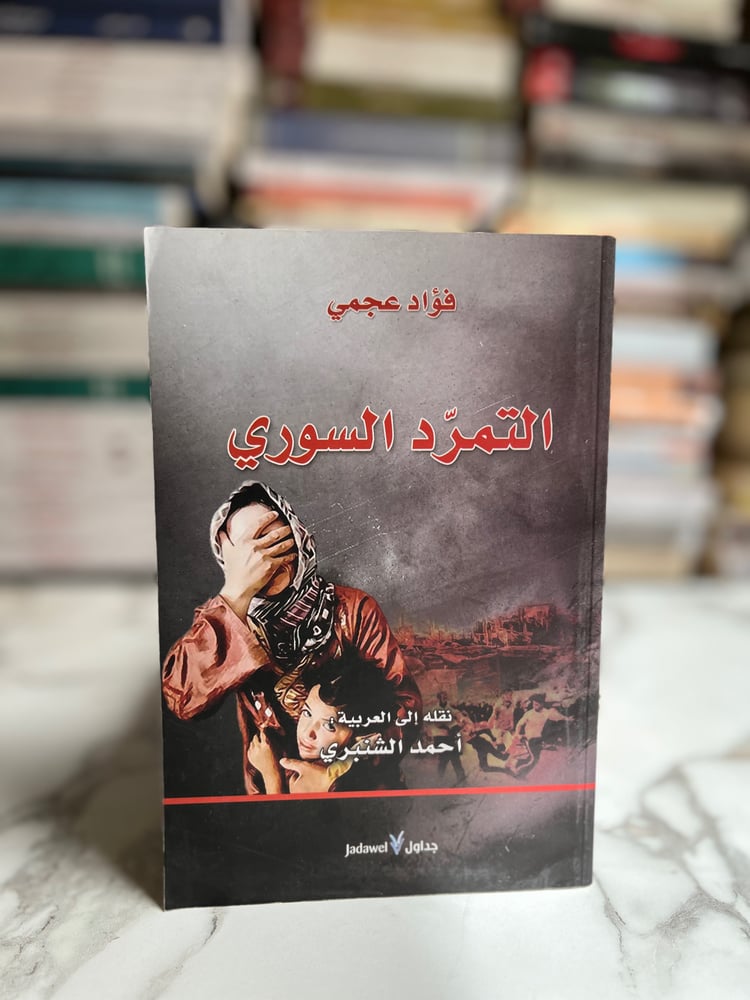

Syrian rebellion
34ر.س
Out of Stock
Product description
The book "The Syrian Rebellion" by its author Fuad Ajami forms a reading of the current Syrian political scene from the father's rule to the son's rule. The author addresses the approach followed by Assad the son internally in Syria and neighboring countries, including Lebanon, before the eruption of the protest movement. He delves into its core and explains in some detail the spread of popular protests starting from Daraa to all provinces and suburbs, detailing the external and internal motives that ignited "the Syrian revolution in a country that woke up from a long slumber." Ajami criticizes "the fear of some Christians," highlighting their positions regarding the protest movement based on suspicion of the coming of a Sunni authority that might bring extremists. He launches an attack on the Syrian regime, which carried the banner of protecting minorities "for political goals," and approaches from a historical perspective the situation of the Alawite sect, attempting to encompass some of its beliefs, presence in the Syrian political scene, and the demographic and political changes it experienced after 1970. He refers us to the French Mandate period and its stance towards minorities, including Alawites. He believes that the fall of the Ottoman Sultanate led to the loss of many Sunni Muslims, as the empire was the homeland of traditional Islam, and the simplest people from the cities of Hama and Aleppo saw their religion in the practice of the state and its creed. Under the title "The Time of the Founder," Ajami studies the period from 1949 to 1970 and beyond, shedding light on the ideological landscape that Syria knew to determine its direction between communists, Nasserists, nationalists, and Baathists. He talks about the era of President Hafez al-Assad and the approach followed by the regime, which, according to the writer, worked to strengthen its pillars and power through four main axes: establishing a relationship with the Sunni merchant class in major Syrian cities like Damascus and Aleppo to gain their support; subjugating Sunni institutions to his control; strengthening the influence of the Alawite sect in the political and security institutions; and recruiting the countryside as a support for traditional sovereignty. At the end of the book, Ajami wishes for the Syrians, "Hopefully they will soon enjoy the normal situation that has always been difficult to attain."

From Riyadh