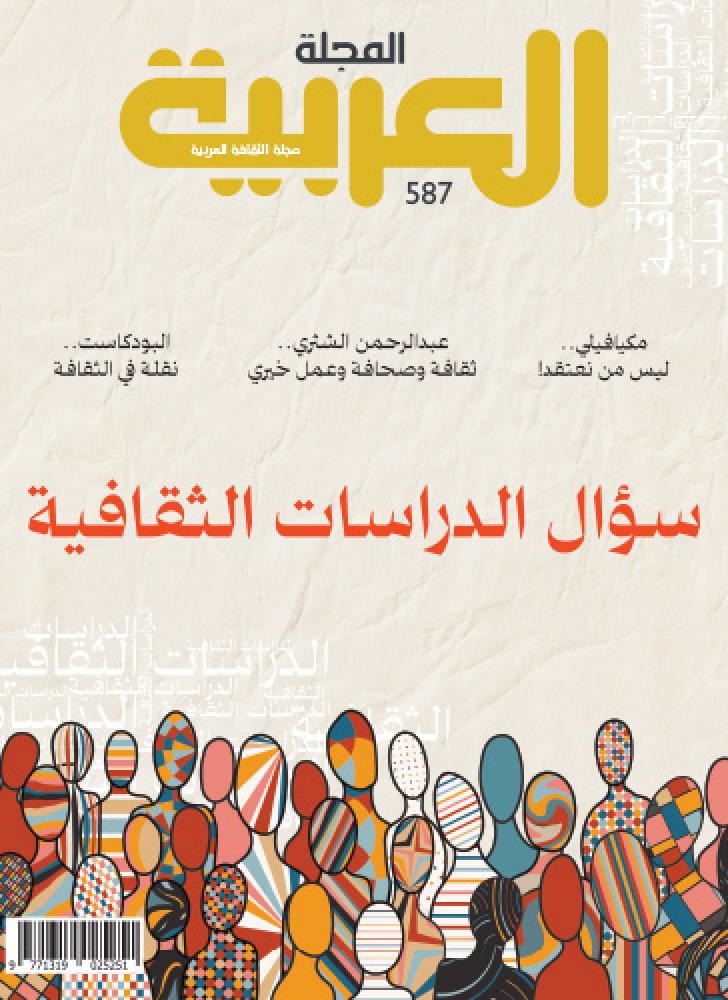

The Arabic Magazine 587
15ر.س
Out of Stock
Product description
The idea of cultural studies goes to reading the movement of societies, cultures, peoples, phenomena, and the resulting impact through them. In this sense, it is a deep scientific and intellectual vision aimed at major patterns, examining them within their political, social, and anthropological contexts, not the minor cases such as the individual or direct behavior... and others. This type of study appeared early in the West, where its foundations, schools, and concepts were crystallized within academic research fields, as well as through the efforts of thinkers and researchers outside university walls, to become, in general, a movement in science, philosophy, and thought. Within its framework, orientalist studies proceed, which concern the cultural aspect of a particular identity, entity, or culture. In the Arab world, such studies are rare, as cultural studies in their technical sense have not yet been formed, according to what is established in the West. This occurs while the Arab world is centuries ahead in scientific, cultural, and cognitive foundations, and in scientific and translational communication with what others have produced, meaning that Arabs have surpassed the stage of formation and should have reached a stage of multiple additions. Here, the questions of cause become clear: Is the cause the environment of scientific, research, intellectual, and cognitive fields? Or the climate of politics, censorship, and scientific freedom in some Arab countries? Or is it a state of hesitation among researchers and those engaged in thought and culture? Or other causes and obstacles?! Today, the need for Arab cultural studies is confirmed, especially as we welcome a new human civilization, which will have a space of human gathering, and everything within that space of patterns, interactions, and dealings fundamentally cultural, not belonging to material origins known to traditional cultural studies. This necessitates that Arabs do not repeat their delay but seize the opportunity of equal knowledge, equal sources, and similar levels; thus, they should proactively adopt cultural studies to read the reality of societies, cultures, and traditional peoples, based on digital data, to observe phenomena, foresee their outcomes, and contribute to enriching human and human-made products with innovative, lively, and vital knowledge. In conclusion, I greet you in this issue, which your magazine (Al-Arabi Magazine) dedicates to discussing one of the most prominent questions of thought and philosophy, which is the question: (Cultural studies and the Arab reality regarding them).

From Al Qatif