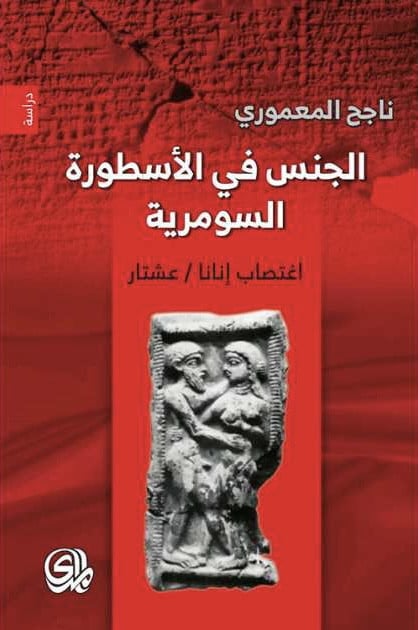
Sex in the Sumerian myth
28ر.س
Out of Stock
Product description
Number of pages: 244
The ancient Iraqi myths still arouse the interest of scholars and followers of ancient literature and the history of civilizations in the Eastern Mediterranean.
Especially the Sumerian myths, because they represent an important threshold that illuminates the spiritual and cultural level created in southern Iraq, and remained centered in the history of Iraqi civilization for a long time, rising towards neighboring religions, and appeared in the religious elements and their system in Syria.
Due to the strong similarity, they seemed as if they were transferred when migrating, so the Sumerian myths have a wide space in circulation and communication, and this was the extent of their influence and dominance.
The most profound and widely circulated myths are those in which the female deity played an active role, stemming from the nature of the land of the Tigris and Euphrates valley and its natural characteristics that call for attention to the system of the female deity, the worship of the Great Mother, and its connection to beliefs about life, fertility, renewal, and rebirth.
Gender, as a semiotic system, played a vital role in these beliefs and rituals, because the mythological mental structure did not treat it as a consumption of desire and activity but as an active factor in developing life, maintaining it, and achieving balance in nature and the universe, as well as the movement of time and the regularity of seasons.
The ancient Iraqi thought endowed the ritual of sex with a sacred attribute, turning it into an divine act celebrated with reverence.
The Sumerian phase produced many myths, poems, and hymns in this vital field.
These texts became a cultural capital that strongly contributed to understanding the nature of life and its beliefs.

From Al Qatif
Questions you might have