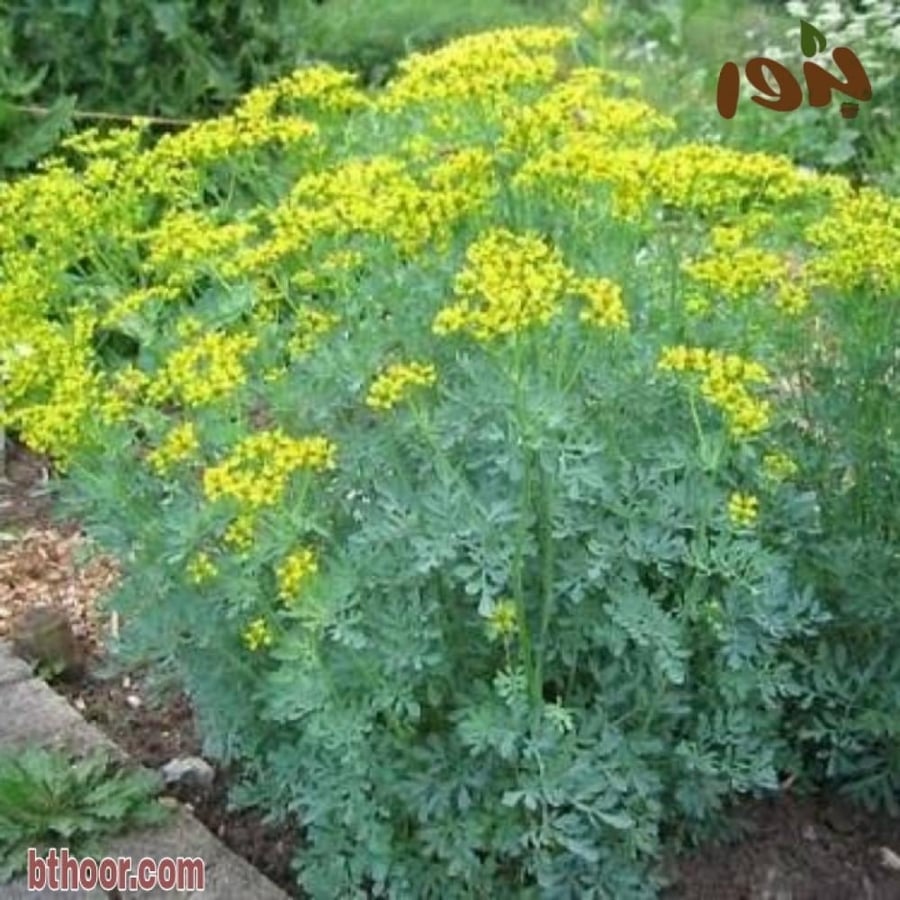


Seeds of the aromatic herb Al-Shadab (Ruta graveolens)
7ر.س
Product description
Common name: Rue
Scientific name: Ruta graveolens
Also called: Rue officinalis
Original habitat of Rue plant: The original habitat of Rue plant is in southern Europe and the Mediterranean Sea. It is currently cultivated worldwide for medicinal and agricultural purposes.
Description of Rue plant: Rue is a perennial herbaceous plant that reaches a height of 60-90 cm. It is characterized by its small, feathery, bluish-green leaves, and has a strong, distinctive smell. The plant produces small yellow flowers.
Description of Rue flower: Rue flowers are small and yellow, clustered in bunches at the tops of the stems. The flowers usually appear in spring, adding a splash of color to the plant.
Uses and benefits of Rue: Rue is used in traditional medicine to treat many ailments such as digestive problems and headaches. It is also used in cooking as a spice in some cultures, known for its anti-inflammatory and insect-repellent properties.
Suitable climate for Rue: Rue prefers moderate to warm climates. It tolerates drought and high heat. It needs a moderate amount of light and can grow in partial shade.
Suitable soil for Rue: Rue requires well-drained, nutrient-rich soil. It can grow in poor soil as long as it drains well. It prefers sandy or clay soil.
Propagation method of Rue: Rue usually propagates by seeds, but can also be propagated by cuttings in spring.
Planting time for Rue: Rue can be planted in spring after the danger of frost has passed, or in autumn in regions with mild winters.
How to plant Rue by seeds: Seeds are planted directly in the soil at a depth of about 1 cm. Maintain spacing between plants to avoid overcrowding. Water the soil regularly until the seeds germinate, but avoid overwatering.
Fertilizing Rue: Rue is fertilized once a year with a balanced organic fertilizer, preferably at the beginning of the growing season in spring to stimulate growth and produce healthy leaves.

From Buraydah
Questions you might have