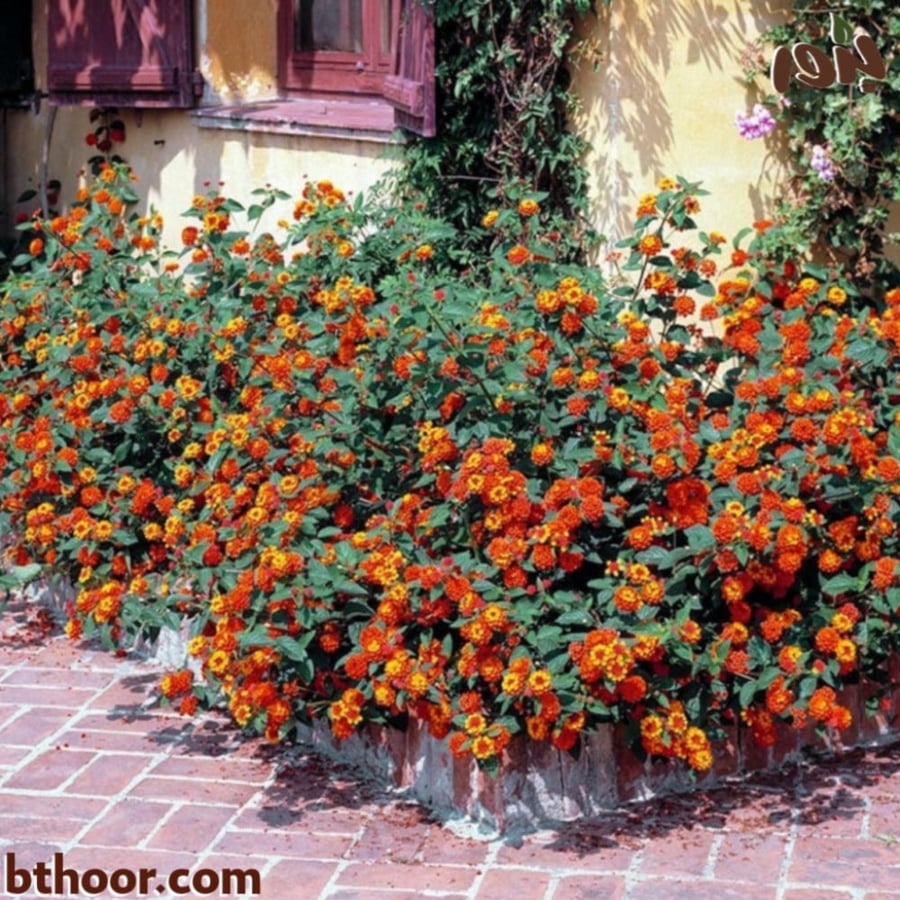


Lantana Camara seeds - various colors
22ر.س
Product description
Common name: (Lantana Camara). Scientific name: Lantana camara. Also called: Mina - Curved Lantana - Umm Kulthum Flower. Native habitat: • Hot areas in America, and it spreads in Saudi Arabia and Gulf countries. Description: • Lantana camara or (Curved Lantana) is a shrubby plant within a group of types of the Lantana genus or Lantana with multiple colors, its leaves are oval-shaped, serrated at the edges and tip, characterized by density and evergreen, its stems are branched, rough to the touch, reaching up to two meters in height and may exceed that. The flower: • Its small flowers grow in clusters shaped like a dome or hat, their colors are vibrant and attractive, including orange, yellow, purple, red, in addition to pink, and some are bi-colored. There are also multiple colors mixed within the same plant. It blooms throughout the year, with reduced flowering in winter, and it is attractive to bees. Uses and benefits: • Used as a flowering fence and for decoration in garden pathways. • For beautification along roadsides and residential complexes. • Its flowers have medicinal and therapeutic uses. • Grown in containers and agricultural pots. • Can be cultivated in hanging baskets (hanging containers). Suitable climatic conditions: • Grows well and blooms densely in high temperatures and sunny areas, making it one of the best flowers suitable for cultivation in Saudi Arabia and Gulf countries. • Adaptable to semi-shaded areas with reduced flowering. • Tolerates cold weather (without frost levels), may lose all its leaves but will return with moderate weather and flourish when it becomes warmer. • Tolerates strong winds and dust. Propagation method: • Propagated by seeds and cuttings. Planting time: • Spring is the best time for outdoor planting directly in the ground. • Can be planted year-round indoors in suitable germination environments (such as plastic greenhouses). Suitable soil for planting: • Characterized by its ability to tolerate relatively high salinity and drought. • Resistant to insects and pests, and can grow in various soil types. Planting method: • Moisten the soil well. • Bury the seed in the soil at a depth not exceeding 1.5 cm, or place it on the soil surface and cover it with soil to the same depth. • Keep the soil moist throughout the germination period in direct ground planting. • Moisten the germination trays when the soil surface dries, being careful not to overwater to avoid soil and seed rot, which results in very low or no germination rate. • When germination begins, water only when the soil surface dries. • Transfer plant shoots from small trays or containers to larger plant pots or directly into the ground when the plant has two or more pairs of leaves.

From Buraydah