Parkinsonia tree seeds phrase
62ر.س
Product description
Common name: Parkinsonia tree. Scientific name: Parkinsonia aculeata. Also called: Horse thorn.
Original habitat of the Parkinsonia tree:
• Panama and North America, and it is cultivated in many hot and desert areas.
Description of the Parkinsonia tree:
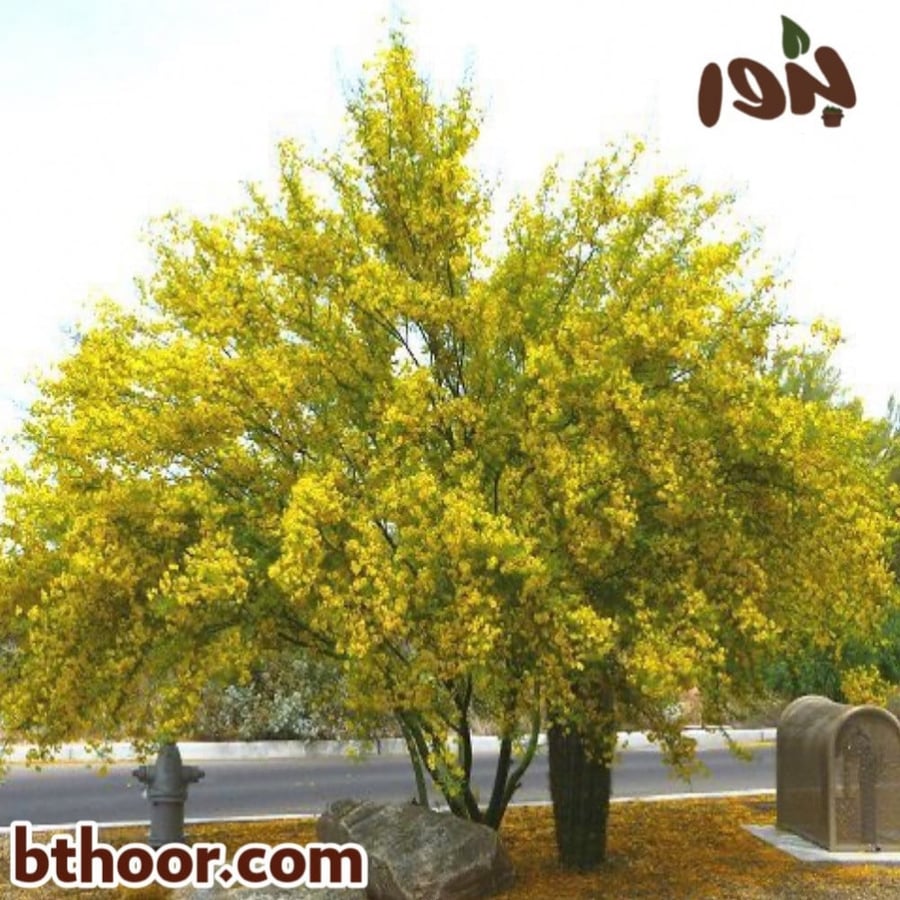
• A fast-growing, spiny desert tree, perennial, evergreen. It is one of the species belonging to the genus (Parkinsonia) of the legume family.
Its roots are deep and spreading, its trunk is smooth and green, with many branches, and the branches are zigzag.
Its leaves are compound, small, arranged, light green in color, ranging in length from 20-40 cm.
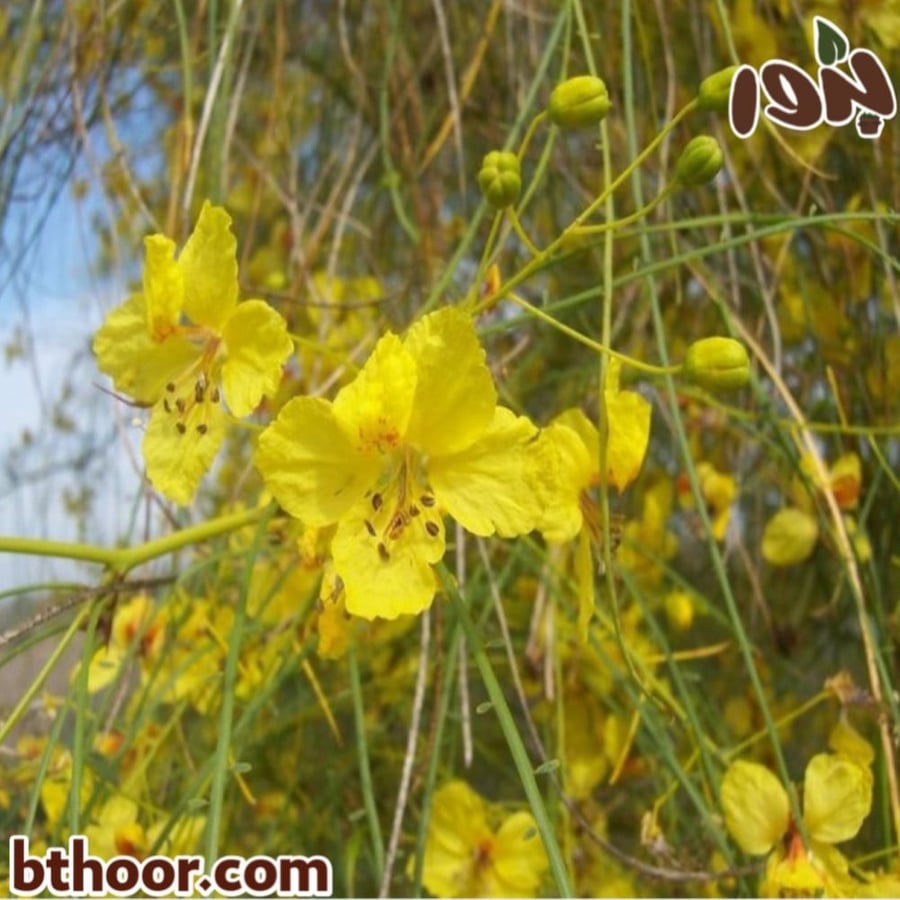
Its flowers are beautiful, yellow, and bloom densely.
The Parkinsonia tree is classified as an ornamental and shade tree, reaching a height of up to 10 meters.
Flowers of the Parkinsonia tree:
• Dense and fragrant, growing in clusters exceeding 10 cm in length, bright yellow with a red center.
• Attractive to bees, blooming for several months from March to September.
Uses and benefits of the Parkinsonia tree:
• Used for beautifying gardens and along roadsides.
• Used as windbreaks and barriers against moving sand.
• Its wood is used as fuel for heating, and high-quality charcoal is produced from it.
• Its leaves are used as animal fodder.
• A suitable pasture for bees in the spring.
Suitable climate for the Parkinsonia tree:
• Capable of resisting many harsh climatic and environmental conditions.
• Tolerates hot weather where temperatures exceed 50°C.
• Adapts to frost and low temperatures below zero.
Suitable soil for the Parkinsonia tree:
• Prefers sandy soil and grows in light clay soil with good drainage.
• Tolerates drought and high salinity.
• The Parkinsonia tree is tolerant of many soil types.
Propagation methods of the Parkinsonia tree:
• By seeds.
• By stem cuttings.
• By air layering.
Best time to plant the Parkinsonia tree:
• The planting time using seeds is directly in the ground from early October to March.
• The time for taking stem cuttings is in the spring.

From Buraydah
Questions you might have