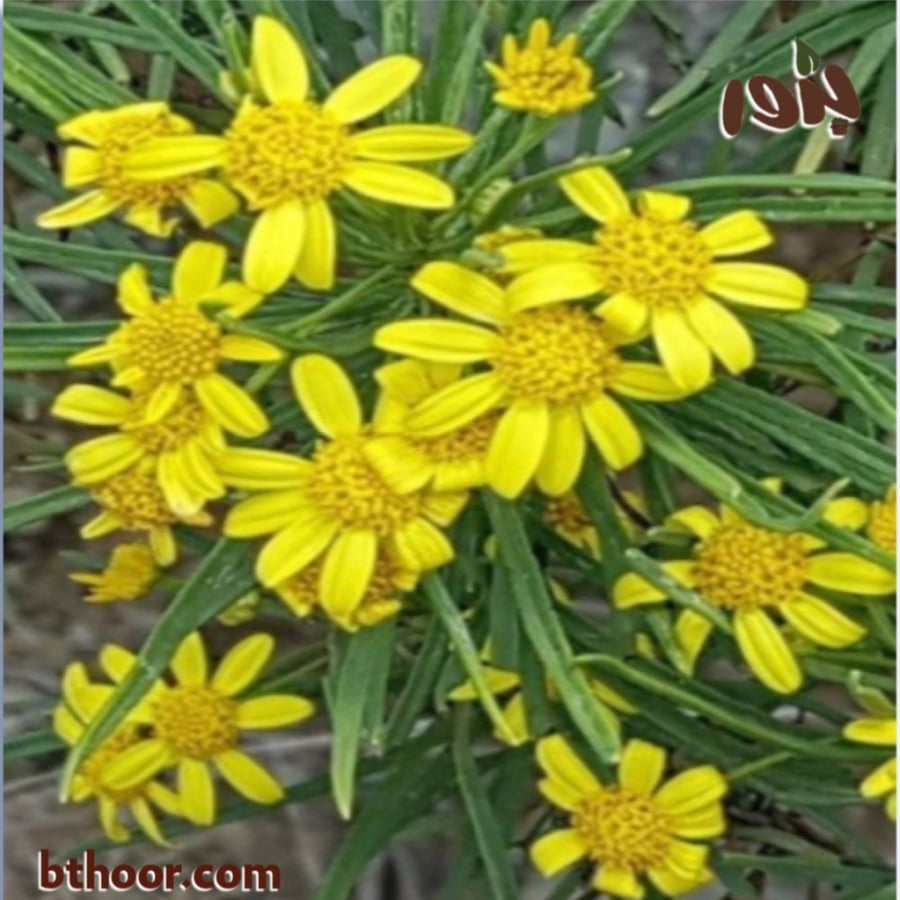

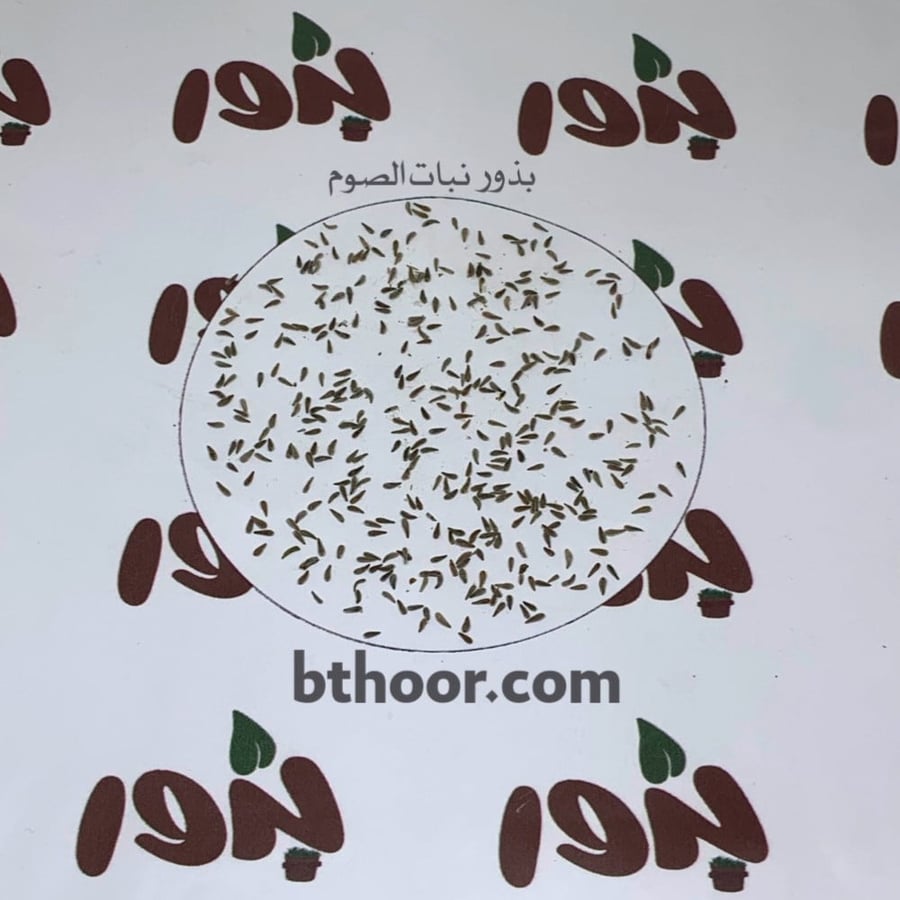
Seeds of fasting - Arab Euryops (Euryops arabicus)
7ر.س
Product description
Common name: Somali
Scientific name: Euryops arabicus
Also called: Arab Hanjalan
Native habitat of the Somali tree – Arab Hanjalan:
The origins of Arab Somali date back to the Arabian Peninsula, especially in mountainous areas and semi-arid plains. It also spreads in some regions of East Africa, Yemen, Oman, and Saudi Arabia. It is considered a native plant in dry environments, as it has adapted to the desert climate and low rainfall.
Description of the Somali tree – Arab Hanjalan:
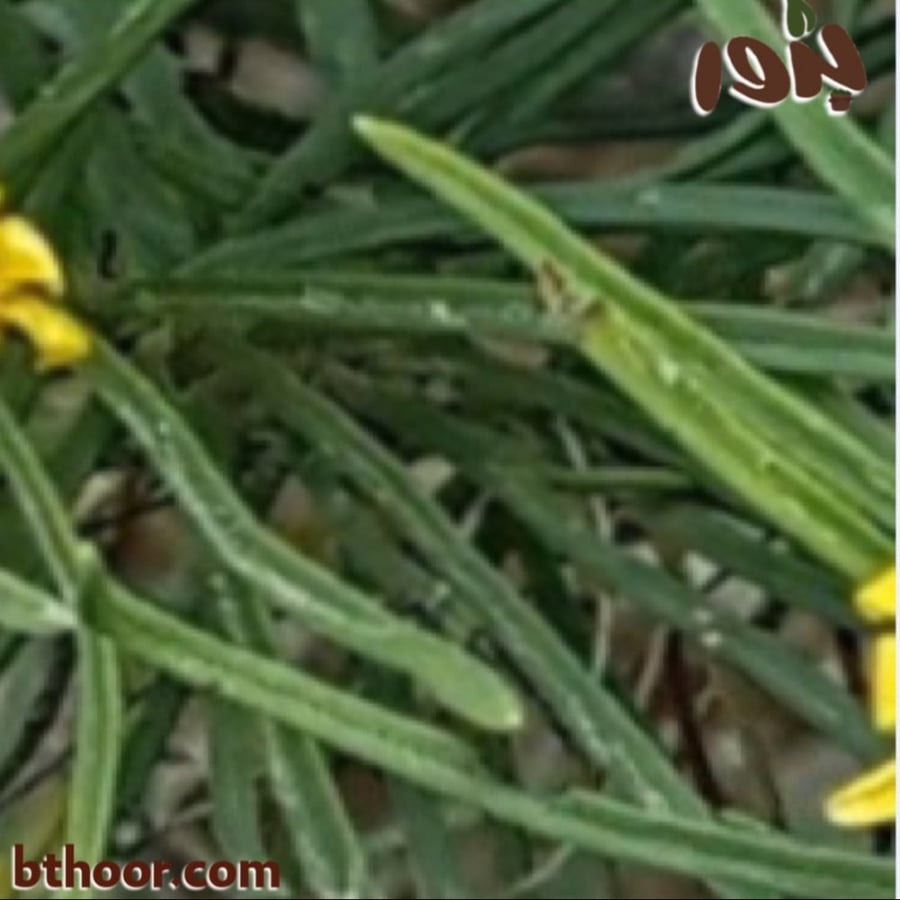
The Somali is a perennial evergreen shrub, ranging in height from 1–2 meters. It features small, feathery greenish-silver leaves, giving it an elegant appearance in nature. Its stems are woody, often densely branched to form a round or semi-spherical shape.
Description of the flower of the Somali tree – Arab Hanjalan:
Its flowers are bright yellow, similar to chamomile, usually blooming in spring and sometimes after rainy seasons. The flowers are relatively small but abundant, making the shrub glow with a shiny golden color that attracts attention and pollinating insects like bees and butterflies.
Uses and benefits of the Somali tree – Arab Hanjalan:
Used in afforestation projects and desertification control due to its drought resistance.
Incorporated into natural and rocky garden designs to add aesthetic value.
Considered an important plant in natural pastures, as camels and some livestock feed on it.
Attractive to bees and pollinators, enhancing environmental diversity.
Suitable climate for the Somali tree – Arab Hanjalan:
Endures high temperatures and drought.
Grows well in sunny, open areas.
Does not tolerate severe frost or prolonged cold.
Suitable soil for the Somali tree – Arab Hanjalan:
Grows in poor sandy and rocky soils.
Relatively tolerant of salinity.
Prefers well-drained soil.
Propagation method of the Somali tree – Arab Hanjalan:
Propagated by seeds that are directly sown in the soil after the rainy season.
Can also be propagated by soft cuttings in humid environments.
Best time to plant the Somali tree – Arab Hanjalan:
The best time is early spring or after rainfall.
Can be planted in autumn in regions with mild winters.
Planting method of the Somali tree – Arab Hanjalan:
Choose an open, sunny location.
Dig a hole suitable for the size of the seedling.
Place the seedling and firm it with soil well.
Water moderately at first until it adapts.
Does not require support or intensive pruning, only remove dry branches.
Fertilization method for the Somali tree – Arab Hanjalan:
Due to its ability to grow in poor soil, it does not need heavy fertilization.
A light organic fertilizer can be added at the beginning of the growing season.
It is preferred to fertilize once or twice a year to enhance flowering.

From Buraydah