


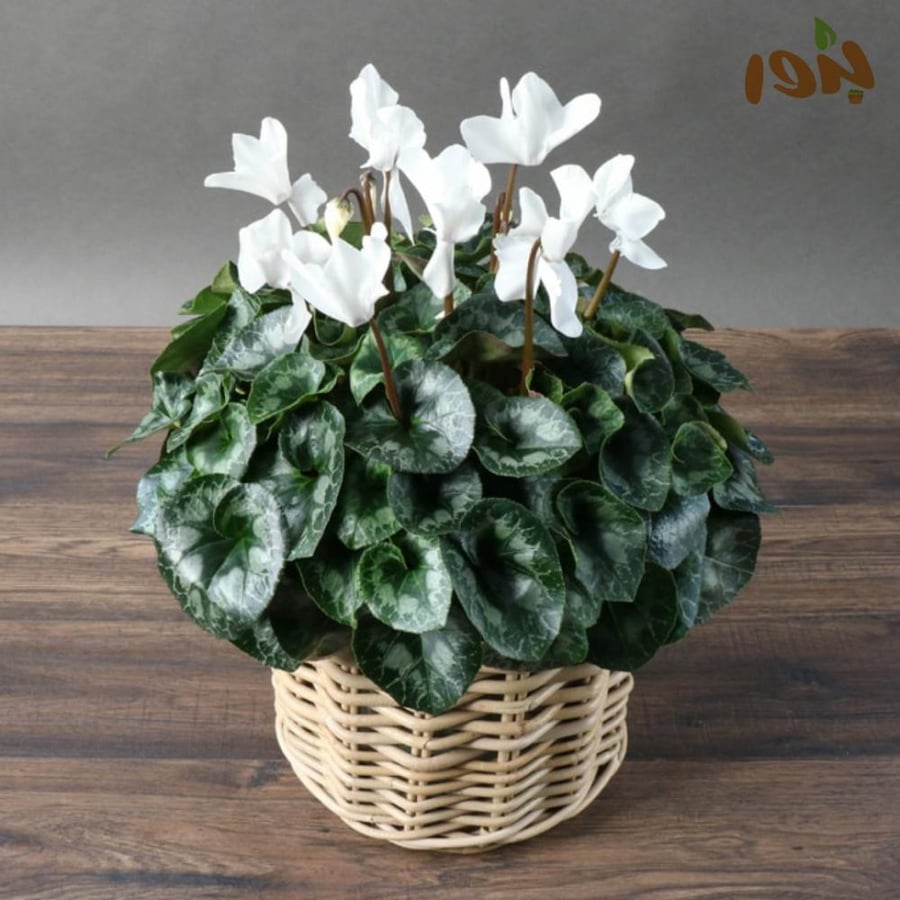


Cyclamen indoor plant seeds
8ر.س
Product description
Common name: Cyclamen - Cyclamen
Scientific name: Cyclamen
Also called: Gazelle horn - Dan al-Qit - Al-‘Artanitha - Soko’a - Az-Za’matout.
Description:
• A perennial wild plant with a tuber exceeding 10 cm in diameter, from which the plant components emerge, reaching up to 30 cm in height. It has oval leaves with a heart-shaped base and a long dark green petiole. It features long inflorescences longer than the leaves, from which beautiful multicolored flowers appear. It is suitable for indoor cultivation.
The flower:
• Cyclamen flowers are very delicate and fragrant, with ribbon-like petals. The flowers are diverse, with four colors: pink, white, red, and purple. The flowers rise above the plant via their inflorescences, and they resemble gazelle horns, which is the origin of one of its names. It blooms in autumn and spring.
Uses and benefits:
• Its leaves are used in some Arab countries in various dishes, similar to preparing cabbage and grape leaves. It is also cultivated for decoration in gardens and homes.
Original habitat:
• Mediterranean basin.
Suitable climatic conditions and soil for cultivation:
• Cyclamen is a perennial plant that can grow in all seasons and has the ability to grow on mountains and among rocks. However, it cannot tolerate extreme temperatures. It needs a temperature in the twenties Celsius, so it can grow indoors where direct sunlight is not necessary, only indirect light such as good indoor lighting or window light. It also grows better in fertile, well-drained soil.
Cultivation method:
• Cyclamen propagates through seeds. It is suitable for planting in groups in containers and household plant pots. The seeds should be buried no deeper than 1 cm in the soil. It is preferable not to expose them to intense light during germination, as cyclamens generally germinate better in dark places, requiring a temperature between 18 and 20 degrees Celsius. High temperatures and low cold can cause seed rot or dormancy.
Germination occurs in summer or autumn. When small plant sprouts appear, they need a well-lit place without direct sunlight. When their flowers appear, avoid watering them with water.

From Buraydah