



Moringa seeds Oliveira - Indian Moringa
43ر.س
Product description
Common name: Moringa oleifera
Scientific name: Moringa oleifera
Also called: Shoua, Oil palm, Left, Palm, Precious seed, Wild garlic, Horse radish, Riwaq tree, Drumstick, Indian Moringa
Description:
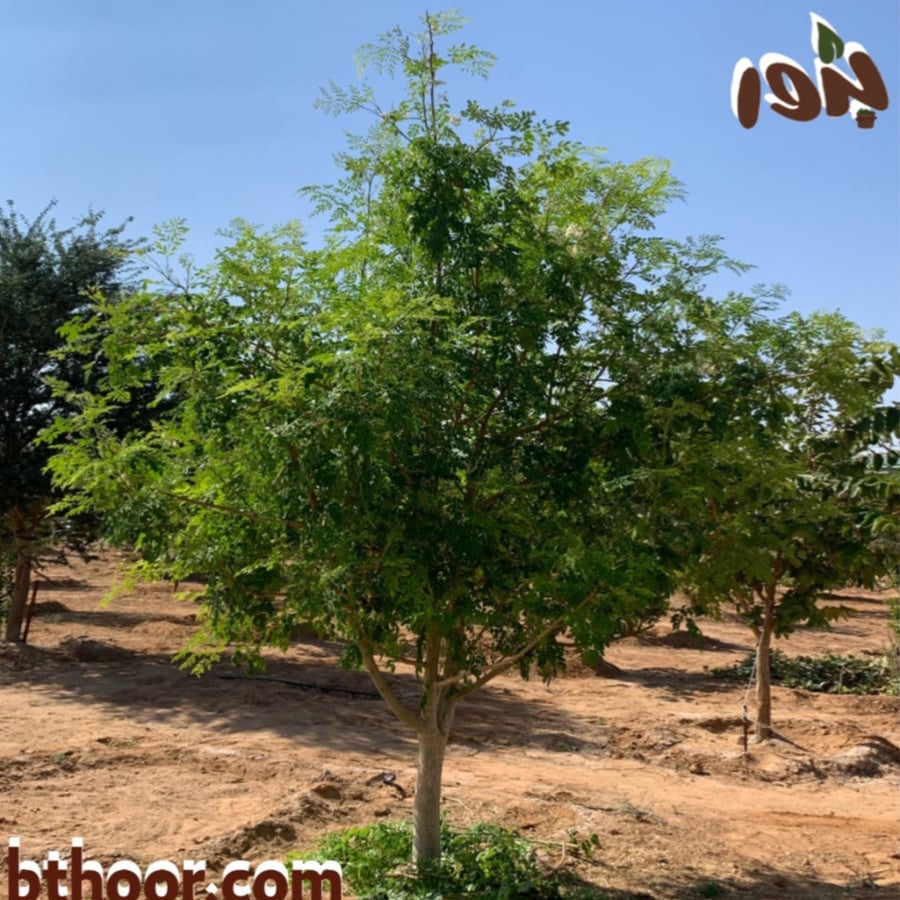
• Fruitful tree with a fragrant smell, its leaves are green feathery. It is drought-resistant, fast-growing, and characterized by its ability to grow in arid lands. It also has low water needs. It can be small or medium-sized, with a height ranging from 7 to 16 meters.
Uses and benefits:
• Shade, decoration, soil improvement, perfumes, cosmetics, food, animal nutrition, beekeeping, medicinal use: used to treat bladder inflammation, prostatitis, diarrhea, liver and spleen diseases, skin diseases, and rheumatism.
Original habitat:
• Its original habitat is India, and it is cultivated in Saudi Arabia and Gulf countries.
Fruit and seeds:
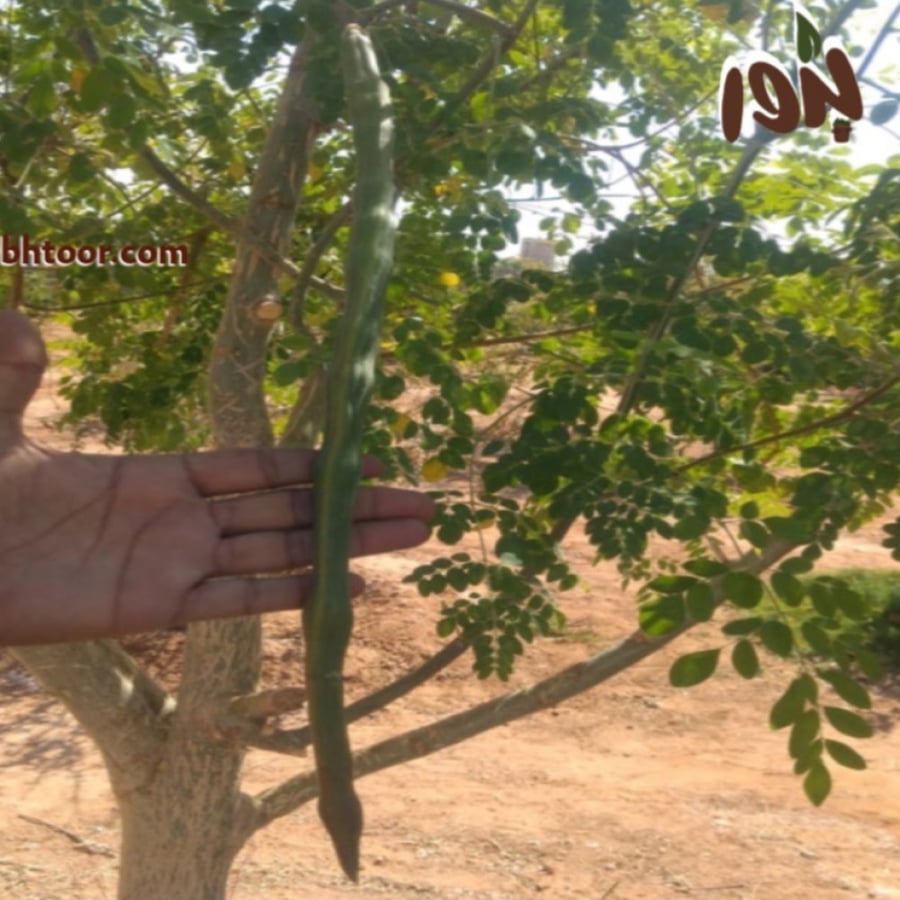
• The fruit is brown in color and consists of pods ranging from 20 to 120 cm in length, depending on the type and region. The fruit tastes bitter and is edible cooked or fresh, but must be washed before eating. It should not be eaten in large quantities. The tree produces between 400 and 600 pods, containing 25 to 35 seeds each.
Flower:
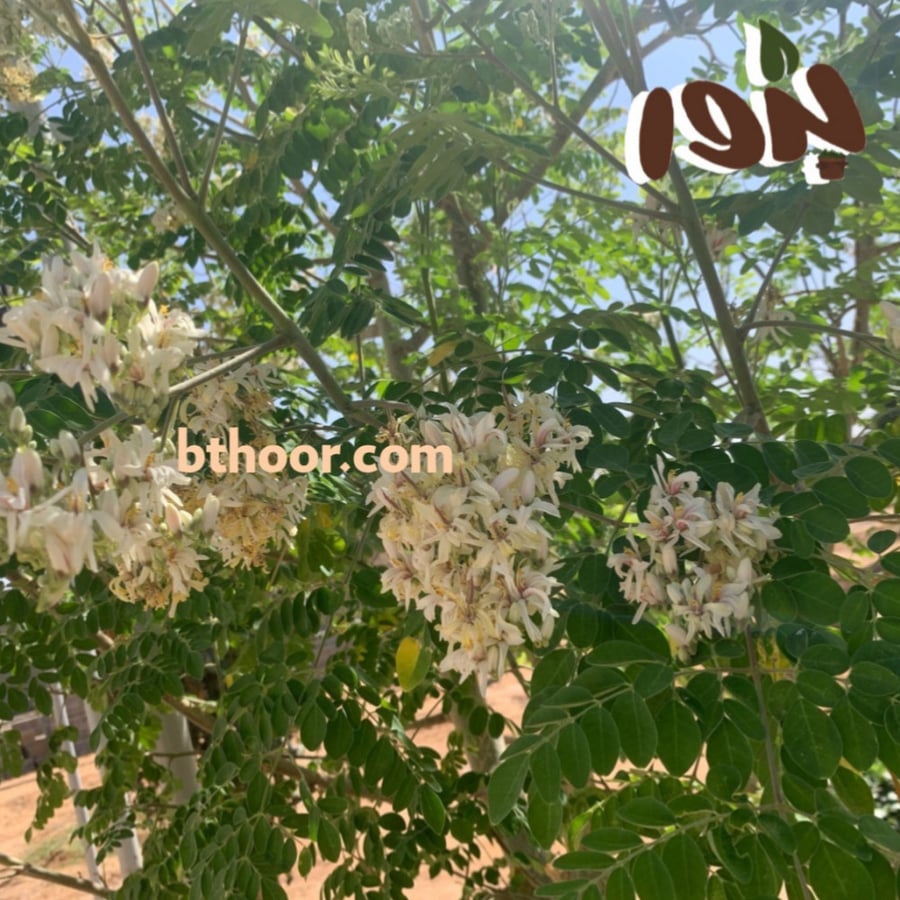
• Its scent is pleasant, composed of five united petals, white and light yellow, with pink streaks in the middle. It begins to bloom in May.
Suitable climatic conditions and soil for cultivation:
• Moringa oleifera is highly drought-resistant but does not tolerate cold or frost. It can be successfully cultivated in sandy and clay soils, which require good drainage.
Germination time:
• Plants appear after 3-4 days in fertile soils and after 2-3 weeks in dry sandy soils.
Trees bear fruit after 6-8 months of planting in permanent land, but start producing regularly after the second year, and continue to bear fruit for several years.
Cultivation method:
• Germination occurs in shaded areas, often with seeds placed in perforated bags, then planted in soil. When seedlings reach three months old, they can be transplanted to their permanent location.
Regarding tree care:
• Old flowering branches are pruned to stimulate and encourage new branches to grow, which produce more leaves.

From Buraydah