

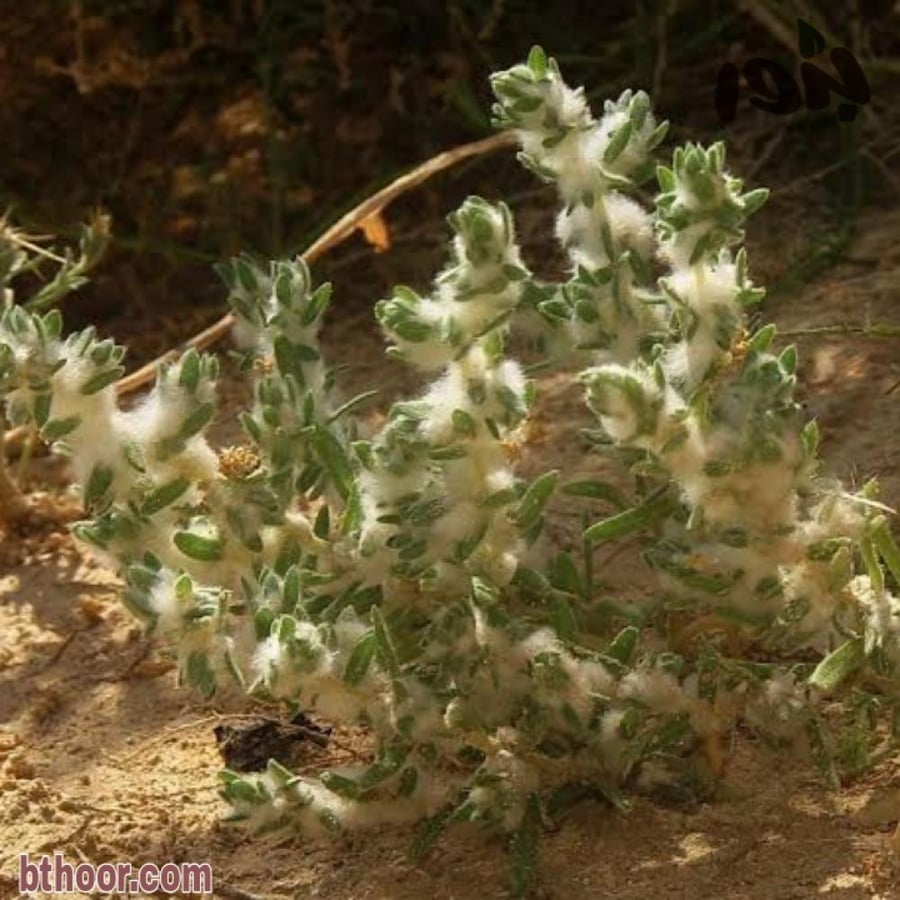

Cottonseed wholesale
26ر.س
Product description
Common name: Qatina
Scientific name: Bassia eriophora
Also called: Al-Hamadh
Original habitat of the Qatina plant: Its original habitat is dry and semi-dry areas in North Africa and Southwest Asia, including desert regions in countries like Egypt, Libya, and Sudan.
Description of the Qatina plant: Qatina is a perennial herbaceous plant that grows shrub-like, can reach a height of 1.5 meters. It features branched stems and small, thin leaves covered with soft white hairs, giving it a silvery appearance. The small, inconspicuous flowers gather in clusters along the stems.
Uses and benefits of the Qatina plant: Qatina is used as animal fodder in desert areas due to its tolerance to harsh conditions. It is cultivated to stabilize the soil and prevent erosion in dry regions. It is used in traditional medicine to treat some skin diseases and infections.
Suitable climate for the Qatina plant: Qatina prefers dry and semi-dry climates. It tolerates high temperatures and severe drought. It grows well in areas where annual rainfall ranges between 100-300 mm.
Suitable soil for the Qatina plant: Qatina grows in sandy, clayey, and alkaline soils. It prefers well-drained soil and tolerates poor, salty, and nutrient-deficient soils.
Propagation method of the Qatina plant: It propagates through seeds.
Best time to plant Qatina: The best time to plant Qatina is at the beginning of the rainy season to ensure moisture for seed germination.
Method of planting Qatina: Clear the soil of weeds and prepare it for planting. Scatter the seeds on the soil surface and gently press them, then cover with a thin layer of soil. Water the soil regularly until the seeds start to germinate. After germination, gradually reduce watering. Ensure weeds are removed around the plants.
Fertilization method for Qatina: Organic fertilizer can be used when preparing the soil to improve its fertility. In very poor soils, a small amount of balanced fertilizer (NPK) can be used to promote growth. Generally, it is not necessary because Qatina adapts to poor soils, but adding fertilizer at the beginning of the season can stimulate growth.

From Buraydah
Questions you might have