
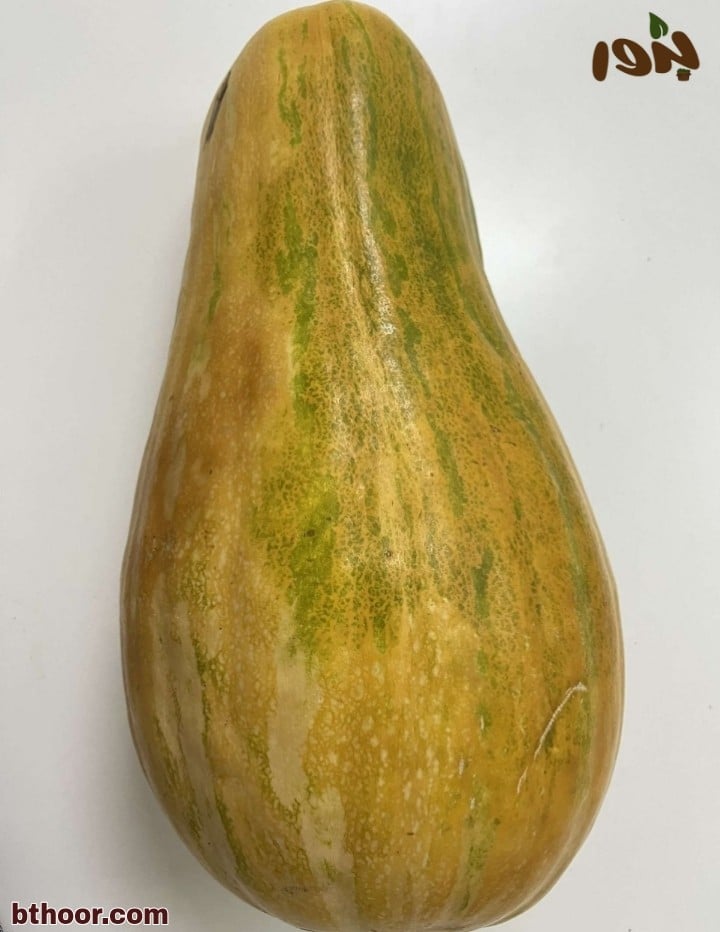
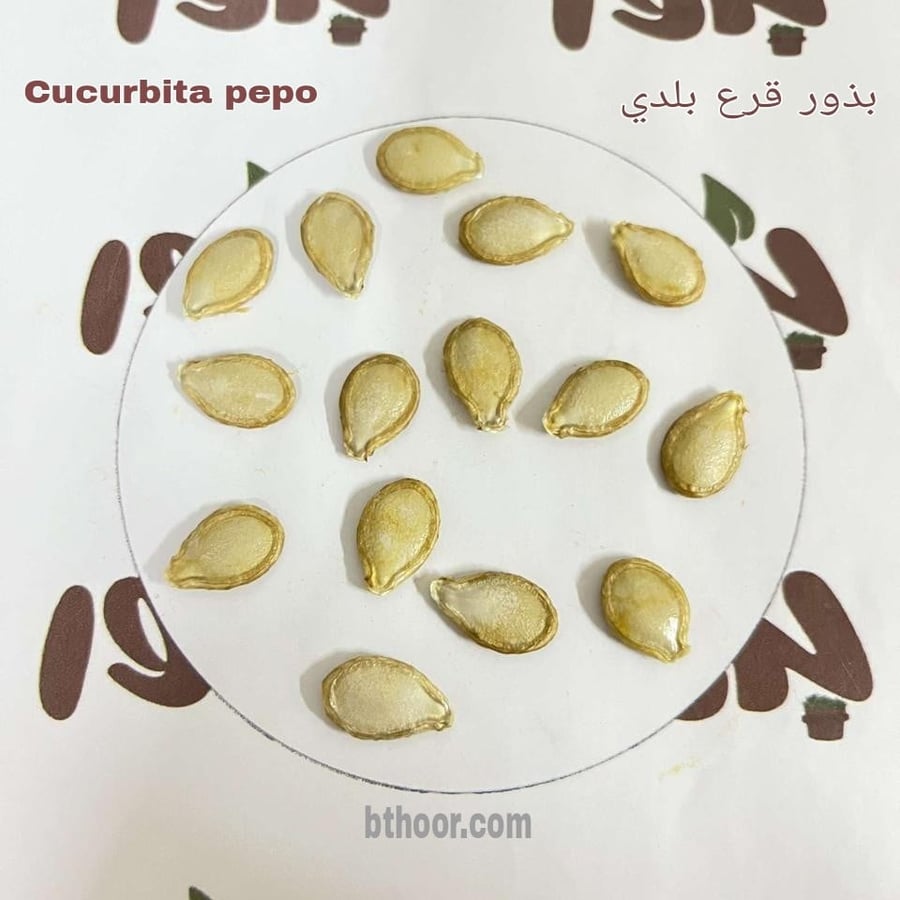
Local pumpkin seeds
6ر.س
Product description
Common name: Local squash
Scientific name: Cucurbita pepo
Also called: Dubbā’
Original habitat of the local squash plant: Its original habitat dates back to the Andes Mountains in Central America, but it grows in many Arab countries.
Description of the local squash plant: The local squash is an agricultural plant of the genus Cucurbita, and this annual plant with a creeping stem and tendrils can reach up to 10 meters. Its large, heart-shaped, slightly lobed (5 lobes), hairy leaves with stiff hairs. Its fruit is a large, round, fleshy berry with a hard shell (squash) weighing several kilograms, and this weight can reach several tens of kilograms. It contains many oval, flat, white seeds (1.5-2 cm × 0.5-1 cm). There are many varieties that can hybridize with each other.
Description of the flower of the local squash plant: Its large, 5-type flowers are light yellow in color, blooming in spring.
Uses and benefits of the local squash plant: The squash is sweet-tasting and has many health benefits. The fruits contain high levels of vitamins and saturated carbohydrates, so it is used in many food recipes. It is rich in fiber and precious minerals. It is prepared in delicious dishes and used to make jam.
Suitable climate for the local squash plant: It grows in moderate, hot, and semi-humid climates. Squash cultivation succeeds in hot or warm climates. It tolerates high temperatures and drought. It loves direct sunlight. It is sensitive to frost and cold. It tolerates drought.
Suitable soil for the local squash plant: It grows in various fertile, well-drained, and aerated soils. Its cultivation succeeds in light, sandy, yellow, and clay soils. It is sensitive to soil salinity.
Method of propagation of the local squash plant: By seeds.
Timing for planting the local squash plant: Squash cultivation succeeds in hot or warm climates; therefore, it is preferable to plant after the first frost wave, at the beginning of summer or the end of spring.
Method of planting the local squash plant: The land is divided into mounds; seeds are planted in each mound at a rate of 3-4 seeds, with each mound about 1 meter apart. Seeds are planted at a depth of about one inch until they reach the soil surface, as it is known that squash grows quickly toward the surface.
Moisten the soil with appropriate water. It is preferable to water the pumpkin when signs of thirst and drought appear; squash does not need much water.
Method of fertilizing the local squash plant: When the squash seeds grow and reach the soil surface and sprouts form, fertilization is necessary at this stage to keep weeds below the sprouts, helping the soil retain moisture. The plot needs 100 kilograms of ammonium sulfate plus 100 kilograms of superphosphate, applied in two doses; the first after 3 weeks of planting and the second after a month and a half.

From Buraydah