
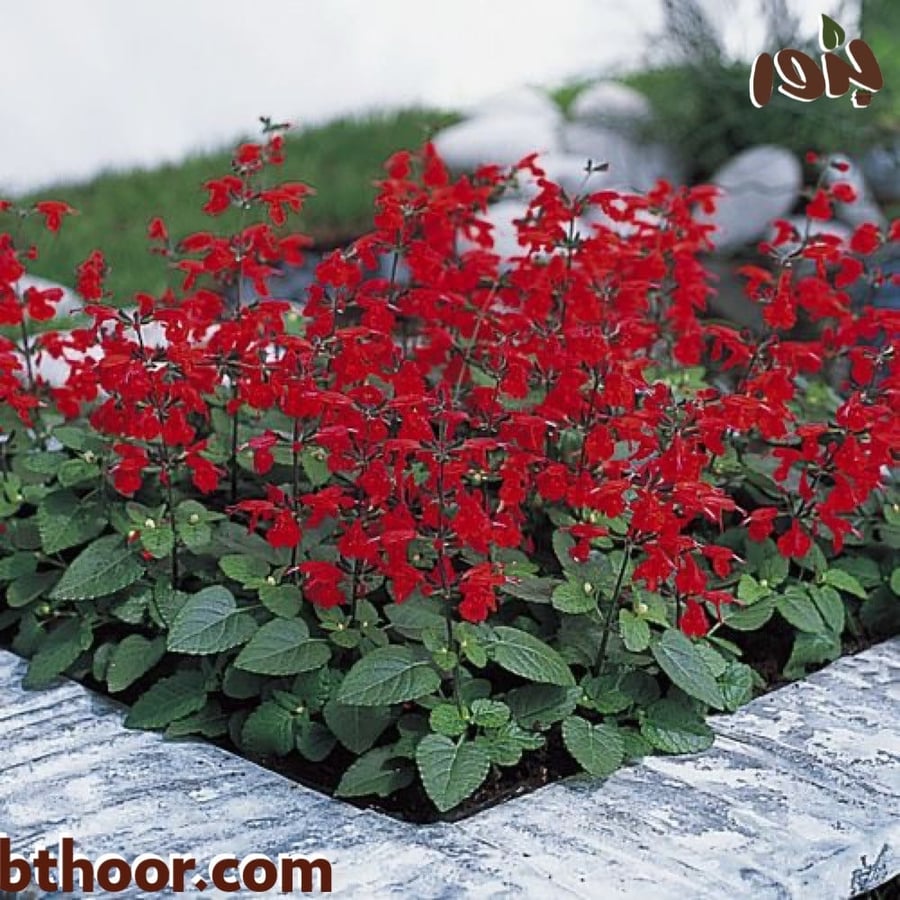

Red salvias
45ر.س
Product description
Common name: Scarlet Salvia. Scientific name: Salvia splendens. Also called: Fireflower. Native habitat of Scarlet Salvia flowers:
• Its original habitat is the Mediterranean basin, and it spreads in Europe and North America, as well as being cultivated in Saudi Arabia and many Arab countries.
Description of Scarlet Salvia:
• Salvia flower is a perennial herbaceous plant, growing in mountainous areas, sometimes reaching a maximum height of one meter or a meter and a half. Its leaves are heart-shaped, serrated at the edges, and opposite on the top of the plant.
Uses and benefits of Scarlet Salvia:
• Essential oils with a camphor scent are extracted from it.
• It has many antioxidant, anti-inflammatory, and ulcer-healing properties.
• Adds aesthetic value to home gardens, balconies, and roadside gardens.
• It is among the materials widely used in alternative medicine.
Description of Scarlet Salvia flower:
• Its beautiful flowers come in various colors including red, yellow, and sky blue, arranged in opposite spikes that rise vertically. They are characterized by their soft texture and fragrant scent.
Suitable climate and soil for growing Scarlet Salvia:
• It can be cultivated year-round in cooler regions, as this plant tolerates cold. Therefore, its life cycle is long. The temperature ranges between 18 and 20 degrees Celsius. It is planted in well-drained soil with a pH between 6.5 and 7.
Germination time:
• Its cultivation period is 6-8 weeks, and it is harvested from mid-July to December. The flowering period is in autumn and late spring, and it thrives in winter.
Method of cultivating Scarlet Salvia:
• Salvia seeds are planted in soil and covered well with about 20 millimeters of soil. It is started in February. It is also possible to cultivate Salvia from cuttings, provided a soft cutting is taken.
• It begins cultivation in summer or spring. The plant needs shaded locations if the container is placed outside the house. In protected cultivation, the plant achieves better growth due to intense indirect light and humidity levels around 60%.

From Buraydah
Questions you might have