

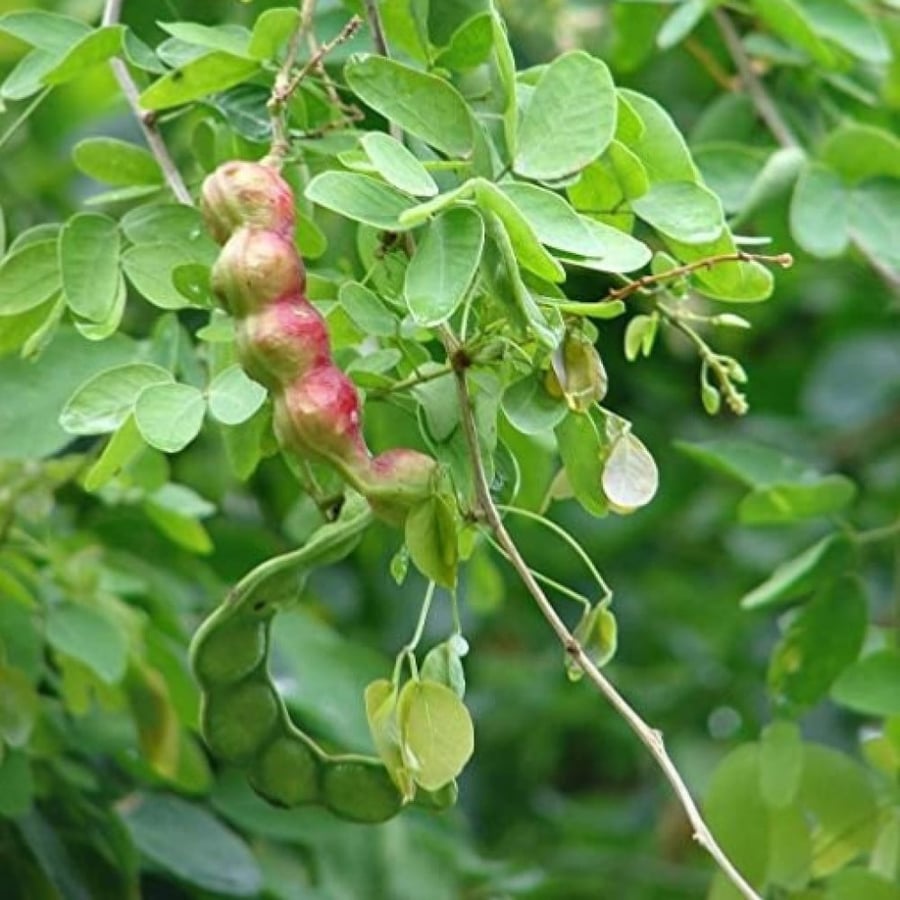

Indian almond seeds
6ر.س
Product description
Common name: Indian almond. Scientific name: Pithecellobium dulce. Also called: - Local almond - Sea Gaf - Sabar. The original habitat of the Indian almond tree: • The original habitat is Mexico and Florida, spread in Saudi Arabia and Gulf countries. Description of the Indian almond tree: • It is a thorny evergreen tree, with many branched branches, its leaves are dense, dark green in color, and relatively small in size, and the leaves largely resemble the shape of wild Sidr tree leaves. It is classified as a shade tree, reaching more than 10 meters in height, with a spread circumference exceeding 6 meters, and it is a fast-growing tree. Flowering: • It blooms from early April until the end of May, its flowers are greenish white with a pleasant scent. Fruits and seeds of the Indian almond tree: • The fruits are pods, covered with an outer shell (husk) that gradually changes color during the growth stages from green to the mature fruit color (red). • The edible part is a thin white bark, with a thickness ranging between 2-4 mm. Inside the pods, it covers the outer shell of the pods and contains black grains (seeds), with a distinctive taste and nutritional value. Uses and benefits of the Indian almond tree: • Used for planting orchards and on islands and road edges. • Its fruits are edible, with a distinctive taste. • It is considered a shade tree with dense shade. Suitable climatic conditions for the Indian almond tree: • Prefers tropical and subtropical climates. • Tolerant of drought and one of the most heat-tolerant trees, resistant to cold weather. • Very suitable for the climate of Saudi Arabia and Gulf countries. Method of propagation of the Indian almond tree: • Propagated by seeds, which generally have a high germination rate and quick sprouting. Best time for planting the Indian almond: • Planted in spring (directly in the ground). • Can be planted throughout the year in controlled environments to regulate temperature and humidity for germination (such as plastic greenhouses). Suitable soil for planting the Indian almond: • Adaptable to most soil types and tolerant of high salinity. Method of planting the Indian almond tree: • Soak the seeds in lukewarm water for 4-8 hours; they may absorb water in less time, so it is recommended to remove them when noticing this. • Cover the seeds with soil no more than 2 cm thick, whether planting directly in the ground or in containers (agricultural pots). • Keep the soil moist during the germination period. • When germination begins, gradually reduce watering to the stage of watering only when the surface of the soil is dry.

From Buraydah