

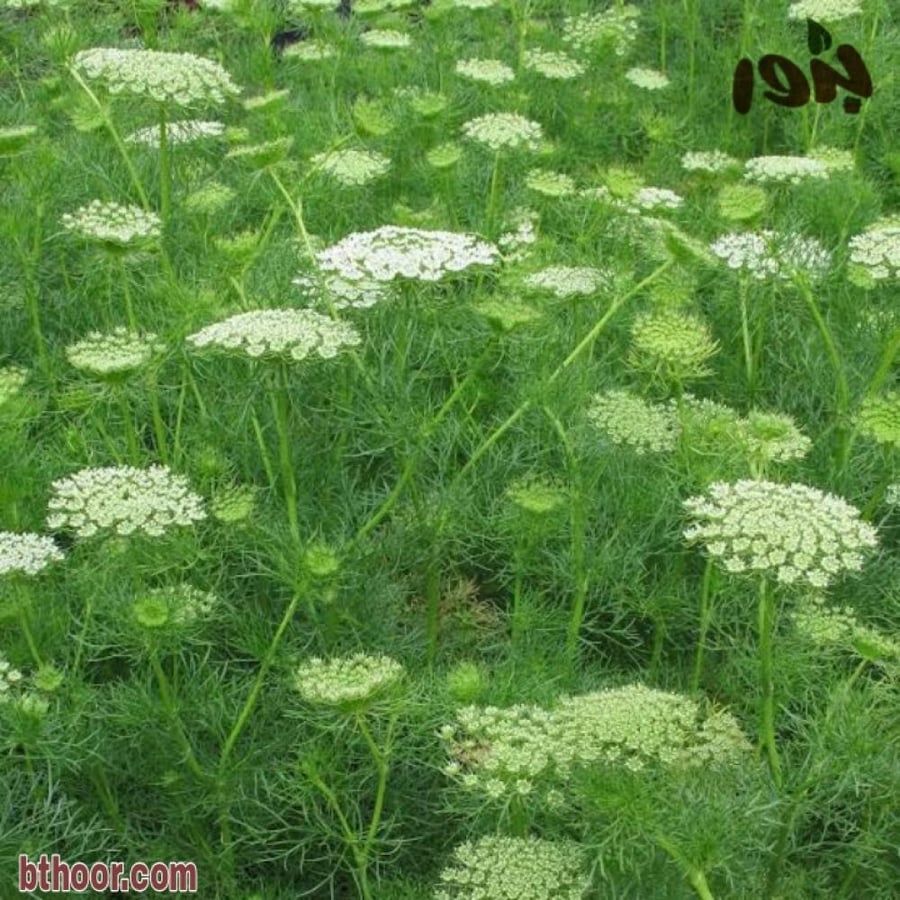
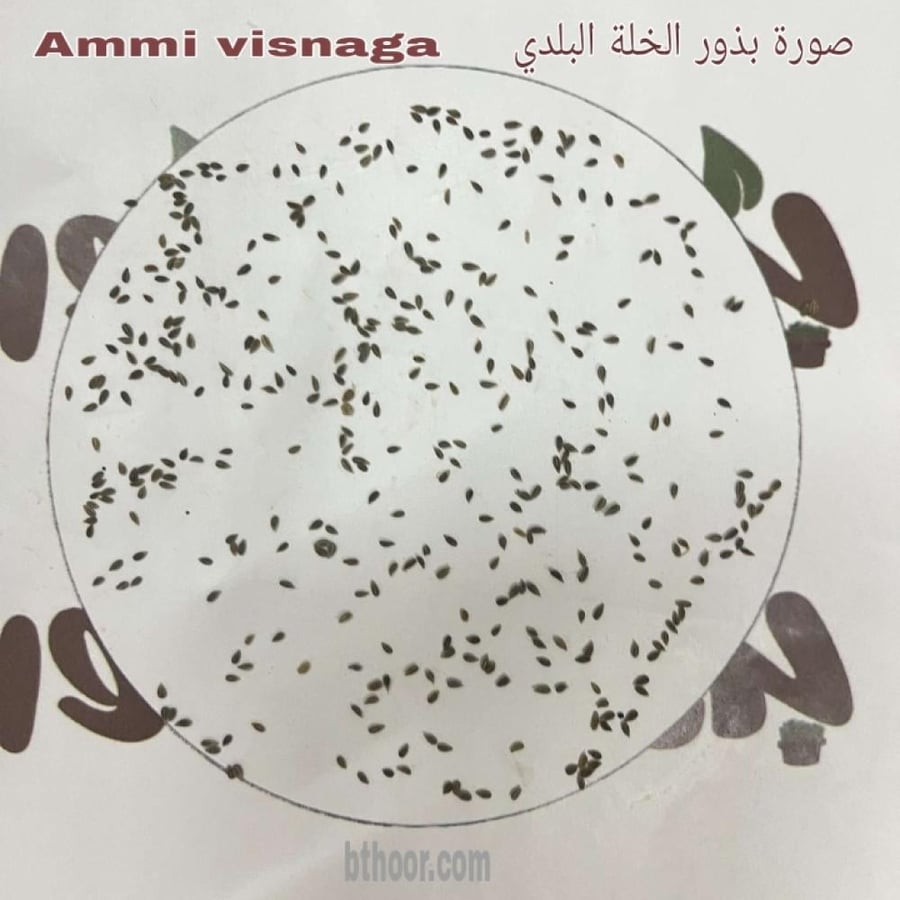
Seeds of the local Kholah herb (Ammi visnaga)
6ر.س
Product description
Common name: Alkhila Albaladi
Scientific name: Ammi visnaga
Also called: Alkhila, Medicinal Alkhila
Original habitat of Alkhila Albaladi plant: Mediterranean region, where it grows in the wild in countries like Egypt, Morocco, Tunisia, and parts of Southern Europe.
Description of Alkhila Albaladi plant: Alkhila Albaladi, scientifically known as Ammi visnaga, is an annual or biennial herbaceous plant from the Apiaceae family. The plant is characterized by its height, reaching about 80-100 cm, its finely divided delicate leaves, and its small white flowers grouped in large umbels. When the flowers mature, they turn into small oval seeds.
Description of Alkhila Albaladi flower: It features a large umbrella-shaped umbel, where small white or cream-colored flowers gather in a cluster that can reach a diameter of 10-15 cm. The flowers are arranged radially around a central axis, giving it a symmetrical and attractive appearance.
Uses and benefits of Alkhila Albaladi plant: The herb has been used since ancient times in traditional medicine. Its seeds are used to treat and break down kidney stones. It is used to treat some skin diseases such as vitiligo and psoriasis. It contains substances that can be used as a natural insecticide.
Suitable climate for Alkhila Albaladi plant: Alkhila Albaladi prefers a moderate and warm climate. It grows well in areas with bright sunshine and moderate temperatures. It tolerates drought and various temperatures. It withstands frost and cold.
Suitable soil for Alkhila Albaladi plant: It grows best in fertile, well-drained soil. It can be cultivated in different types of soil, including sandy and clay soils, provided they are well-drained.
Propagation method of Alkhila Albaladi plant: It propagates through seeds.
Planting time for Alkhila Albaladi: Seeds are planted in spring after the danger of frost has passed, and they can also be planted in autumn in regions with a moderate climate.
Method of cultivating Alkhila Albaladi: The soil should be prepared by tilling well and adding organic fertilizer to improve its fertility. Seeds are directly sown into the soil at a depth of about 1-2 cm, with spacing of approximately 20-30 cm between seeds. The seeds need moderate and regular watering until they start to grow, then watering should be gradually reduced. The Alkhila Albaladi plant requires little care after growth, such as removing weeds and aerating the soil.
Fertilizing method for Alkhila Albaladi: After seed germination and the growth of young seedlings, nitrogen fertilizer can be added to stimulate leaf and stem growth. Use a balanced nitrogen fertilizer (such as NPK 20-20-20) at a rate of 10-15 grams per square meter.

From Buraydah