

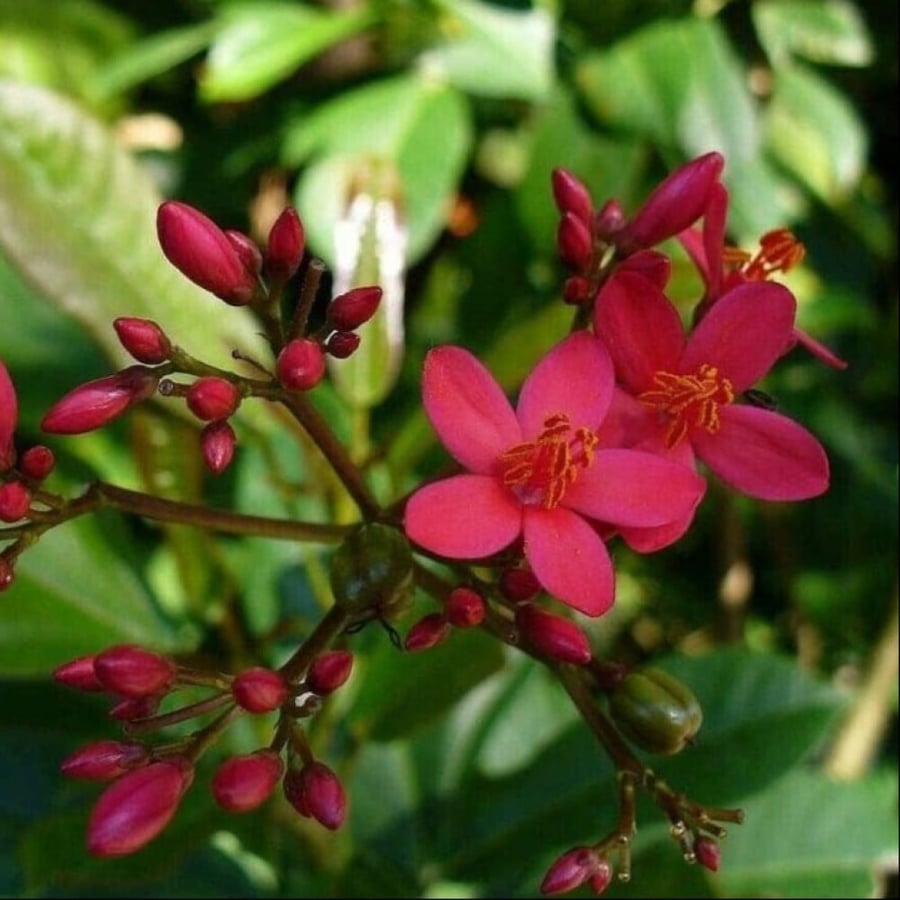


Red Jatropha tree seeds
7ر.س
Product description
Common name: Gatropha
Scientific name: Jatropha integerrima
Description:
• Evergreen tree, withstands harsh environmental conditions, grows quickly, reaches a height of 3 to 4 meters, considered an ornamental tree, blooms heavily especially in summer.
Uses and benefits:
• Widely used for decoration in public gardens, along roadsides, and on fences of homes and private gardens, as it has no impact on water tanks or infrastructure.
• Can be used to combat sand encroachment in desert areas and resist desertification, and its oil is used to produce biofuel.
Native habitat:
• Native to South America, grows in tropical, subtropical, and arid regions with dry climates such as Saudi Arabia and Gulf countries.
• The seed size ranges from 1 to 2 cm.
Flower:
• Despite its small size, it features a deep, radiant red color and dense flowering, occurring in clusters shaped like bunches, each cluster bearing 10 to 17 flowers, possibly more, with five petals.
Suitable climatic conditions and soil for cultivation:
• Grows in most soil types.
• Tolerates drought, high heat, frost, and temperatures below zero, and can withstand high salinity.
• Preferably watered regularly, especially in late spring and summer, along with the use of slow-release fertilizers two to four times a year.
Method and timing of planting:
• Planting method: Soak the seeds in warm water for 8 to 24 hours, then plant directly in the soil at a depth of 1.5 cm, ensuring the soil remains moist until germination. After that, water naturally daily, preferably at sunrise.
• Can be planted in a 9 cm pot or large seedling trays with cells no smaller than 4×5 cm. After moistening the soil, place it in the pot or trays, then plant the seed at 1.5 cm deep, keeping the soil moist until germination. Afterward, maintain regular watering, ensuring the soil dries out before the next watering, and continue this until transplanting to the permanent location.
• Planting period: From early July to the end of September.
• At the end of summer, ensure warmth during the colder months, especially during the early growth stages in winter.

From Buraydah