


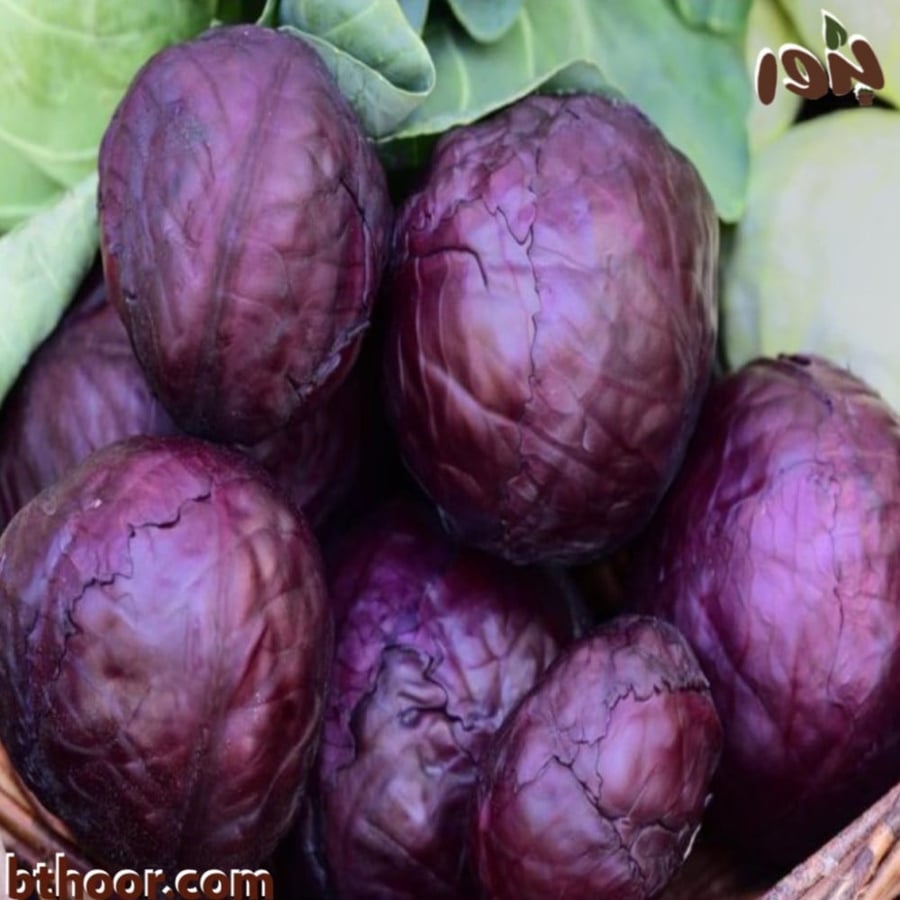
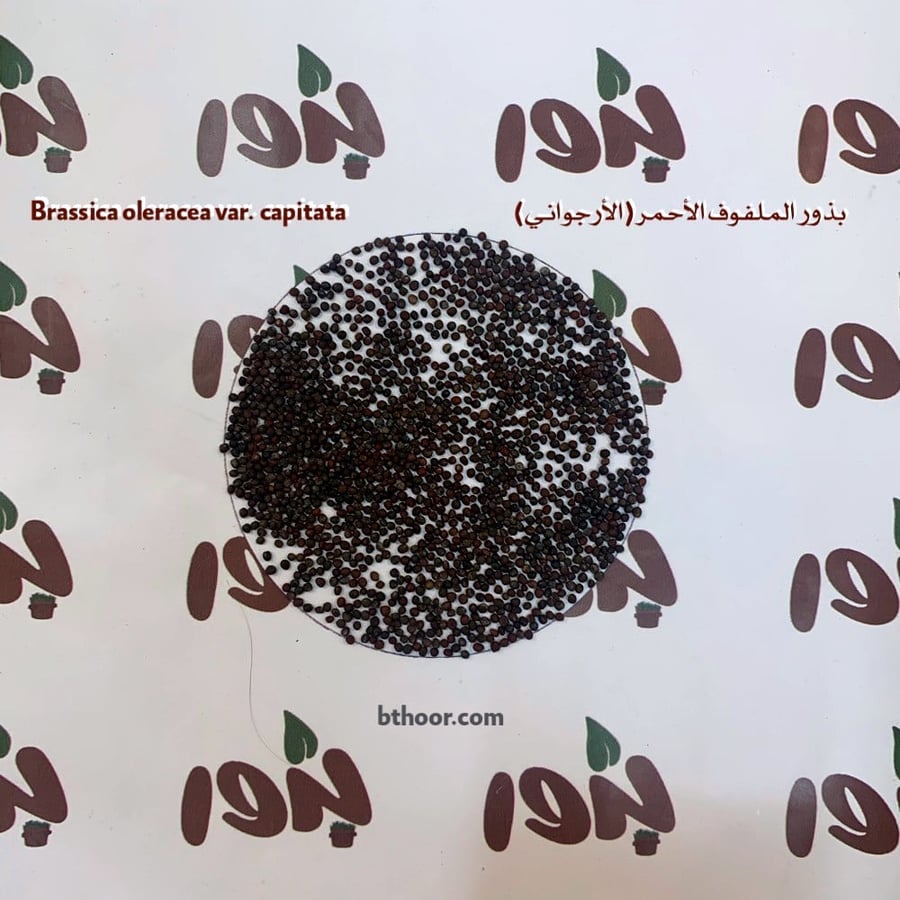
Red cabbage seeds - purple (Brassica oleracea var. capitata)
7ر.س
Product description
Scientific name: Brassica oleracea var. capitata
Common name: Red cabbage
Also called: Red kale - Purple cabbage - Round cabbage
Native origin:
It is believed that the native origin of this type is Europe.
Description:
Red cabbage is one of the types of cabbage, and it is a seasonal plant, from leafy vegetables, spherical or nearly spherical in shape, with leaves that are compound and layered. It is called (red or purple) cabbage because of the difference in leaf color depending on the soil type, where the leaves tend to be red in acidic soil, while in neutral soil they tend more toward purple.
Uses and benefits:
Red cabbage is characterized by high nutritional value.
It is used with many meals and is famous in coleslaw.
Red cabbage contains many vitamins such as vitamin C.
It has many health benefits.
Suitable climate for growing red cabbage:
The appropriate temperature for seed cultivation is 28-28 degrees Celsius:
Red cabbage prefers cool weather during the vegetative growth period.
Red cabbage loves the sun but does not tolerate high heat, so it is important to choose areas with partial shade.
Method of propagation of red cabbage:
It propagates through seeds and transplanting.
Timing for planting red cabbage:
This variety is imported, so its cultivation is slightly delayed compared to local cabbage; it is planted from mid-July to early November.
Suitable soil for growing red cabbage:
It can be grown in various soils from sandy to heavy soils, provided the soil has good drainage and is rich in organic matter.
When planted in sandy soil, production is earlier.
When planted in heavy soil, production is later but yields a high crop.
Method of planting red cabbage:
It is important that the land is free of weeds.
The land is plowed well, then leveled, and sand beds are prepared according to the quantity and need.
Lines are made according to necessity, with a spacing of 25-30 cm between each line.
Seeds are placed in rows within the line, ensuring space between seeds for good fruit development.
Seeds are covered with soil no more than 1 cm thick.
The beds are watered carefully to prevent water flow force from washing away the seeds.
Watering continues regularly, along with weeding the soil.

From Buraydah