

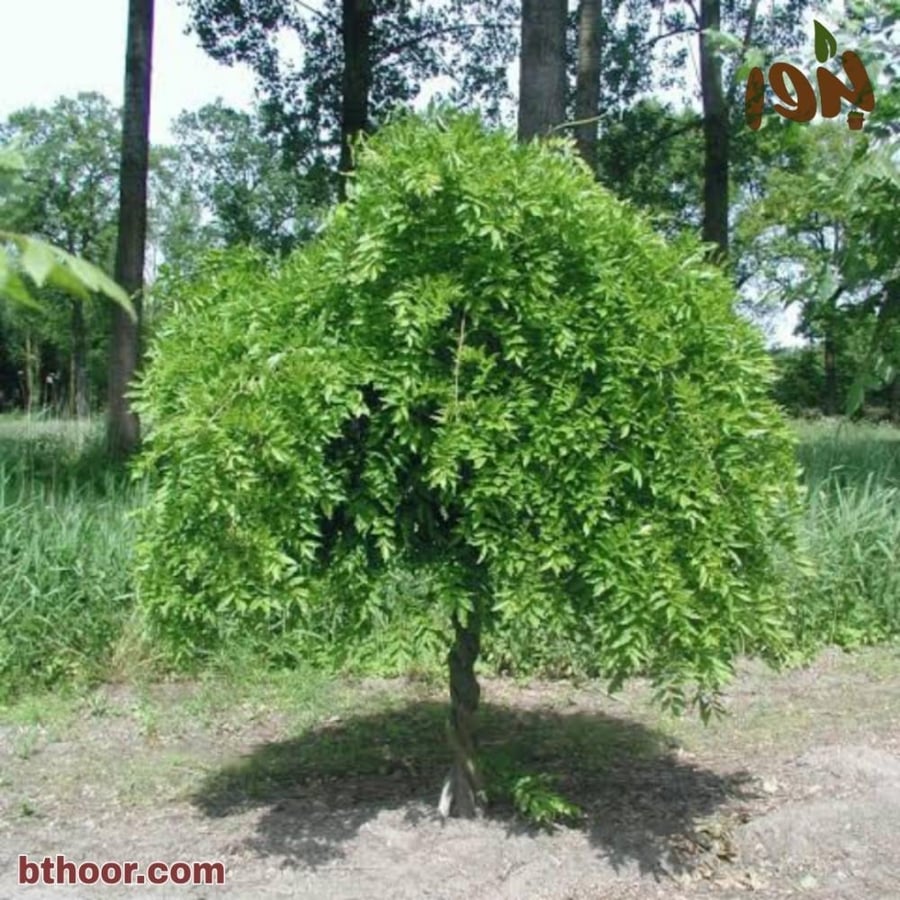


Wisteria sinensis seed
32ر.س
Product description
Common name: Violet Wisteria
Scientific name: Wisteria sinensis
Also called: Chinese Wisteria, Climbing Wisteria
Native habitat of Violet Wisteria:
The origins of Chinese Wisteria trace back to eastern regions of China, where it grows in forests and mountainous areas. It has spread globally as a luxurious ornamental plant thanks to its enchanting flowers and distinctive fragrance, especially in Japan, Europe, and North America.
Description of the Wisteria tree:
Violet Wisteria is a strong-growing perennial climbing plant, reaching up to 10 meters or more if supported properly. It has woody stems that coil around supports, and pinnate green leaves. It produces long clusters of violet flowers that hang down like waterfalls in a stunning scene.
Description of the Wisteria tree flower:
The flowers resemble bean or pea flowers, gathering in hanging clusters that reach 30–50 cm in length. Their color ranges from light to dark purple, usually blooming in spring, and sometimes again in late summer. They feature a strong fragrant scent that attracts butterflies and bees.
Uses and benefits of Violet Wisteria:
Planted to cover pergolas, fences, and entrances with its charming hanging appearance.
Adds a romantic and fragrant touch to gardens and open spaces.
Used in designing Japanese and classical gardens.
It is a plant attractive to bees and natural pollinators.
Suitable climate for Violet Wisteria:
Prefers moderate to warm climates.
Can tolerate low temperatures down to -10°C when acclimated, but blooms better in warm, sunny areas.
Needs direct sunlight for at least 6 hours daily to bloom densely.
Suitable soil for Violet Wisteria:
Grows in most soil types as long as well-drained.
Prefers clay or loamy soil rich in organic matter.
Favors slightly acidic to neutral soil (pH between 6 and 7).
Propagation method of Violet Wisteria:
Propagates by seeds but requires a long time to bloom (may exceed 5 years).
Planting time for Violet Wisteria:
Can be planted in late winter to early spring (March–April), or in autumn in a moderate climate.
It is preferable to plant in a permanent location as it needs a strong support structure and ample space to grow.
Method of planting Violet Wisteria:
Dig a hole twice the size of the root.
Carefully place the seedling and secure it well.
Water the soil thoroughly after planting.
Provide a strong support (such as a pole or fence) for it to climb.
Requires regular pruning to direct growth and stimulate flowering.
Fertilizing method for Violet Wisteria:
At the beginning of growth, use a light nitrogen fertilizer.
In early spring, use a phosphorus-rich fertilizer (such as NPK 10-30-10) to stimulate flowering.
Fertilize once a month during the growing season.

From Buraydah