



Lavender seeds
10ر.س
Product description
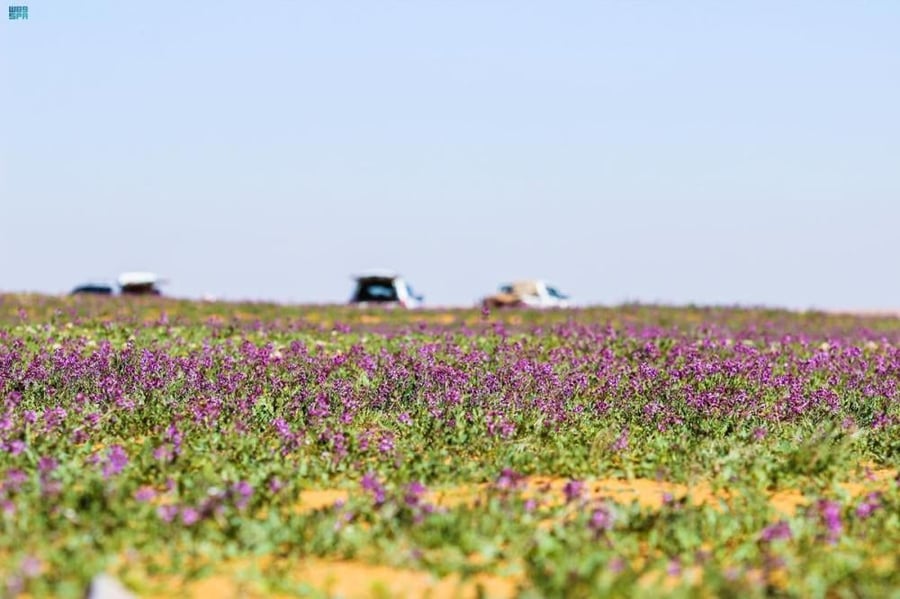
Wild lavender plant around grazing from spring vegetables, quick germination, spreads on the ground and rises about 30 cm. It has branches that show its purple flowers at the end of the branches with a pleasant fragrant smell, fragrant, and the seeds are produced in the form of discs. Many poets have sung about it in their poems because of its emotional and ancestral connection. Antar bin Shaddad said about it: "And the scent of Al-Khuzami reminds me of my nose... a gentle breeze of 'Azzara and the 'Ayyad." Ibn Miyada described the scent of lavender as: "With the scent of lavender of the sand, it became embracing... the branches of the 'Aqahi dry up the dew and the drops." Scientific name: Horwoodia Dicksoniae Turrill. Other names: Khairi Al-Bar, Al-Dharam, Al-Laounda, Hanan, Thnaban, Fatima's basin, Al-Jameem. The plant is abundant. Family: Brassicaceae. Native habitat: Saudi Arabia, southern Iraq, and Jordan. Due to the beautiful psychological color of lavender, Saudi Arabia chose it as the official color of hospitality, expressing the authenticity of this plant and its deep-rooted connection to Saudi lands. Flowers: purple with white edges, with four petals, emitting a pleasant scent at sunset and sunrise. Leaves: tender, succulent, rectangular to oval-shaped, with serrated edges, about 6 cm long and 2 cm wide. Height: 30 cm. Wild lavender cultivation and environmental conditions: Lavender is cultivated in moderate to somewhat warm climatic conditions, mostly relying on rain during rainy seasons and direct sunlight. It can also be grown in any moderate climate conditions such as greenhouses. If lavender is planted in a basin or pot, the containers must be deep because its roots penetrate into the soil. Soil: Wild lavender grows in light, well-ventilated sandy soil, with an ideal pH level from 6.7 to 7.3. Watering method: Lavender is watered moderately, with caution not to over-moisten the soil as this kills the plant, considering the weather conditions, soil moisture, and climate conditions of the plant. Sun exposure: Daily exposure to sunlight. Propagation: By seeds.

From Al Hait