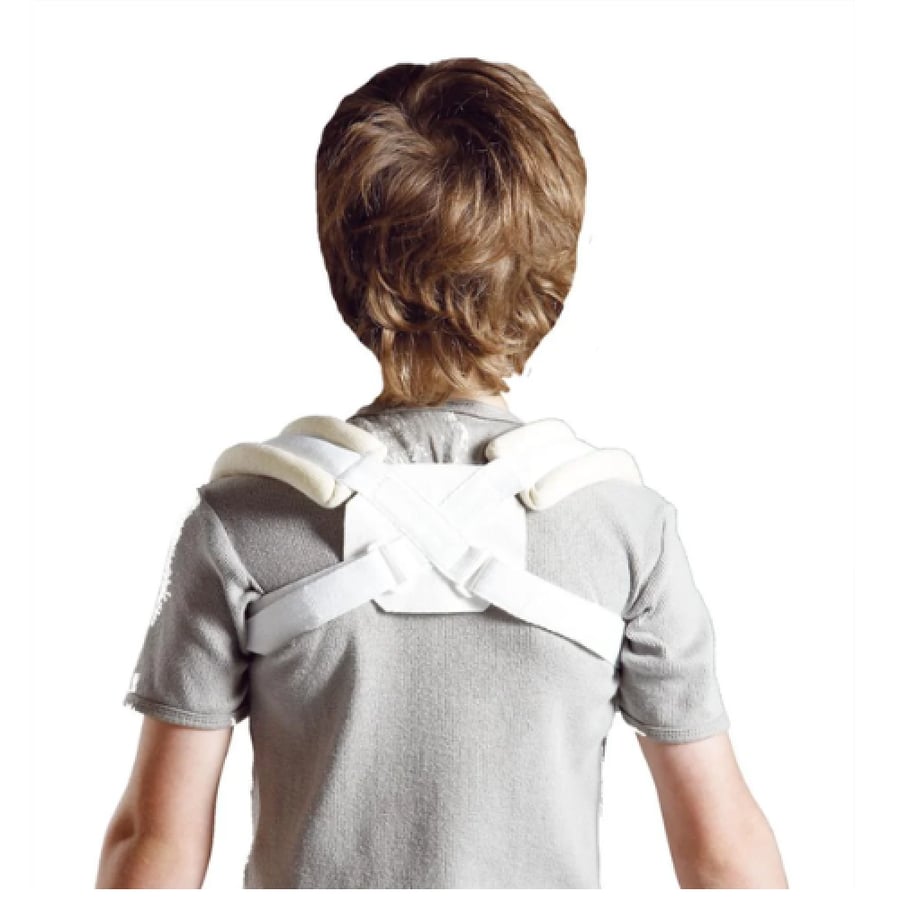

Clavicle support for children - E-CL801
50ر.س
Product description
Clavicle support for children E-CL801: effective support for safe healing When a child experiences an injury to the clavicle bone, which is relatively common in childhood due to falls or sports accidents, providing the correct and stable support becomes extremely important to ensure proper bone healing and reduce pain. This is where the role of the clavicle support for children comes in, specifically the model E-CL801, which is specially designed to fit small children's sizes and bodies.
What is the clavicle support for children E-CL801?
The clavicle support E-CL801 is an external medical device designed to stabilize the clavicle bone (clavicle) in place after injury or fracture. The support works to fix the shoulders back and down, reducing pressure on the clavicle and helping align the broken bone parts to allow proper healing. This model features a comfortable design suitable for children.
Indications for use of the clavicle support E-CL801:
The clavicle support E-CL801 is mainly used in cases requiring stabilization and support of the clavicle bone, notably:
Clavicle fractures: the most common use. The support helps stabilize the broken bone parts in the correct position to ensure healing.
Acromioclavicular (AC) joint injuries: where the support provides support to the injured joint and reduces its movement.
Strain or sprains of soft tissues in the shoulder and clavicle area: to reduce pain and prevent worsening of the injury.
Post-surgical procedures in the clavicle or shoulder area: to provide protection and support during recovery.
Correction of poor postures: in some cases, it can be used to help correct slight hunchback or poor shoulder postures, although this is not its primary purpose in injury cases.
Features of the E-CL801 clavicle support:
The E-CL801 clavicle support features a set of characteristics that make it ideal for use with children:
Soft materials: usually made from breathable materials like cotton or soft polyester, to avoid irritation to the child's sensitive skin and ensure comfort during long-term wear.
Comfortable and padded design: contains padded cushions at pressure points to avoid chafing or excessive pressure, increasing the child's comfort.
Adjustable straps: features adjustable shoulder straps, allowing precise adjustment of the support to fit the child's size and provide optimal stabilization of the clavicle. The simple adjustment system allows easy regulation by parents or specialists.
Lightweight: its light design does not add extra weight to the child, making it more tolerable.
Easy to put on and take off: parents can easily put on and remove the support, facilitating cleaning and regular inspection of the affected area.
Durable and washable: often designed to be durable and withstand daily use, and usually washable by hand to maintain cleanliness.
Improves shoulder posture: in addition to stabilizing the clavicle, the support helps pull the shoulders back, improving overall back posture and preventing hunching.
Important tips when using the clavicle support for children:
Consult a doctor is essential: always consult a doctor before using the clavicle support. The doctor will determine if the support is the appropriate treatment, its type, and duration of wear.
Choose the correct size: ensure selecting the appropriate size based on the child's chest circumference. Incorrect sizing may affect the effectiveness of the support or cause discomfort.
Regular skin monitoring: regularly check the child's skin under the support, especially under the armpits, to ensure there is no redness, irritation, or ulcers.
Hygiene: maintain the cleanliness of the support according to the washing instructions provided with the product, especially since children may sweat or get dirty easily.
Encourage the child: the child may feel uncomfortable at first, so it is important to encourage and remind them that the support will help them heal faster.
Limit activity: the child should avoid physical activities that may negatively affect the clavicle area while wearing the support, according to the doctor's instructions.

From Riyadh
Questions you might have