Product description
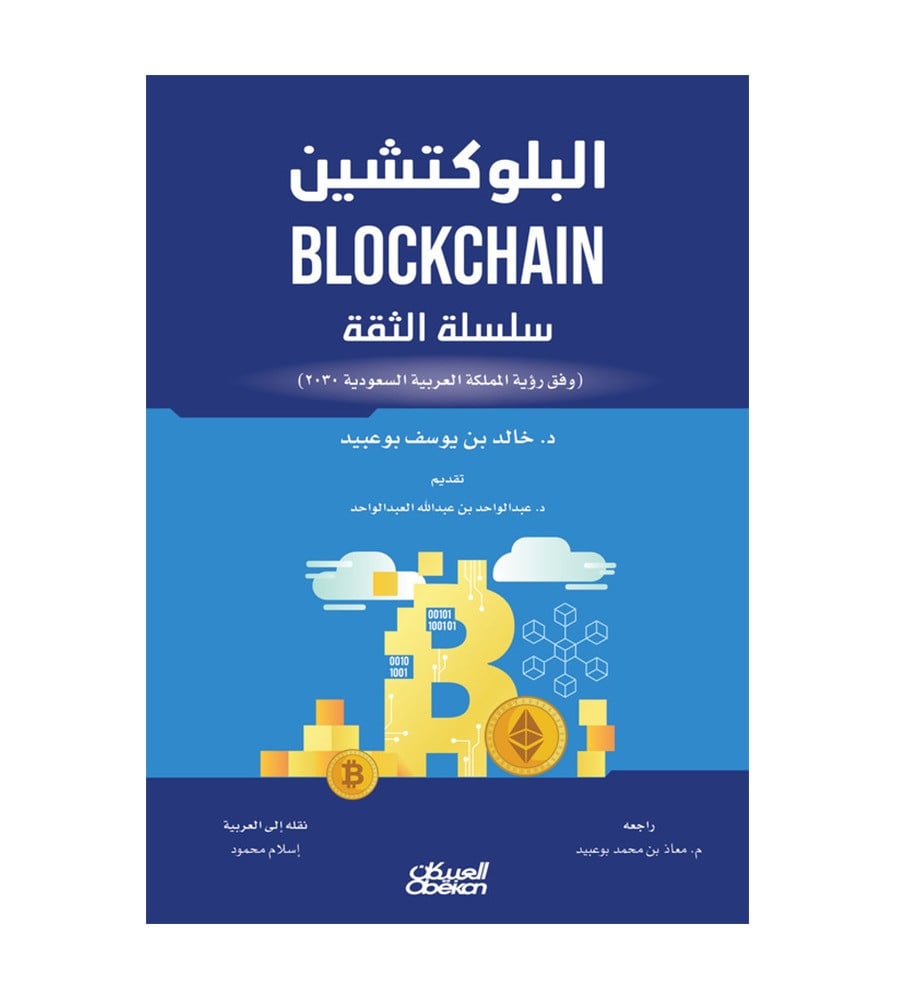
Blockchain - The Chain of Trust
Author: Dr. Khaled bin Youssef Abu Obeid
Introduction: Dr. Abdul Wahid bin Abdul Allah Al-Abd Al-Wahed
Reviewed by: Eng. Muaz bin Mohammed Abu Obeid
Translated into Arabic: Islam Mahmoud
Binding: Cover
Parts: One
Paper: Shamoha
Size: 14 × 21
Summary: In this digital age we live in, people increasingly rely on technology to store many sensitive and important data related to their personal and financial matters, as well as processing and transmitting them, and also the affairs of their institutions and governments.
This heavy reliance on technology and digitization has led to the need for governments to fulfill their duties, to keep pace with this rapidly evolving development, and to provide their services in a manner that ensures the necessary flexibility and transparency, while maintaining cybersecurity requirements for the state, citizens, and residents.
With our wise leadership, this has not been overlooked; through Saudi Arabia’s Vision 2030, plans, strategies, and initiatives have been launched for social, economic, and digital technological transformation and development, aimed at diversifying the economy, reducing bureaucracy, and contributing to broad reforms for transparency, accountability, and responsibility.
There are many emerging concepts and technologies around the world, such as cybersecurity, artificial intelligence, Internet of Things, and chains of trust, which will contribute to supporting the Fourth Industrial Revolution and achieving the nation’s Vision 2030.
The technology of the chain of trust has several advantages, such as transparency, speeding up processes, reducing costs, and providing a trusted environment for all stakeholders, which aligns with our vision and goals.
Therefore, we have in our hands this book, which enriches the Arabic technical content, and sheds light on part of the history of the chain of trust technology, its development over its relatively short lifespan, its types, uses, and features.
It also discusses whether the chain of trust is always the cure-all for technical problems to be solved, such as bureaucracy and centralization, or if there are some factors that should be considered before adopting it; how to identify suitable use cases; and what future applications are expected.

From Riyadh