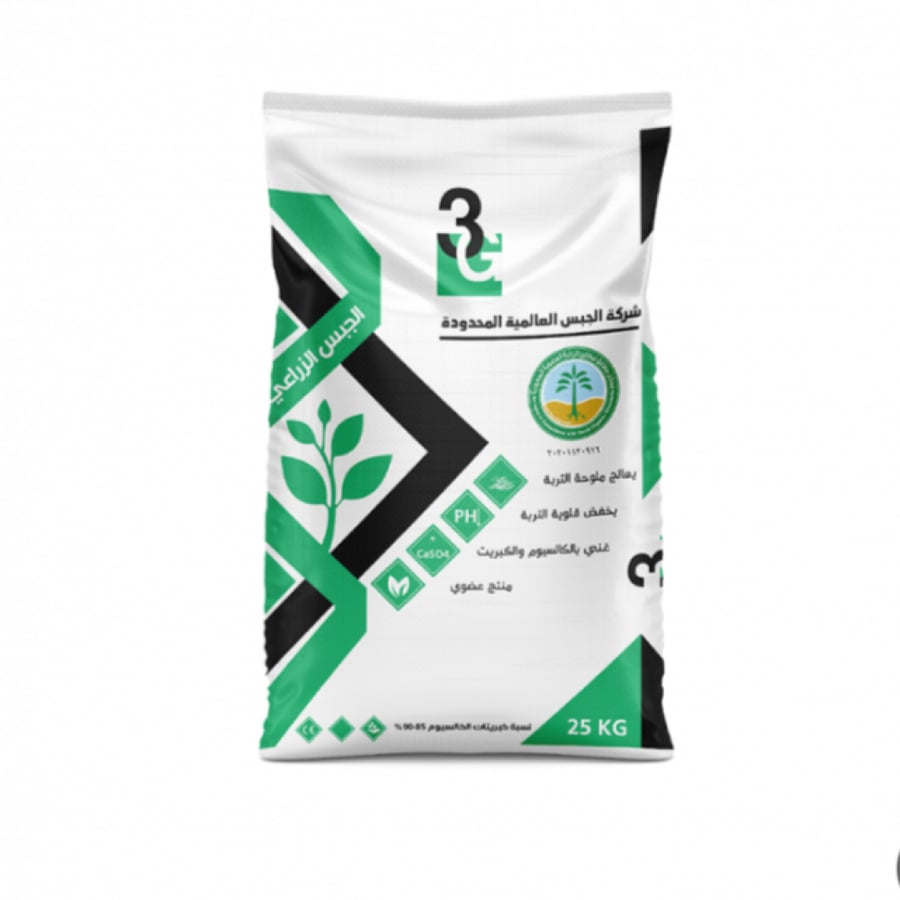
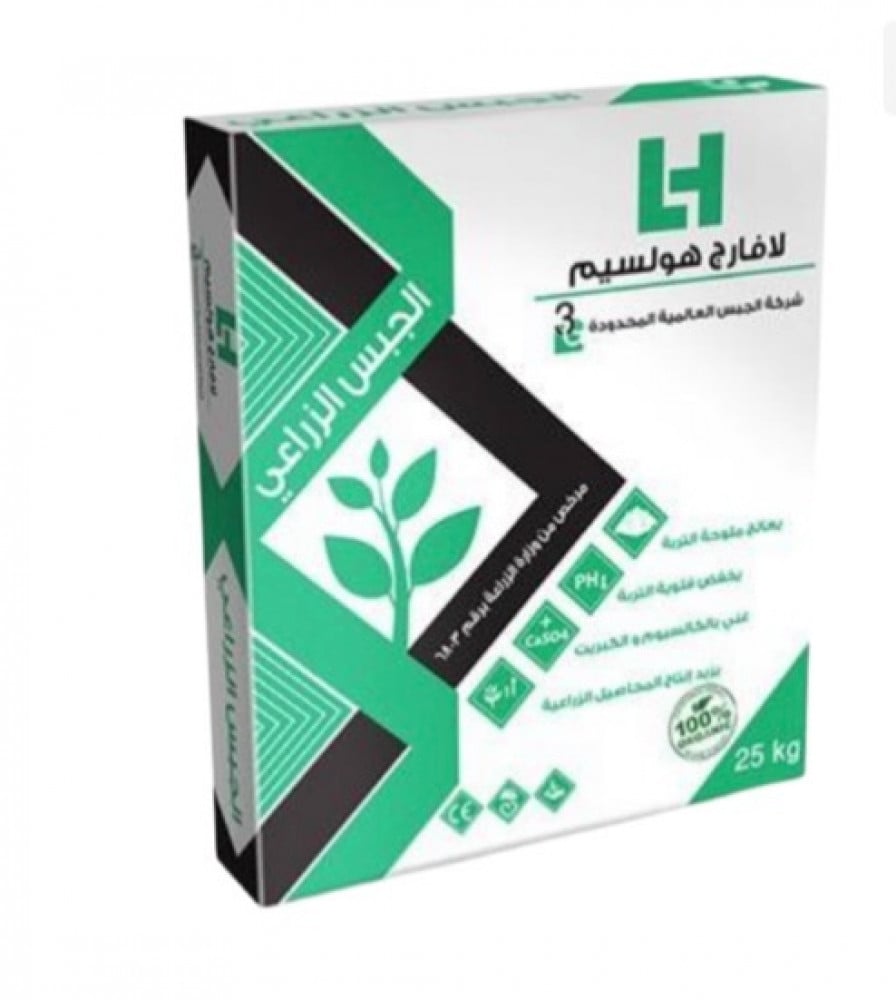
Organic agricultural gypsum 1kg
4ر.س
Product description
Agricultural gypsum, enriched, pure, natural, for soil, from calcium sulfate dihydrate, with high fineness and dry, and it is one of the best means in treating soil alkalinity and removing salts. Lafarge Holcim's agricultural gypsum is a pure, natural, enriched gypsum for soil from calcium sulfate dihydrate, with high fineness and dry, and it is one of the best means in treating soil alkalinity and removing salts. Presence of a salt crust on the soil surface, white or dark. Low permeability of the soil, poor aeration, and low cohesion. High pH in the soil of more than 7 degrees. Weak plants and poor growth. Plants stunted and colored dark green with a bluish tint. Symptoms of thirst appear on plants, with leaf burn and yellowing. Features of agricultural gypsum: Agricultural gypsum is a primary source of soluble calcium in the soil, which in turn leads to the elimination of harmful sodium ions. It also helps increase soil microorganisms that fix nitrogen. It prevents deterioration of saline soil properties during cultivation of alkaline and saline-alkaline lands, and it breaks calcium and sodium bonds and groups, making it easier for roots to absorb nutrients. Agricultural gypsum is environmentally friendly, characterized by its lack of toxic heavy elements, and contains a high percentage of sulfur, in addition to increasing soil permeability and aeration quality, which facilitates root penetration and increases their water absorption capacity. How to use agricultural gypsum from Lafarge Holcim: Spread the gypsum manually or spread fertilizers at a total rate of one kilogram per square meter after leveling the soil surface. Deep plow the land to mix the gypsum with the soil. Divide the land into plots or basins, then cut water channels and drains, then irrigate the basins with water to a height of 15 cm and leave until the water seeps into the ground. The use of agricultural gypsum compensates for water deficiency by flooding these basins with water to eliminate existing salts and those inherent in the soil, and to reduce alkalinity. Organic and chemical fertilizers are added to increase its fertility and improve its properties. If the soil salinity is less than 4 millimhos, i.e., less than 2500 parts per million, agricultural gypsum is added annually at a rate of 0.5-1.5 tons per feddan. If the soil is moderately saline between 4-8 millimhos (2500-5000 parts per million), the amount of gypsum should be increased to about 2-5 tons per feddan to maintain soil fertility. If analysis shows that the soil is highly saline between 8-12 millimhos (5000-7500 parts per million), the amount of gypsum is increased to 5-8 tons per feddan. Precautions: Keep away from children. Store in a safe place. When it contacts the eyes, wash thoroughly. Product information: Lafarge Gypsum Company, a French company, produced in the Kingdom of Saudi Arabia.
From Riyadh